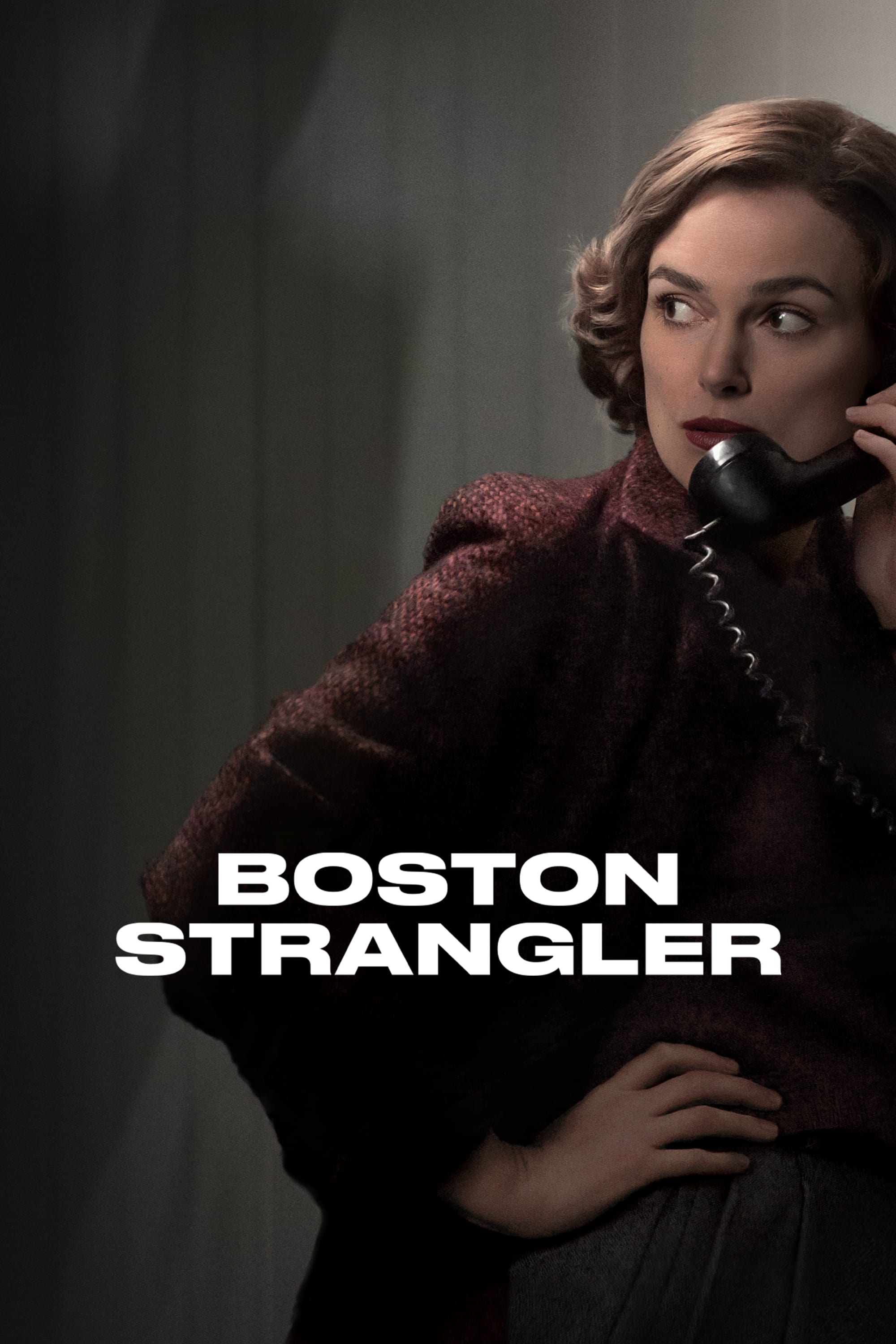
Boston Strangler (2023) character relationship network mapped with AI analysis. Explore the connections, alliances, and conflicts between characters.
Characters
Loretta McLaughlin
(played by Keira Knightley) — protagonist
Lead investigative reporter for the Boston Record American who uncovers the serial killer's pattern, coins the name 'Boston Strangler,' and navigates workplace sexism and personal hardships to expose...
Jean Cole
(played by Carrie Coon) — protagonist
Tenacious reporter and Loretta's close colleague who teams up with her to investigate the murders, overcoming institutional sexism to help publish a groundbreaking theory about multiple killers.
Paul Dempsey
(played by Christian Mallen) — minor
The Killer
(played by Pat Fitz) — minor
George Nassar
(played by Greg Vrotsos) — minor
Albert DeSalvo
(played by David Dastmalchian) — supporting
The primary suspect who confesses to all thirteen murders, later revealed to have been manipulated by others to secure financial rewards, with DNA evidence only confirming his guilt in the final case.
Daniel Marsh
(played by Ryan Winkles) — supporting
A suspect linked to copycat murders in Ann Arbor, theorized by the reporters to have manipulated DeSalvo's confession to facilitate a fraud scheme, though never formally charged with murder.
Story Dynamics
Alliances, conflicts, and narrative interactions that evolve throughout the story.
Albert DeSalvo → The Killer
(Unknown Possible Identity) — The film leaves DeSalvo's responsibility for most crimes unresolved.
DeSalvo confesses to all thirteen murders, but later DNA evidence links him only to the thirteenth murder and not the other twelve.
George Nassar → Daniel Marsh
(Social Institutional Acquaintance) — Their shared confinement links them within the confession controversy.
Harrison reveals that DeSalvo, Marsh, and Nassar were all held in the same ward at the same time.
Albert DeSalvo → Daniel Marsh
(Alliance Alleged Confession Partners) — Marsh is alleged to have helped shape DeSalvo's confession.
Harrison claims that DeSalvo's confession was coached by Marsh and Nassar while they were held in the same hospital ward.
Albert DeSalvo → George Nassar
(Alliance Confession Scheme Partners) — Their alleged cooperation forms the financial explanation for the confession.
The later theory states that Nassar arranged for DeSalvo to confess so Nassar could claim a reward for each victim.
Jean Cole → The Killer
(Conflict Investigative Adversary) — The killer investigation defines Jean's most consequential reporting.
Jean helps investigate the strangulation pattern and publishes a theory about different killers behind the Boston Strangler crimes.
Jean Cole → Paul Dempsey
(Narrative Theory Subject) — Dempsey anchors the reporters' multiple-killer theory.
Jean co-develops the theory that Dempsey committed the first six Boston murders before moving to New York.
Jean Cole → Daniel Marsh
(Narrative Investigative Subject) — Marsh is treated as a key figure in the suspected fraud surrounding the confession.
Jean participates in the theory that Marsh and Nassar manipulated DeSalvo's confession for financial purposes.
Jean Cole → George Nassar
(Conflict Adversarial Source) — Nassar's statements complicate the reporters' conclusions.
Jean's reporting incorporates Nassar's denial, his admission that he wanted the reward, and his claim that there may have been more than one murderer.
Jean Cole → Albert DeSalvo
(Narrative Investigative Subject) — DeSalvo is a major subject of Jean's reporting.
Jean helps Loretta investigate the confession, the lack of evidence against DeSalvo, and the later theory that his confession was manipulated.
Loretta McLaughlin → The Killer
(Conflict Investigative Adversary) — The unidentified killer is the central threat driving her investigation.
Loretta identifies a pattern among the strangulation murders and coins the name Boston Strangler for the suspected killer.
Loretta McLaughlin → Paul Dempsey
(Narrative Theory Subject) — Dempsey becomes the proposed explanation for the first phase of the murders.
Loretta and Jean create a theory that Dempsey killed the first six older women in Boston before moving to New York.
Loretta McLaughlin → Daniel Marsh
(Narrative Investigative Subject) — Marsh becomes important to Loretta's alternative explanation of the murders.
Loretta learns that Marsh is the likely suspect in the identical Ann Arbor murders and later investigates his connection to the confession.
Loretta McLaughlin → George Nassar
(Conflict Adversarial Interview) — Nassar challenges Loretta's interpretation of the case and the media's role.
Loretta visits Nassar in prison, where he denies coaching DeSalvo but accuses the media of creating a sensation.
Loretta McLaughlin → Albert DeSalvo
(Narrative Investigative Subject) — DeSalvo becomes a central subject in Loretta's search for the truth.
Loretta follows DeSalvo's arrest, confession, imprisonment, later telephone call, and the circumstances surrounding his death.
Loretta McLaughlin → Jean Cole
(Alliance Investigative Partner) — They form the central investigative partnership against institutional resistance.
After a fourth victim is found, Loretta and Jean decide to continue investigating the murders together and later develop a shared theory.
Story Analysis
Two reporters challenge an official single-killer narrative and expose an unresolved history of violence, institutional failure, and media distortion.
Plot Progression
A Pattern In The Headlines
— Loretta identifies a shared strangulation pattern among Boston murders. Resistance from law enforcement and her employer makes publication difficult.
The Reporters Against Silence
— Loretta and Jean join forces after another victim is found. Their investigation advances while sexism, family harassment, and workplace pressure intensify.
A Case Without Boundaries
— The younger Sophie Clark becomes a victim, disrupting the established pattern. The reporters uncover police failures and connections to crimes beyond Boston.
Confession Under Suspicion
— DeSalvo confesses to all thirteen murders, but the evidence cannot support a murder conviction. A rejected lineup and the lack of proof keep the case uncertain.
The Truth Splinters
— DeSalvo dies before Loretta can hear his promised account. Testimony from Harrison and Nassar leads Loretta and Jean to publish a multiple-killer theory, later partly qualified by DNA evidence.
Directed by Matt Ruskin
Boston Strangler (2023) · 6.6/10 · crime, mystery, thriller