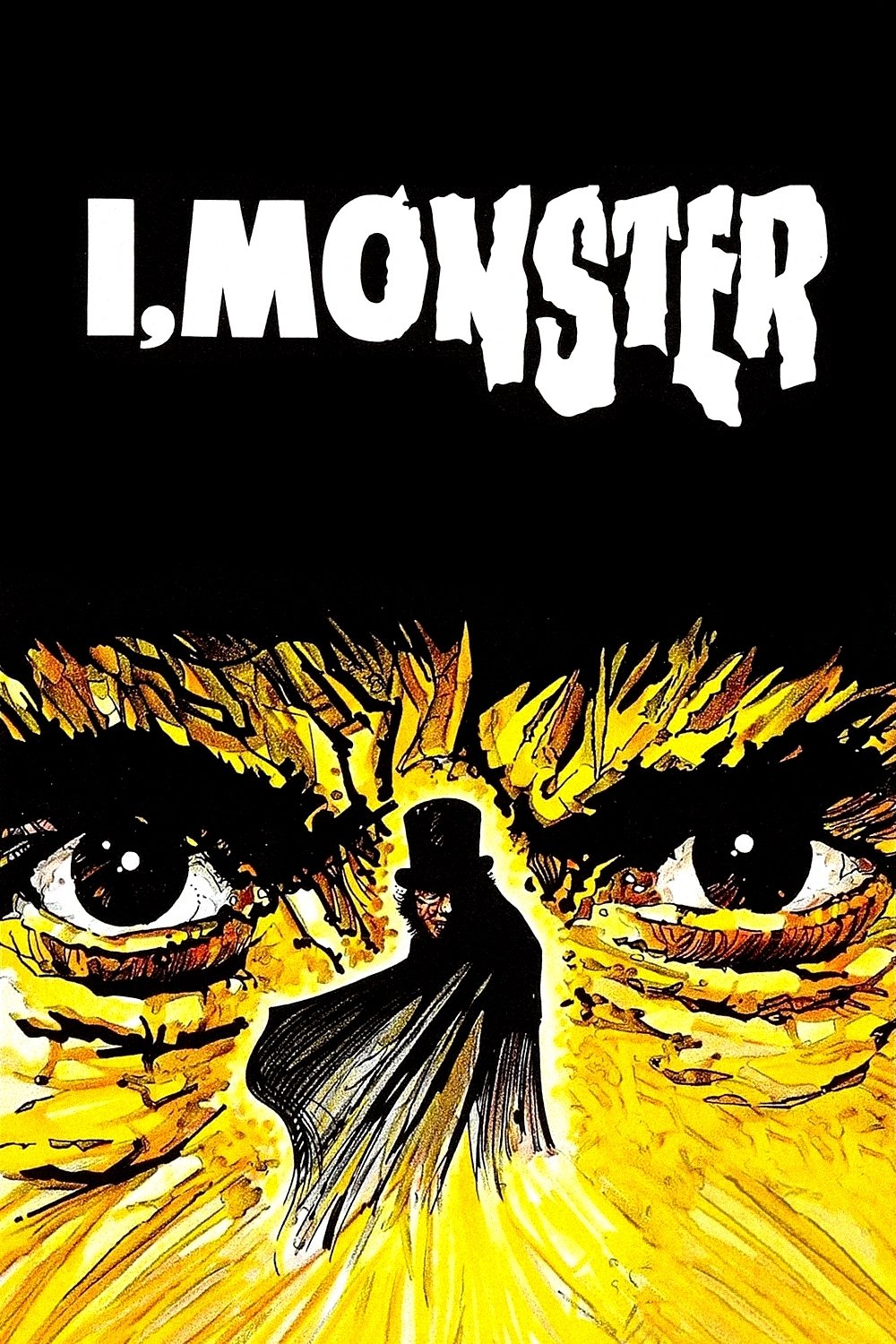
I, Monster (1971) character relationship network mapped with AI analysis. Explore the connections, alliances, and conflicts between characters.
Characters
Dr. Charles Marlowe / Mr. Edward Blake
(played by Christopher Lee) — protagonist
Dr. Charles Marlowe is a physician who believes human personality contains opposing sides that can be separated. He develops a drug to break through the barriers of the unconscious, and the experiment...
Frederick Utterson
(played by Peter Cushing) — protagonist
Frederick Utterson is concerned when Marlowe disappears and investigates the doctor's house. After Poole tells him that Blake has a key and household authority, Utterson suspects Marlowe is being blac...
Enfield
(played by Mike Raven) — supporting
Enfield is one of the people alarmed by Marlowe's theories and experiments. Along with Lanyon, he fears the doctor's attempt to separate opposing sides of human personality is dangerous. The account e...
Lanyon
(played by Richard Hurndall) — supporting
Lanyon is a doctor who has broken with Marlowe over the attempt to create a drug that could produce an entirely good or entirely evil personality. He shares Enfield's alarm at Marlowe's experiments an...
Poole
(played by George Merritt) — supporting
Poole is Marlowe's household servant. Marlowe leaves him at home before discussing the drug, and Poole later tells Utterson that Blake has a key and that the household has been ordered to obey him. At...
Canonical Relationships
Family, romantic, and professional connections based on plot evidence.
Frederick Utterson → Poole
(Professional Questioning Investigator) — Utterson questions Poole as part of his inquiry into Marlowe's disappearance.
Utterson investigates Marlowe's house, where Poole reveals Blake's key and the household orders.
Dr. Charles Marlowe / Mr. Edward Blake → Lanyon
(Professional Scientific Rival) — Their professional disagreement becomes a fundamental conflict over Marlowe's experiments.
Lanyon admits that he has broken with Marlowe over the doctor's attempt to create a drug producing entirely good or evil personalities.
Dr. Charles Marlowe / Mr. Edward Blake → Poole
(Professional Employer And Servant) — Poole serves Marlowe's household but is placed under Blake's coercive authority.
Poole is identified as Marlowe's household servant. Blake later orders everyone in the household to obey him, including Poole.
Story Dynamics
Alliances, conflicts, and narrative interactions that evolve throughout the story.
Frederick Utterson → Lanyon
(Alliance Investigative Collaborator) — Lanyon supplies Utterson with crucial context about Marlowe's work.
During Utterson's investigation, Lanyon provides information about his break with Marlowe and the drug experiment.
Enfield → Lanyon
(Alliance Fellow Dissenter) — They share opposition to Marlowe's scientific project.
Enfield and Lanyon both fear the danger of Marlowe's experiments.
Enfield → Dr. Charles Marlowe / Mr. Edward Blake
(Social Concerned Associate) — Enfield is an informed associate who voices concern about Marlowe's ideas.
Enfield participates in the opening discussion and fears that Marlowe's experiments are dangerous.
Dr. Charles Marlowe / Mr. Edward Blake → Frederick Utterson
(Narrative Investigator And Subject) — Utterson investigates the disappearance and the suspicious presence of Blake.
Utterson becomes concerned about Marlowe's disappearance and investigates his house.
Story Analysis
A doctor's attempt to separate moral and forbidden impulses creates an increasingly mysterious threat embodied by Blake.
Plot Progression
The Divided Mind
— Marlowe presents his theory that human personalities contain opposing sides. He introduces a drug designed to penetrate the unconscious and separate moral impulses.
Blake Enters Soho
— A frightening man calling himself Blake rents a room and demands an uncertain stay. Destructive robberies and purposeless assaults begin appearing in Soho.
The House Under Control
— Utterson investigates Marlowe's disappearance and learns that Blake possesses a household key. Lanyon explains the scientific dispute, while a document exposes Blake's claim to Marlowe's possessions.
The Cane At Dockland
— A vicious Dockland murder produces physical evidence resembling Blake's gold-headed cane. Utterson uses it to warn Marlowe that Blake may be the killer.
The Unresolved Letter
— Marlowe claims Blake has left the country and presents an unexplained letter as evidence. His final question to Poole about the messenger leaves Blake's whereabouts and identity unresolved.
Directed by Stephen Weeks
I, Monster (1971) · 5.5/10 · horror, science-fiction
Content sources
Related entry on
Wikidata
(Q126257), public domain (CC0).
Plot breakdown and analysis on this page are AI-generated from the title's synopsis and metadata.