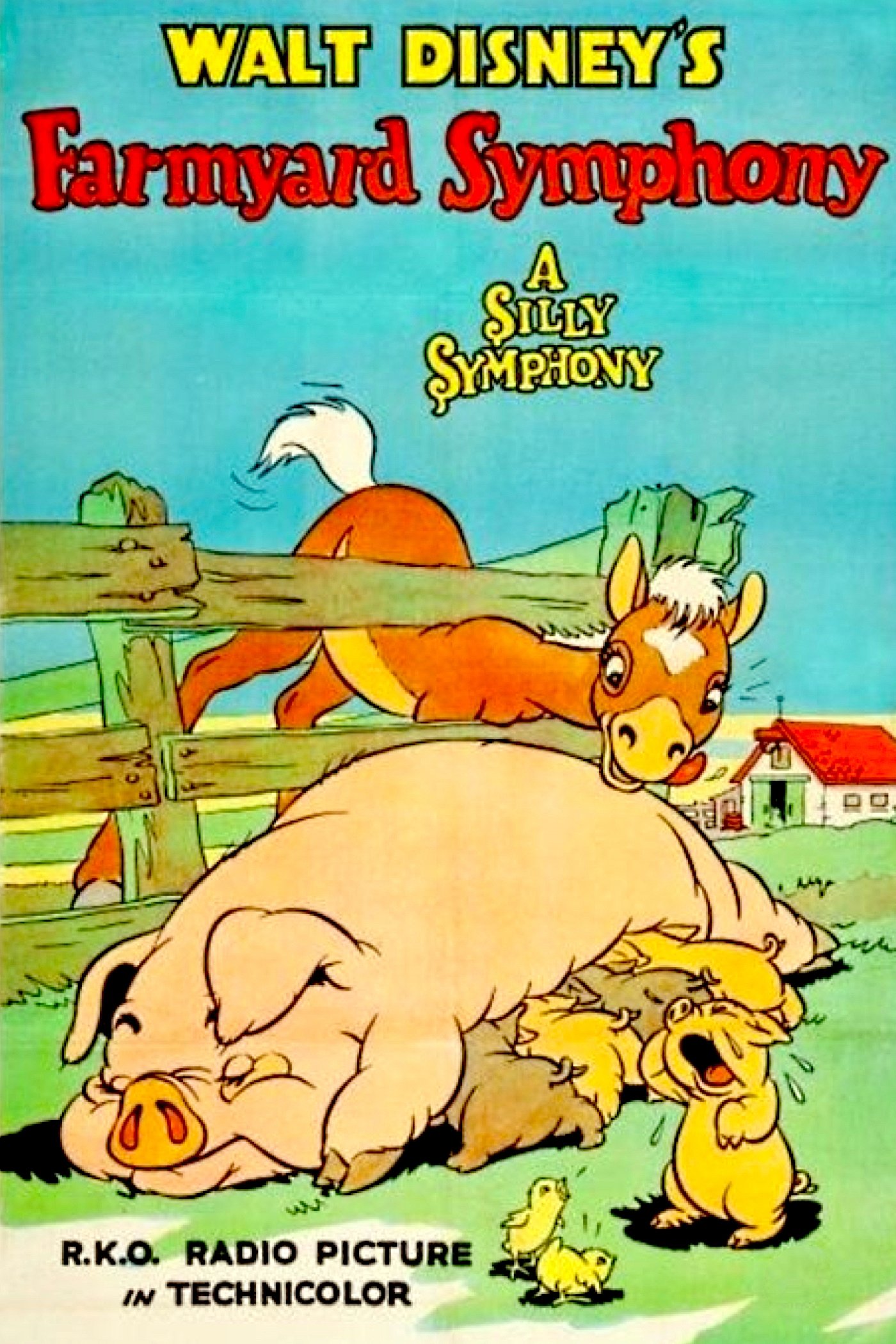
Plot Analysis Summary
A musical portrait of farmyard life that moves from morning activity to courtship, communal singing, and feeding.
Story Structure — 5 Plot Phases
Pastoral Farmyard Awakening
The farmyard comes alive through a sequence of daily animal activities. The bull, foal, piglets, calf, and geese are introduced through varied musical pieces.
Key Events
-
Farmyard Morning Begins — Farm animals begin their daily activities to pastoral orchestral music. Characters: Bull, Hens / Rooster, Ducks / Geese / Chicks
Location: Farmyard
-
Pastoral Opening Movement — The opening farmyard imagery accompanies Beethoven and Nicolai. Characters: Bull, Hens / Rooster, Ducks / Geese / Chicks
Location: Farmyard
-
Bull Wakes Up — The bull wakes as the William Tell Overture begins. Characters: Bull
Location: Farmyard
-
Bull Joins Morning Rhythm — The bull's waking sequence expands the lively morning routine. Characters: Bull
Location: Farmyard
-
Foal Wakes — The foal's waking is accompanied by The Barber of Seville.
Location: Farmyard
-
Piglets Feed — Piglets eat while The Barber of Seville continues.
Location: Farmyard
Playful Morning Parade
Young animals chase each other while the geese march together. The farmyard routine becomes increasingly energetic before attention shifts to the chickens.
Key Events
-
Calf Chases Foal — The calf and foal chase each other during Spring Song.
Location: Farmyard
-
Playful Chase Continues — The young animals continue their playful movement across the farmyard.
Location: Farmyard
-
Geese March — The geese march together to the tune Garryowen. Characters: Ducks / Geese / Chicks
Location: Farmyard
The Rooster's Serenade
The rooster struts, wakes the chickens, and courts the white hen. Their clucked musical exchange becomes the short's central expressive moment.
Key Events
-
Rooster Struts — The rooster performs a strut during the Semiramide Overture. Characters: Hens / Rooster
Location: Chicken Yard
-
Chickens Awaken — The rooster wakes the chickens as the orchestral passage continues. Characters: Hens / Rooster
Location: Chicken Yard
-
Rooster Courts Hen — The rooster woos the white hen through a musical serenade. Characters: Hens / Rooster
Location: Chicken Yard
-
Hen Answers Song — The rooster and white hen exchange a clucked La donna è mobile. Characters: Hens / Rooster
Location: Chicken Yard
-
Courtship Duet Changes — Their duet transforms into a variation of Miserere. Characters: Hens / Rooster
Location: Chicken Yard
The Call To Feeding
The other animals join the rooster and hen in a larger musical passage. Feeding time interrupts the courtship and redirects the entire farmyard.
Key Events
-
Animals Join Singing — The other farm animals join the rooster and hen's musical passage. Characters: Bull, Hens / Rooster, Ducks / Geese / Chicks
Location: Farmyard
-
Farmyard Ensemble Builds — The ensemble grows as the animals participate together. Characters: Bull, Hens / Rooster, Ducks / Geese / Chicks
Location: Farmyard
-
Feeding Call Sounds — The animals hear a sound more welcoming than the courtship music: feeding time. Characters: Bull, Hens / Rooster, Ducks / Geese / Chicks
Location: Farmyard
A Satisfying Farmyard Feast
The animals eat together during the closing musical sequence. The film resolves with Spotty eating corn.
Key Events
-
Animals Rush To Eat — The farm animals turn their attention from singing toward feeding. Characters: Bull, Hens / Rooster, Ducks / Geese / Chicks
Location: Feeding Area
-
Collective Feeding Sequence — The animals eat during the March of the Swiss Soldiers and Hungarian Rhapsody. Characters: Bull, Hens / Rooster, Ducks / Geese / Chicks
Location: Feeding Area
-
Spotty Eats Corn — The film ends with Spotty eating corn to Wagner's Tannhäuser Overture.
Location: Feeding Area