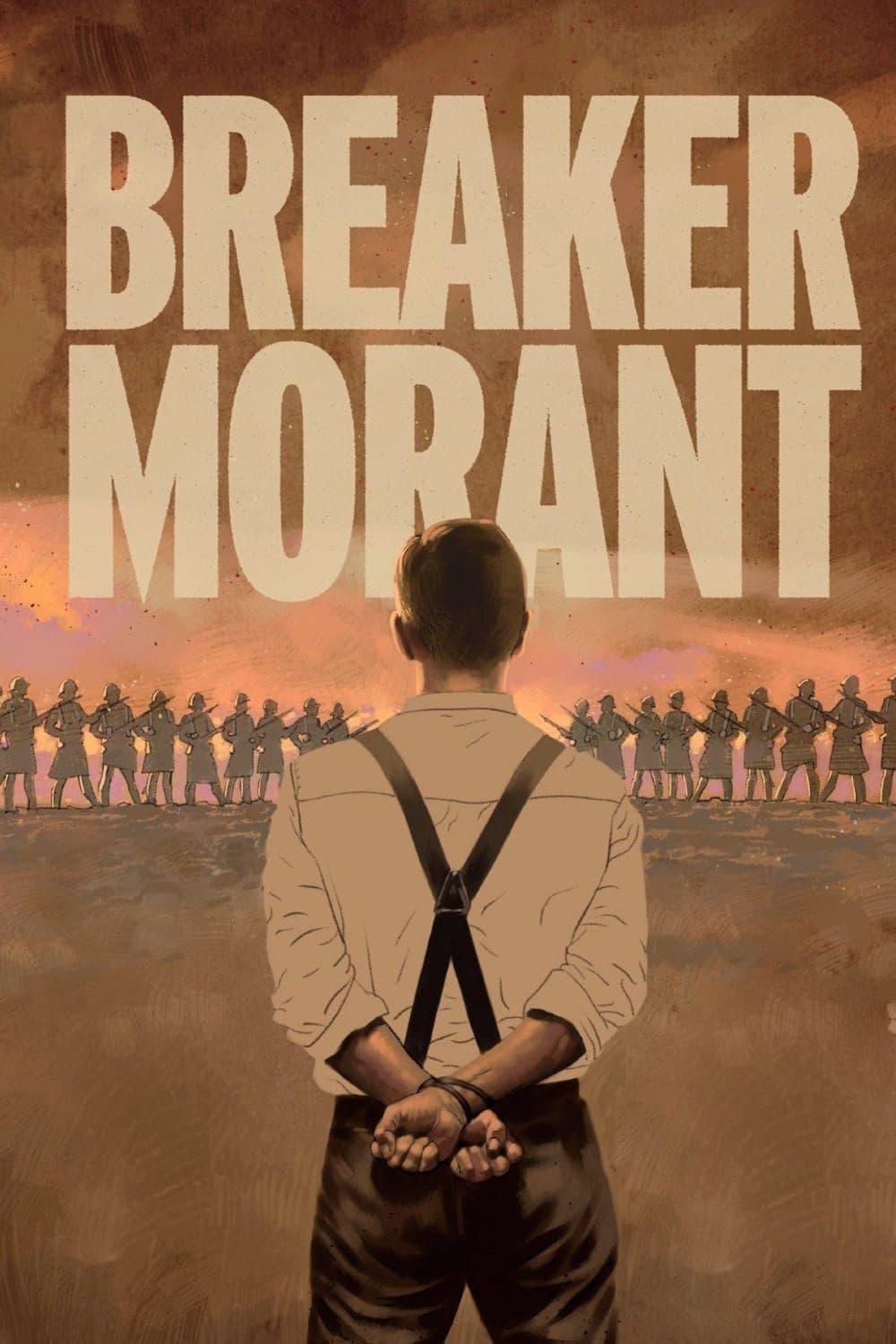
Plot Analysis Summary
A politically charged court-martial examines wartime killings, unwritten orders, and the human cost of military expediency.
Story Structure — 5 Plot Phases
A Trial with Political Stakes
Morant, Handcock, and Witton face a court-martial, with Thomas given little time to prepare their defense. Kitchener uses the proceedings to demonstrate strict enforcement of the rules of war while pursuing a guilty verdict.
Key Events
-
Three Officers Face Court-Martial — Morant, Handcock, and Witton face charges of murdering Boer prisoners and Hesse. Characters: Harry 'Breaker' Morant, Lt. Peter Handcock, Lt. George Witton, Major J.F. Thomas
Location: Court-martial proceedings, South Africa
-
Thomas Begins the Defense — Thomas has only one day to prepare the defense of the three accused officers. Characters: Major J.F. Thomas, Harry 'Breaker' Morant, Lt. Peter Handcock, Lt. George Witton
Location: Court-martial proceedings, South Africa
-
Kitchener's Political Purpose — Kitchener uses the trial to signal that soldiers who disobey the rules of war will be judged. Characters: Lord Kitchener, Major J.F. Thomas
Location: Court-martial proceedings, South Africa
-
Hunt Is Captured and Mutilated — Hunt's capture and mutilation become the emotional cause of Morant's retaliation. Characters: Cpt. Simon Hunt, Harry 'Breaker' Morant
Location: South African campaign
Revenge and Prisoner Killings
The trial recalls Hunt's capture and mutilation, which spur Morant's retaliation. Morant executes Visser and is also implicated in the killing of six other prisoners, invoking alleged orders.
Key Events
-
Morant Attacks a Boer Camp — Morant leads an attack after Hunt's death; a captured Boer is wearing Hunt's jacket. Characters: Harry 'Breaker' Morant, Boer Leader
Location: Boer camp, South Africa
-
Visser Is Executed — Morant orders Visser's execution, beginning the prisoner-killing charges. Characters: Harry 'Breaker' Morant, Visser
Location: South Africa
-
Six Prisoners Are Killed — Morant later justifies the killing of six prisoners by referring to orders from Whitehall. Characters: Harry 'Breaker' Morant, Lt. Peter Handcock, Lt. George Witton
Location: South Africa
-
Hesse Speaks with Prisoners — Morant sees Hesse speaking with prisoners and suspects him of espionage without proof. Characters: Reverend Hesse, Harry 'Breaker' Morant
Location: South Africa
Hesse and the Unwritten Orders
Morant suspects Hesse of espionage without proof, and Handcock follows and shoots him. In court, Thomas argues that unwritten orders were passed verbally from Kitchener through Hunt to Morant.
Key Events
-
Handcock Follows Hesse — Handcock takes a rifle and horse and follows Hesse. Characters: Lt. Peter Handcock, Reverend Hesse
Location: South Africa
-
Hesse Is Found Shot — Hesse is found shot the next morning after Handcock followed him. Characters: Lt. Peter Handcock, Reverend Hesse
Location: South Africa
-
Defense Challenges the Orders — Thomas argues that verbal, unwritten orders to shoot prisoners were passed through Hunt to Morant. Characters: Major J.F. Thomas, Harry 'Breaker' Morant, Lt. Peter Handcock, Lt. George Witton
Location: Court-martial proceedings, South Africa
-
Courtroom Bias Emerges — The proceedings reveal political pressure and a court inclined toward a guilty verdict. Characters: Major J.F. Thomas, Lord Kitchener, Harry 'Breaker' Morant, Lt. Peter Handcock, Lt. George Witton
Location: Court-martial proceedings, South Africa
-
Handcock Admits Hesse's Murder — Handcock tells Witton he followed and shot Hesse, while maintaining an alibi with two ladyfriends. Characters: Lt. Peter Handcock, Lt. George Witton
Location: Court-martial proceedings, South Africa
Verdict and Execution
The court acquits the defendants of Hesse's murder but convicts them on the prisoner-killing charges. Kitchener commutes Witton's sentence but is unavailable when pleas for Morant and Handcock are made; the two are executed.
Key Events
-
Handcock Admits Hesse's Murder — Handcock tells Witton he followed and shot Hesse, while maintaining an alibi with two ladyfriends. Characters: Lt. Peter Handcock, Lt. George Witton
Location: Court-martial proceedings, South Africa
-
Defendants Acquitted over Hesse — The court acquits the defendants of Hesse's murder but convicts them on the other charges. Characters: Harry 'Breaker' Morant, Lt. Peter Handcock, Lt. George Witton, Major J.F. Thomas
Location: Court-martial proceedings, South Africa
-
Witton's Sentence Is Commuted — Kitchener commutes Witton's death sentence to life imprisonment before leaving. Characters: Lord Kitchener, Lt. George Witton
Location: South Africa
-
Kitchener Is Absent — Kitchener is unavailable when pleas for a reprieve are sought. Characters: Lord Kitchener, Major J.F. Thomas
Location: Court-martial proceedings, South Africa
-
Morant and Handcock Executed — Morant and Handcock are shot while Witton is taken toward the prison transport. Characters: Harry 'Breaker' Morant, Lt. Peter Handcock, Lt. George Witton
Location: South Africa
-
Handcock's Coffin Is Too Small — Handcock's body is awkwardly forced into a coffin built too small for him. Characters: Lt. Peter Handcock
Location: South Africa
Aftermath and Suppressed Account
Witton serves three years before public outcry secures his release, and he writes an account of the affair. The book is suppressed during the World Wars, while Thomas returns to legal practice in Australia.
Key Events
-
Witton Is Released — Witton serves three years before public outcry leads to his release. Characters: Lt. George Witton
Location: Australia
-
Witton's Account Is Suppressed — Witton's account is suppressed during the World Wars; Thomas returns to his law practice. Characters: Lt. George Witton, Major J.F. Thomas
Location: Australia