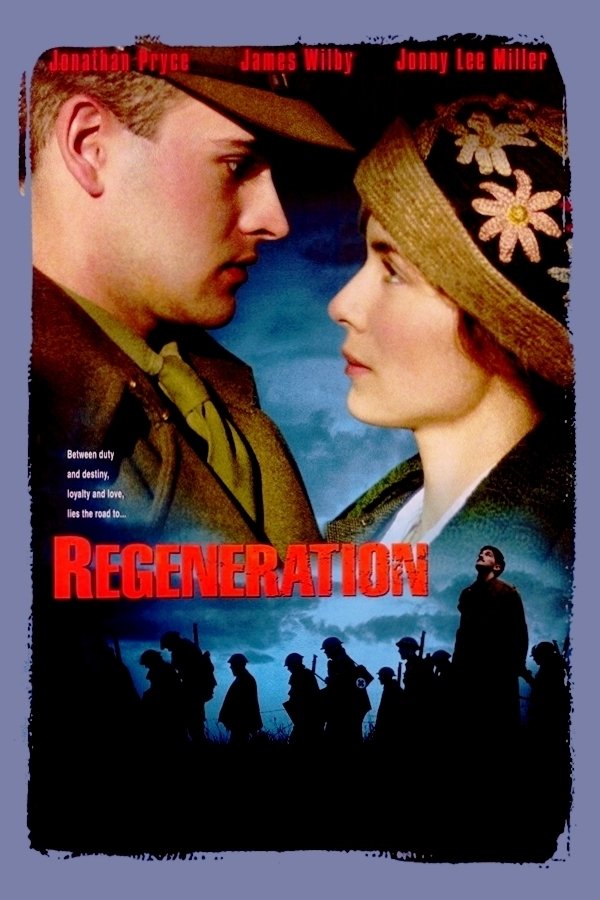
Regeneration (1997) character relationship network mapped with AI analysis. Explore the connections, alliances, and conflicts between characters.
Characters
2nd Lt. Siegfried Sassoon
(played by James Wilby) — protagonist
A decorated war hero and poet who publicly renounces the war via an open letter. Sent to a psychiatric hospital instead of facing court-martial, he ultimately returns to the front despite his unchange...
2nd Lt. Billy Prior
(played by Jonny Lee Miller) — supporting
A working-class officer suffering from psychogenic mutism due to traumatic war experiences. He regains his speech through hypnosis, pursues a relationship, and is assigned home duties due to uncertain...
2nd Lt. Wilfred Owen
(played by Stuart Bunce) — supporting
An aspiring poet whose wartime dreams foreshadow his death. He receives poetic guidance from Sassoon and dies near the war's end, his body recovered from a French waterway.
Sarah Lumb
(played by Tanya Allen) — supporting
A munitions factory worker who forms a romantic relationship with Billy Prior during his recovery, providing him with emotional grounding and reassurance.
Capt. Robert Graves
(played by Dougray Scott) — supporting
A fellow poet and friend of Sassoon who strategically intervenes to secure Sassoon's psychiatric care at Craiglockhart, sparing him from military justice.
Canonical Relationships
Family, romantic, and professional connections based on plot evidence.
2nd Lt. Billy Prior → Sarah Lumb
(Romantic Partner) — A romantic bond that provides Prior with emotional grounding and normalcy outside the war.
Story Dynamics
Alliances, conflicts, and narrative interactions that evolve throughout the story.
2nd Lt. Siegfried Sassoon → 2nd Lt. Wilfred Owen
(Social Friend) — A platonic friendship built on mutual respect and shared literary ambitions.
2nd Lt. Siegfried Sassoon → Capt. Robert Graves
(Alliance Partner) — Graves acts as a protective ally, leveraging his influence to save Sassoon from military punishment.
Story Analysis
The film examines wartime trauma, class, treatment, artistic friendship, and the moral costs of returning to battle.
Plot Progression
A Letter Against the War
— A decorated soldier publicly condemns the continuation of the war. Military authorities send him to a psychiatric hospital instead of court-martialling him.
Voices Behind Silence
— The hospital's therapeutic environment brings difficult patients into focus. One patient's recovered speech and hypnotic treatment expose a devastating battlefield memory.
Poetry and Psychological Cost
— A friendship formed through poetry offers creative solidarity inside the hospital. Meanwhile, the psychiatrist absorbs his patients' trauma and begins to deteriorate.
Return to the Front
— The psychiatrist rejects brutal electric treatment and returns to his gentler methods. A soldier insists on returning to France despite continuing opposition to the war.
The Poem After Death
— The final wartime images connect injury, death, poetry, and memory. A poem and a recurring canal tunnel image transform private trauma into mourning.