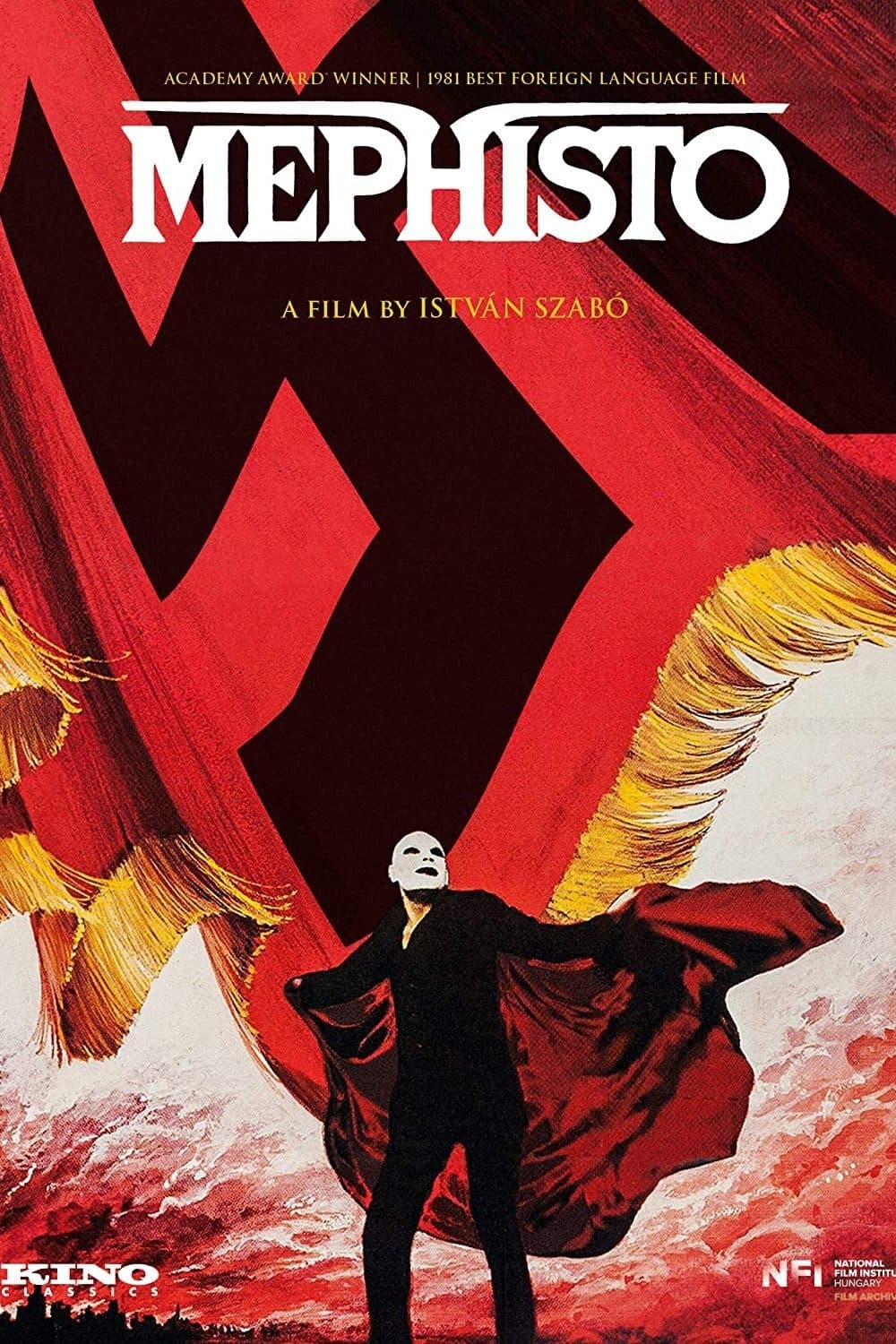
Story Structure — 4 Plot Phases
Provincial Beginnings and Radical Experiments
Hendrik Höfgen struggles in provincial theaters and films, founding an avant-garde Bolshevik theater to gain work. His early career is marked by artistic hunger and initial social success.
Key Events
-
Provincial Theater Grind — Hendrik struggles in regional stages to gain recognition. Characters: Hendrik Höfgen
Location: Provincial Theaters
-
Avant-Garde Experiment — Founding a radical theater with a friend to generate work. Characters: Hendrik Höfgen
Location: Bolshevik Theater
-
Wife Watches Mephisto — His wife watches him play the devil's agent before the Nazi rise. Characters: Hendrik Höfgen
Location: Stage
-
Early Film Work — Dances and sings in minor film roles to gain notice. Characters: Hendrik Höfgen
Location: Film Set
-
Communist Past — Engages in politically risky Bolshevik theater productions. Characters: Hendrik Höfgen
Location: Avant-Garde Stage
Political Upheaval and Exile
The Nazi party rises to power, causing Hendrik's wife and friends to exile or protest. He faces a critical choice between moral alignment and career survival.
Key Events
-
Wife Watches Mephisto — His wife watches him play the devil's agent before the Nazi rise. Characters: Hendrik Höfgen
Location: Stage
-
Nazi Rise to Power — The political landscape shifts dramatically as Nazis gain control. Characters: Hendrik Höfgen
Location: Germany
-
Friends and Wife Exile — His circle leaves or protests the new regime while he stays. Characters: Hendrik Höfgen
Location: Germany
-
Social Success — Initially enjoys more success in love and social circles than acting. Characters: Hendrik Höfgen
Location: Society Events
Stardom and Moral Compromise
Hendrik returns to Germany, accepts Nazi patronage, and achieves theatrical fame. He rationalizes his ethical compromises by leveraging political connections to protect friends.
Key Events
-
Return to Germany — Lured by forgiveness and the chance to act in his native language. Characters: Hendrik Höfgen
Location: Berlin
-
Nazi Star Offer — The regime offers him stardom, which he accepts without hesitation. Characters: Hendrik Höfgen
Location: Theater Office
-
Artistic Peak — Reprises Mephisto and receives accolades for his performance. Characters: Hendrik Höfgen
Location: National Stage
Faustian Realization and Tragedy
As he navigates cultural restrictions and political brutality, Hendrik realizes he has become Faustus rather than Mephisto. The bitter irony of his soul-selling culminates in tragic clarity.
Key Events
-
Artistic Peak — Reprises Mephisto and receives accolades for his performance. Characters: Hendrik Höfgen
Location: National Stage
-
Moral Compromise — Overlooks regime brutality while managing the national theater. Characters: Hendrik Höfgen
Location: Nazi Office
-
Using Political Leverage — Uses connections with officials to protect targeted friends. Characters: Hendrik Höfgen
Location: Regime Headquarters
-
Cultural Restrictions — Navigates and works around strict Nazi cultural controls. Characters: Hendrik Höfgen
Location: Theater Backstage
-
Faustian Realization — Realizes he embodies Faustus, not the devil he portrays. Characters: Hendrik Höfgen
Location: Stage Mirror
-
Soul Selling Climax — Achieves his dream at the ultimate moral and spiritual cost. Characters: Hendrik Höfgen
Location: Center Stage
-
Bitter Irony — The Nazi leader is revealed as the true Mephisto figure. Characters: Hendrik Höfgen
Location: Stage
-
Nazi Leader Presence — The powerful leader modeled on Göring holds major influence. Characters: Hendrik Höfgen
Location: Regime Office
-
Integrity Trade — Trades artistic integrity for stardom and center stage. Characters: Hendrik Höfgen
Location: Theater Hall
-
Tragic Resolution — Too late realization of his Faustian bargain concludes the story. Characters: Hendrik Höfgen
Location: Stage