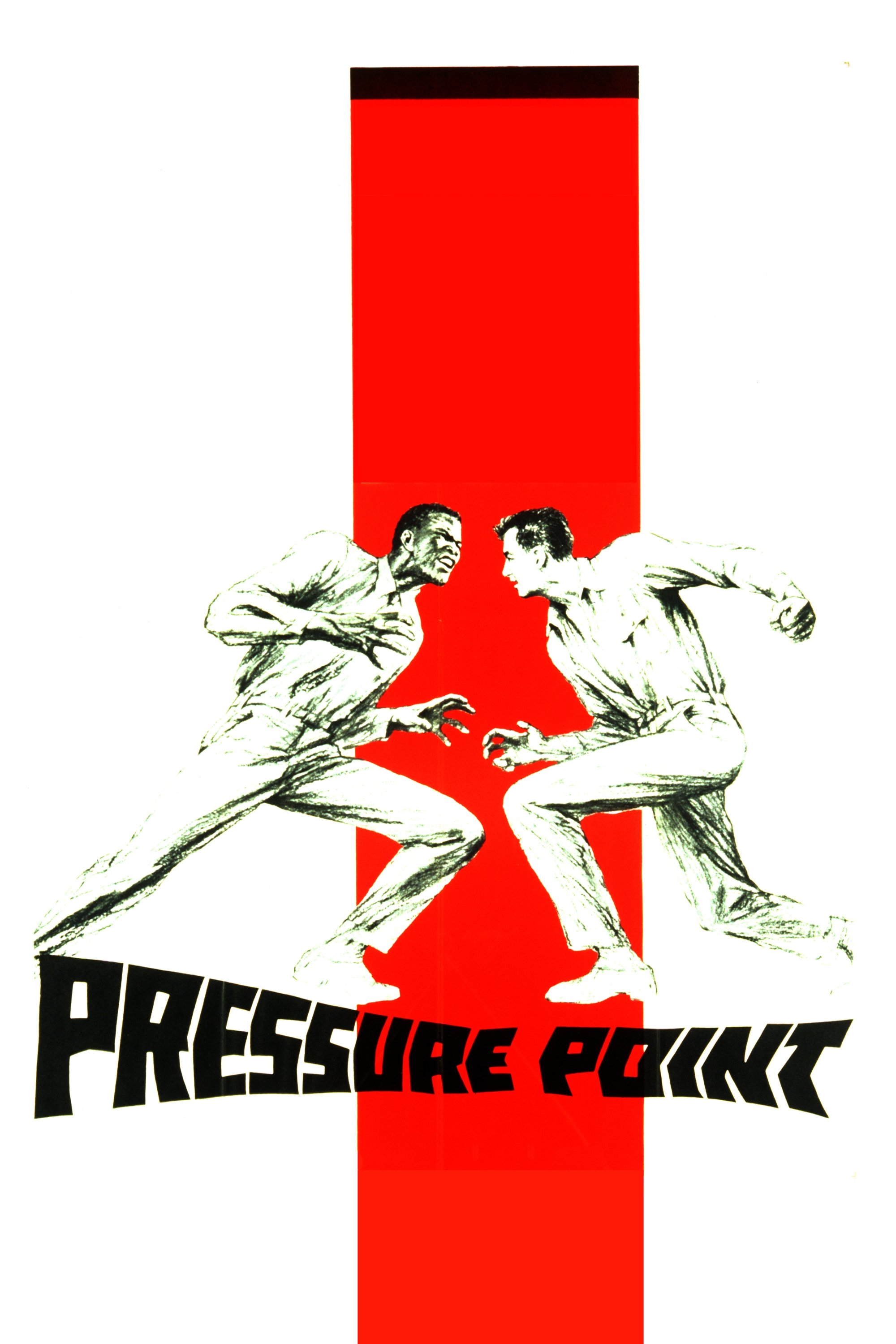
Pressure Point (1962) character relationship network mapped with AI analysis. Explore the connections, alliances, and conflicts between characters.
Characters
Doctor
(played by Sidney Poitier) — protagonist
Senior psychiatrist in 1962 and former penitentiary doctor in 1942. He guides his junior colleague by recounting a complex case involving a deeply racist patient, demonstrating clinical patience and p...
Young Psychiatrist
(played by Peter Falk) — supporting
A frustrated junior doctor in 1962 assigned to a racist Black patient. Initially near burnout and demanding transfer, he is ultimately inspired by the senior doctor's story to commit to his demanding...
Mother
(played by Anne Barton) — supporting
Father
(played by James Anderson) — minor
Patient
(played by Jimmie Horan) — minor
Canonical Relationships
Family, romantic, and professional connections based on plot evidence.
Father → Mother
(Family Parents) — They are identified as the two parental figures in the Patient's childhood.
The plot describes the Patient's childhood through accounts of his Father and Mother as part of the same family history.
Patient → Mother
(Family Son And Mother) — The Mother's passivity contributes to the Patient's troubled childhood environment.
The Patient describes his childhood and specifically refers to the weakness of his Mother.
Patient → Father
(Family Son And Father) — The Father's abusive influence is presented as a foundational source of the Patient's trauma.
The Patient discusses traumatic childhood experiences caused by his Father, and these experiences are shown in flashbacks.
Doctor → Patient
(Professional Psychiatrist And Patient) — The Doctor treats the Patient and investigates the psychological roots of his extremism.
In 1942, the newly arrived prisoner is assigned to the Doctor at a federal penitentiary.
Young Psychiatrist → Patient
(Professional Psychiatrist And Patient) — Their treatment relationship is strained by hostility and professional exhaustion.
The Young Psychiatrist has treated his Patient for seven and a half months and requests that the Patient be assigned to another psychiatrist.
Doctor → Young Psychiatrist
(Professional Senior Colleague) — The Doctor serves as the Young Psychiatrist's senior professional guide.
In 1962, the Doctor leads the psychiatric staff and advises the Young Psychiatrist after hearing about his difficulty with a patient.
Story Analysis
A senior psychiatrist's painful case history persuades a frustrated colleague to continue treating a deeply hostile patient.
Plot Progression
A Crisis in Treatment
— In 1962, the Young Psychiatrist struggles to treat a hostile Patient and asks for a transfer. The Doctor answers with a story from his earlier career.
The Prisoner's Hatred
— The 1942 flashback introduces a prisoner assigned to the Doctor. His racism, Nazi sympathies, taunts, sleep disorder, and blackouts establish the clinical and moral challenge.
Roots of the Wound
— The Doctor encourages the Patient to examine his childhood trauma. Flashbacks connect his psychological breakdown to an abusive Father and a weak Mother.
Rejection and Extremism
— The Patient recalls poverty and a promising relationship with a kind young woman. Her Father's rejection and the family's Jewish identity contribute to the Patient's turn toward Nazism.
The Lesson of Release
— The staff parole the Patient despite the Doctor's objections and accuse the Doctor of bias. The later revelation of the Patient's execution leads the Young Psychiatrist to renew his commitment.