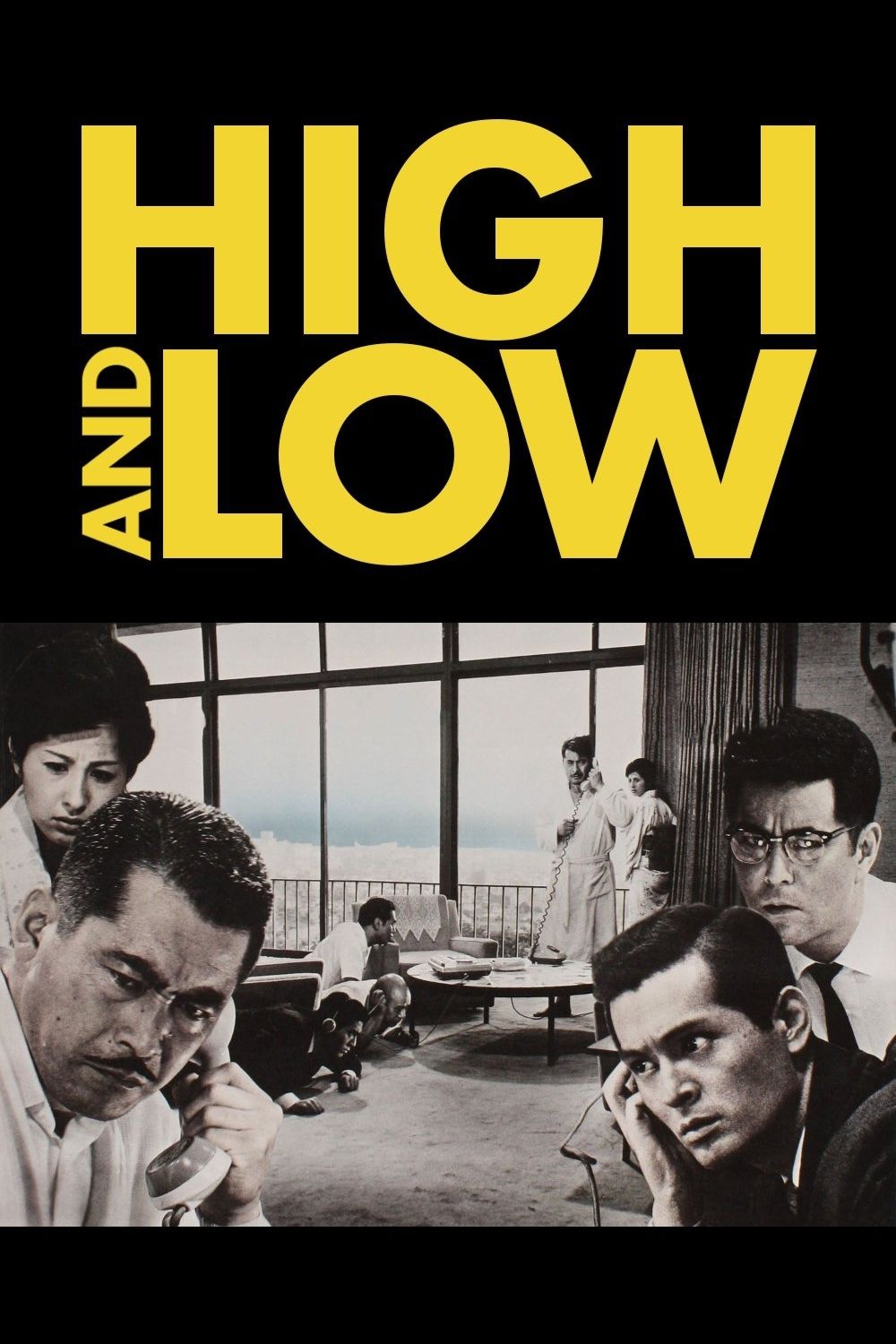
High and Low (1963) character relationship network mapped with AI analysis. Explore the connections, alliances, and conflicts between characters.
Characters
Kingo Gondo
(played by Toshirō Mifune) — protagonist
Wealthy National Shoes executive who mortgages his assets for a corporate buyout. After a ransom call for his son reveals a mistaken abduction of his chauffeur's son, he initially refuses payment to p...
Baba - National Shoes Executive
(played by Yūnosuke Itō) — supporting
Ginjirô Takeuchi - Medical Intern
(played by Tsutomu Yamazaki) — minor
Chief of First Investigating Section
(played by Susumu Fujita) — minor
Police official in charge of the first investigating section, involved in the kidnapping case.
Aoki - the Chauffeur
(played by Yutaka Sada) — minor
First Creditor
(played by Kyū Sazanka) — minor
Creditor demanding repayment of Gondo's loan after his buyout fails.
First Reporter
(played by Minoru Chiaki) — minor
Reporter covering the kidnapping case and the police-planted false story.
Chief of Investigation Section
(played by Takashi Shimura) — supporting
Head of the police investigation section who oversees the kidnapping case and coordinates the effort to identify the kidnapper.
Ishimaru, National Shoes Design Department Director
(played by Nobuo Nakamura) — supporting
Design department director at National Shoes involved in the corporate power struggle over the company's direction.
Kamiya, National Shoes Publicity Director
(played by Jun Tazaki) — supporting
Publicity director at National Shoes who helps manage press coverage during the kidnapping crisis and the police's false-report strategy.
First Executor at Tax Office
(played by Masao Oda) — cameo
Tax office official involved in seizing Gondo's property after his loan defaults.
Messenger Passing Note to Intern
(played by Senkichi Ōmura) — cameo
Messenger who delivers the forged note from the supposed accomplices to the kidnapper.
Female Drug Addict
(played by Kin Sugai) — cameo
Drug addict killed by the kidnapper when he tests the strength of the uncut heroin.
Murder Victim
(played by Keiko Tomita) — cameo
One of the kidnapper's accomplices found dead from a heroin overdose.
Canonical Relationships
Family, romantic, and professional connections based on plot evidence.
Chief of First Investigating Section → First Reporter
(Professional Investigative Source) — The investigating section uses the reporter's communication channel for the operation.
The police investigation depends on public reporting and the planted story designed to misdirect the kidnapper.
Kingo Gondo → Baba - National Shoes Executive
(Power Executive Rivalry) — Gondo's leadership is challenged by the company's divided executive bloc.
Gondo struggles with other executives over control of National Shoes and its production strategy.
First Executor at Tax Office → Kingo Gondo
(Power Property Seizure) — The executor represents the institutional force stripping Gondo of his assets.
The tax office seizes Gondo's property after the buyout loan defaults and the collateral becomes due.
First Creditor → First Executor at Tax Office
(Professional Recovery Interest) — Both pursue the financial consequences of Gondo's failed buyout.
After Gondo's loan defaults, creditors demand repayment while a tax-office executor participates in seizing his property.
Kingo Gondo → First Creditor
(Professional Debtor) — Gondo's financial obligations place him in direct conflict with the creditor.
Gondo mortgages his property for the buyout, and his creditors later demand the collateral after the plan fails.
Kamiya, National Shoes Publicity Director → First Reporter
(Professional Press Contact) — Kamiya's publicity role connects National Shoes to the reporting campaign.
The publicity effort and police strategy encourage the press to report the kidnapping widely and publish a false story.
Kingo Gondo → Kamiya, National Shoes Publicity Director
(Professional Corporate Associate) — Kamiya operates within the company publicity structure surrounding Gondo's crisis.
Kamiya is the publicity director involved in managing press coverage during the kidnapping crisis affecting Gondo and National Shoes.
Story Dynamics
Alliances, conflicts, and narrative interactions that evolve throughout the story.
Kingo Gondo → First Reporter
(Narrative Public Symbol) — The reporter's coverage transforms public perception of Gondo.
After the press widely reports the kidnapping, Gondo is viewed as a hero while National Shoes is vilified.
Chief of Investigation Section → Messenger Passing Note to Intern
(Alliance Operational Contact) — The messenger functions as part of the police deception.
The police forge a note from the dead accomplices demanding drugs and arrange for it to reach Takeuchi.
Messenger Passing Note to Intern → Ginjirô Takeuchi - Medical Intern
(Narrative Message Carrier) — The messenger unknowingly helps the police draw Takeuchi back to the hideout.
A messenger delivers the forged note supposedly written by Takeuchi's accomplices and demanding more drugs.
Chief of Investigation Section → Female Drug Addict
(Narrative Evidence Seeker) — Her death provides investigative evidence linking Takeuchi to lethal drugs.
The police use the drug overdose connected to Takeuchi's test of the heroin as evidence in the final trap.
Ginjirô Takeuchi - Medical Intern → Female Drug Addict
(Conflict Murderer) — The addict becomes a disposable test subject in Takeuchi's attempt to protect himself.
Takeuchi tests the strength of the uncut heroin on another drug addict, who overdoses and dies.
Ginjirô Takeuchi - Medical Intern → Murder Victim
(Conflict Accomplice Killer) — Takeuchi causes the accomplice's death through a lethal drug supply.
Police find Takeuchi's accomplices dead from heroin overdoses and conclude that he supplied them with uncut drugs.
First Reporter → Ginjirô Takeuchi - Medical Intern
(Conflict Unwitting Adversary) — The reporter's coverage becomes an instrument in the trap against Takeuchi.
The false newspaper report about the accomplices being alive helps lure Takeuchi into returning to the hideout.
Chief of Investigation Section → First Reporter
(Alliance Information Coordinator) — The police enlist the reporter as part of their information strategy.
Police encourage reporters to publicize the case and use a false newspaper report to misdirect the kidnapper.
Story Analysis
A wealthy executive sacrifices his corporate ambitions to save a mistakenly abducted child, then confronts the social envy behind the crime.
Plot Progression
A Buyout Under Threat
— Gondo prepares to seize control of National Shoes through a heavily mortgaged buyout. A ransom call suddenly threatens both his finances and his moral judgment.
The Cost of Compassion
— The kidnapping is revealed to be a mistaken abduction involving Aoki's son. Gondo initially protects his corporate future, but Aoki's pleas force him to reconsider.
The Ransom Exchange
— Gondo accepts the ransom demand and works with police to prepare deceptive briefcases. The money is thrown from a moving train, and the child is recovered.
The Investigation Closes In
— Police connect the hideout deaths, drug evidence, and pink smoke to Takeuchi. Meanwhile, Gondo loses his company and property despite becoming a public hero.
The Final Trap
— A false newspaper story and forged note lure Takeuchi back to the hideout. He is arrested after another lethal drug test, but Gondo's financial ruin remains irreversible.
A Divided Meeting
— Gondo finds a freer but poorer life at a rival company. In prison, Takeuchi explains his envy before being taken away behind a dividing screen.
Directed by Akira Kurosawa
High and Low (1963) · 8.4/10 · crime, drama, thriller, mystery