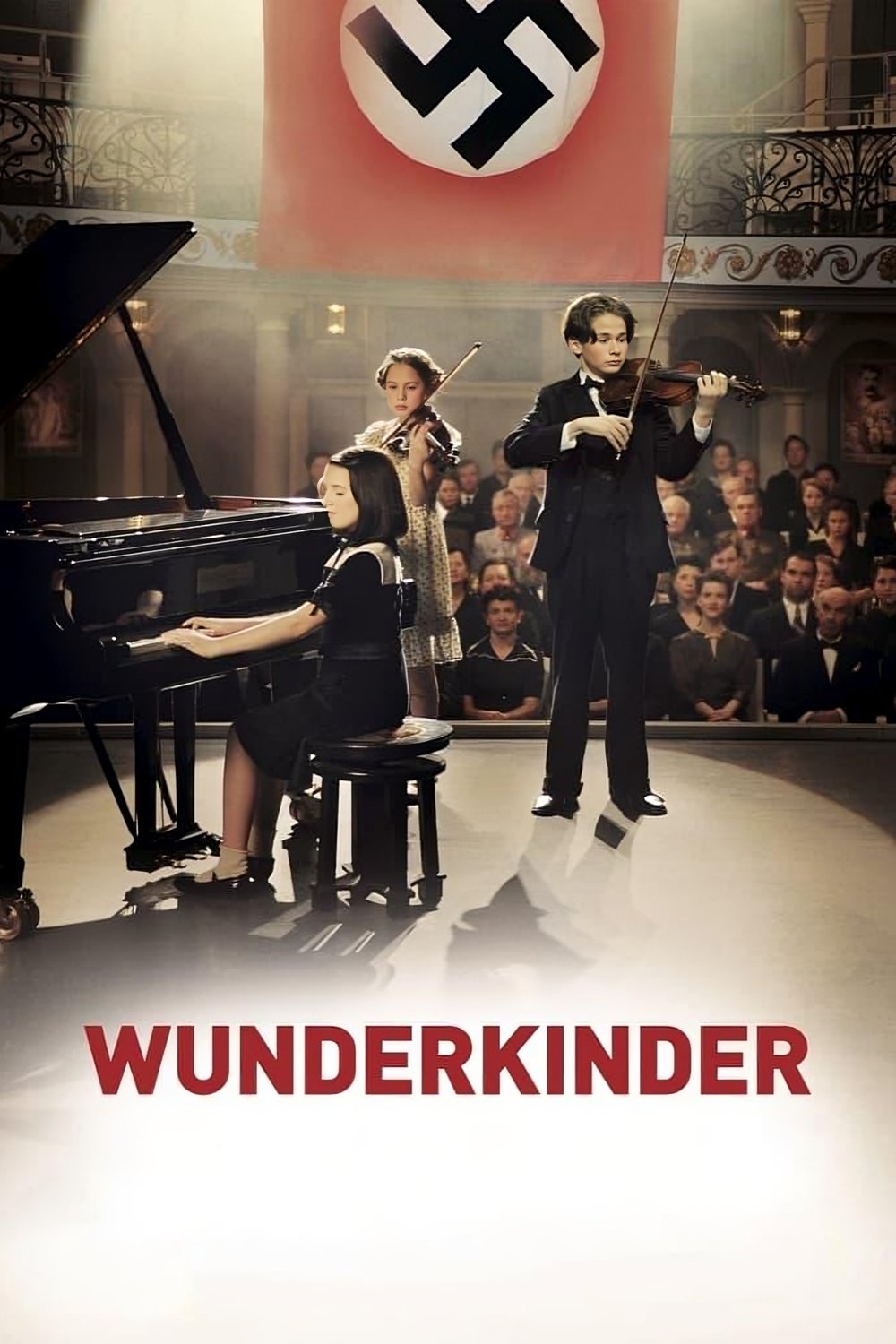
Wunderkinder (2011) character relationship network mapped with AI analysis. Explore the connections, alliances, and conflicts between characters.
Hanna Reich is a German girl whose childhood friendship with Abrascha Kaplan and Larissa Brodsky develops through shared music. During the occupation, she becomes trapped among Jewish civilians and ca...
Abrascha Kaplan is a brilliant Jewish violinist and musical prodigy celebrated by Soviet officials alongside Larissa Brodsky. He initially distrusts Hanna Reich but later accepts her friendship and co...
Larissa Brodsky is a Jewish musical prodigy and Abrascha Kaplan’s close performing partner. She joins Abrascha and Hanna Reich in composing and playing, forming a friendship that they vow to preserve...
Max Reich is Hanna Reich’s father and supports the musical lessons that bring Hanna together with Abrascha Kaplan and Larissa Brodsky. His support contrasts with Helga Reich’s fears about the danger o...
Helga Reich is Hanna Reich’s mother and warns her daughter about the consequences of associating with Jewish children. She argues that music should be pursued for its own sake rather than to impress S...
Irina Salmonova is taken away with Jewish civilians despite Larissa Brodsky’s pleas. Her removal and the violence surrounding the deportations become a devastating turning point for the children. Befo...
SS-Sturmbannführer Becker is a German officer who recognizes Hanna Reich when she is trapped among Jewish civilians. He takes responsibility for Hanna, Abrascha Kaplan, and Larissa Brodsky, but they a...
SS-Standartenführer Schwartow is a German officer whose assurances of safety to Jewish families prove meaningless during the occupation. Families are separated, and elderly Jewish people are slaughter...
Oberst Tapilin is an officer at the railway station during the German invasion. He helps some civilians board a crowded train, although many people are left behind. His brief intervention reflects the...
Family, romantic, and professional connections based on plot evidence.
Becker recognizes Hanna among Jewish civilians and takes responsibility for her, Abrascha, and Larissa.
Schwartow's deportation operation separates Jewish families, including Larissa's community, while Larissa pleads for Irina.
Max Reich is identified as Hanna's father and is described as supporting the children's music lessons.
Helga Reich is identified as Hanna's mother and warns her against associating with the Jewish children.
The present-day opening identifies Nina as Hanna Reich im Alter's granddaughter and shows Nina welcoming her grandmother to a postponed press meeting.
Alliances, conflicts, and narrative interactions that evolve throughout the story.
At the railway station, Oberst Tapilin helps some civilians board a crowded train while Hanna and others face the danger of being left behind.
Becker takes responsibility for Larissa and later orders her to perform for German officers while the children remain under forced labor conditions.
Becker takes responsibility for Abrascha and later orders him to perform for German officers while he is being forced into labor.
Schwartow gives assurances of safety while Jewish families are gathered, but Irina is taken away and elderly Jews are slaughtered.
Larissa pleads when Irina is taken away, and the children later remember Irina's call to fight for those they love.
Abrascha and Larissa are celebrated together as musical prodigies and perform and compose with Hanna.
Hanna gradually joins Abrascha and Larissa in composing and playing, and later shelters together with both children.
Hanna hears Abrascha perform, gradually joins him and Larissa in composing and playing, and later searches for him after receiving a message recalling...
A remembered childhood friendship survives musical persecution, war, deportation, and coercion.
Directed by Marcus O. Rosenmüller
Wunderkinder (2011) · 6.6/10 · drama, music, war
Related entry on Wikidata (Q2595018), public domain (CC0).
Plot breakdown and analysis on this page are AI-generated from the title's synopsis and metadata.