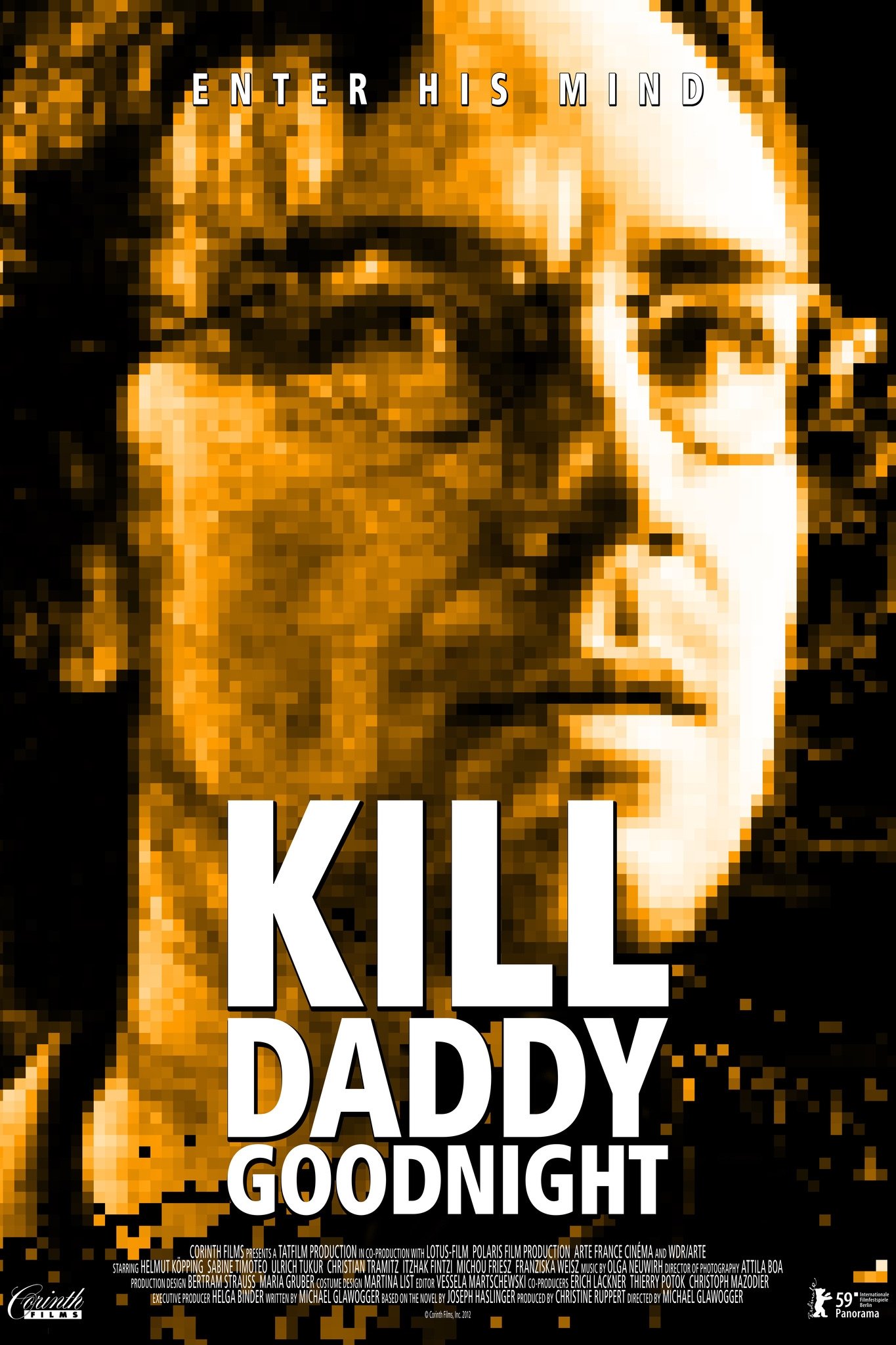
Ratz (played by Helmut Köpping) is a protagonist in Kill Daddy Good Night.
A figure from the National Socialist era, likely a former colleague or accomplice of Lucas's father. Appearing primarily in flashbacks, he illuminates the wartime crimes and the mechanisms of historical cover-up. Jonas Shtrom (played by Ulrich Tukur) is a protagonist in Kill Daddy Good Night.
A Jewish friend and colleague of Lucas, serving as a historical and moral counterweight. He embodies the unresolved Holocaust legacy and pushes Lucas to acknowledge his heritage and guilt. Mimi (played by Sabine Timoteo) appears in Kill Daddy Good Night.
A contemporary romantic interest or partner. She serves as a narrative contrast to Lucas's internal turmoil, highlighting his emotional isolation and the strain his past imposes on personal relationships. Lucas (played by Itzhak Finzi) appears in Kill Daddy Good Night.
The younger version of the protagonist, featured in flashbacks. His early experiences illustrate the formative family dynamics and the initial seeds of the Oedipal conflict and historical ignorance. Lucas, 40 (played by Samuel Finzi) appears in Kill Daddy Good Night.
The protagonist, a Jewish-Austrian art historian living in Israel who returns to Austria to investigate his father's Nazi past. He navigates an Oedipal conflict while confronting the family's historical silence and personal identity. Schwester (played by Franziska Weisz) appears in Kill Daddy Good Night.
Lucas's sister, who represents an alternative approach to processing the family's Nazi legacy. Her character explores differing generational and psychological responses to inherited trauma. Großvater (played by Otto Tausig) appears in Kill Daddy Good Night.
The grandfather, representing the older generation's entanglement with the National Socialist era. His presence in flashbacks and present-day scenes bridges the historical crimes and the family's reckoning. Kramer (played by Christian Tramitz) appears in Kill Daddy Good Night.
A Viennese art historian or museum director. He represents the institutional framework where looted art, restitution claims, and academic complicity intersect with the protagonist's personal investigation.
Kill Daddy Good Night (2009) character relationship network mapped with AI analysis. Explore the connections, alliances, and conflicts between characters.
Characters
Ratz
(played by Helmut Köpping) — protagonist
A figure from the National Socialist era, likely a former colleague or accomplice of Lucas's father. Appearing primarily in flashbacks, he illuminates the wartime crimes and the mechanisms of historic...
Jonas Shtrom
(played by Ulrich Tukur) — protagonist
A Jewish friend and colleague of Lucas, serving as a historical and moral counterweight. He embodies the unresolved Holocaust legacy and pushes Lucas to acknowledge his heritage and guilt.
Mimi
(played by Sabine Timoteo) — supporting
A contemporary romantic interest or partner. She serves as a narrative contrast to Lucas's internal turmoil, highlighting his emotional isolation and the strain his past imposes on personal relationsh...
Lucas
(played by Itzhak Finzi) — supporting
The younger version of the protagonist, featured in flashbacks. His early experiences illustrate the formative family dynamics and the initial seeds of the Oedipal conflict and historical ignorance.
Lucas, 40
(played by Samuel Finzi) — supporting
The protagonist, a Jewish-Austrian art historian living in Israel who returns to Austria to investigate his father's Nazi past. He navigates an Oedipal conflict while confronting the family's historic...
Schwester
(played by Franziska Weisz) — supporting
Lucas's sister, who represents an alternative approach to processing the family's Nazi legacy. Her character explores differing generational and psychological responses to inherited trauma.
Großvater
(played by Otto Tausig) — supporting
The grandfather, representing the older generation's entanglement with the National Socialist era. His presence in flashbacks and present-day scenes bridges the historical crimes and the family's reck...
Kramer
(played by Christian Tramitz) — supporting
A Viennese art historian or museum director. He represents the institutional framework where looted art, restitution claims, and academic complicity intersect with the protagonist's personal investiga...
Mutter
(played by Michou Friesz) — supporting
Lucas's mother, who embodies the post-war Austrian tendency toward silence and denial. Her interactions reveal the psychological toll of the father's crimes and the Oedipal tension within the family.
Canonical Relationships
Family, romantic, and professional connections based on plot evidence.
Mutter → Großvater
(Family Spouse)
Lucas, 40 → Lucas
(Temporal Same Person)
Kramer → Ratz
(Professional Colleague)
Mimi → Ratz
(Romantic Partner)
Ratz → Schwester
(Family Sister)
Ratz → Lucas
(Family Father)
Ratz → Mutter
(Family Mother)
Ratz → Großvater
(Family Grandfather)
Story Dynamics
Alliances, conflicts, and narrative interactions that evolve throughout the story.
Jonas Shtrom → Großvater
(Conflict Perpetrator)
Ratz → Jonas Shtrom
(Conflict Arch Enemy)
Story Analysis
The film combines an oedipal family conflict with historical reckoning over Nazi crimes through interwoven and nonlinear storytelling.