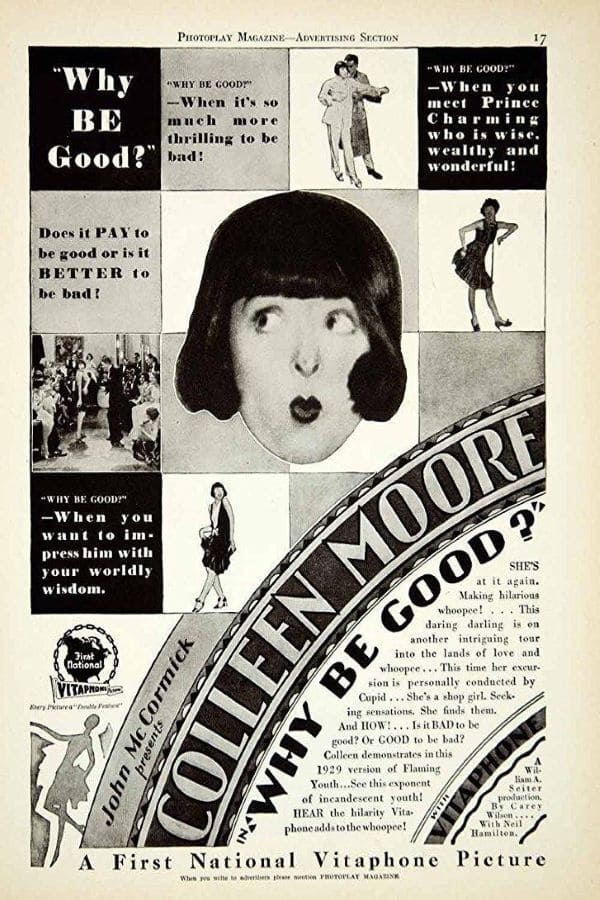
Why Be Good? (1929) character relationship network mapped with AI analysis. Explore the connections, alliances, and conflicts between characters.
The film's protagonist, a young woman who wins a dance contest and navigates societal expectations regarding female virtue through her courtship with Winthrop Peabody Jr.
Pert Kelly's mother. No specific actions or dialogue are detailed in the provided plot summary.
Pert Kelly's father, who voices traditional concerns about the virtues of contemporary men.
The department store heir who seeks a romantic partner and devises a specific test to verify a woman's virtue before marriage.
The strict department store owner and father who initially forbids his son from associating with female workers and terminates Pert's employment.
Family, romantic, and professional connections based on plot evidence.
Junior notices Pert after her dance-contest victory, drives her home, schedules dates with her, and marries her that night.
The plot states that Winthrop Peabody Sr. lectures his son before Junior begins work at the department store.
The character profile identifies Pa Kelly as Pert Kelly's father, and the plot states that he admonishes her about modern men's lack of virtue.
The character profile identifies Ma Kelly as Pert Kelly's mother.
After Pert is tardy to work, she reports to the personnel office, where Senior sees what happened and fires her.
Pert Kelly's courtship with Winthrop Peabody Jr. challenges social judgments about female virtue and ultimately changes Senior's judgment.
Directed by William A. Seiter
Why Be Good? (1929) · 6.8/10 · comedy, drama, romance
Plot analysis generated from content on Wikipedia, licensed under CC BY-SA 4.0.
Related entry on Wikidata (Q7997723), public domain (CC0).