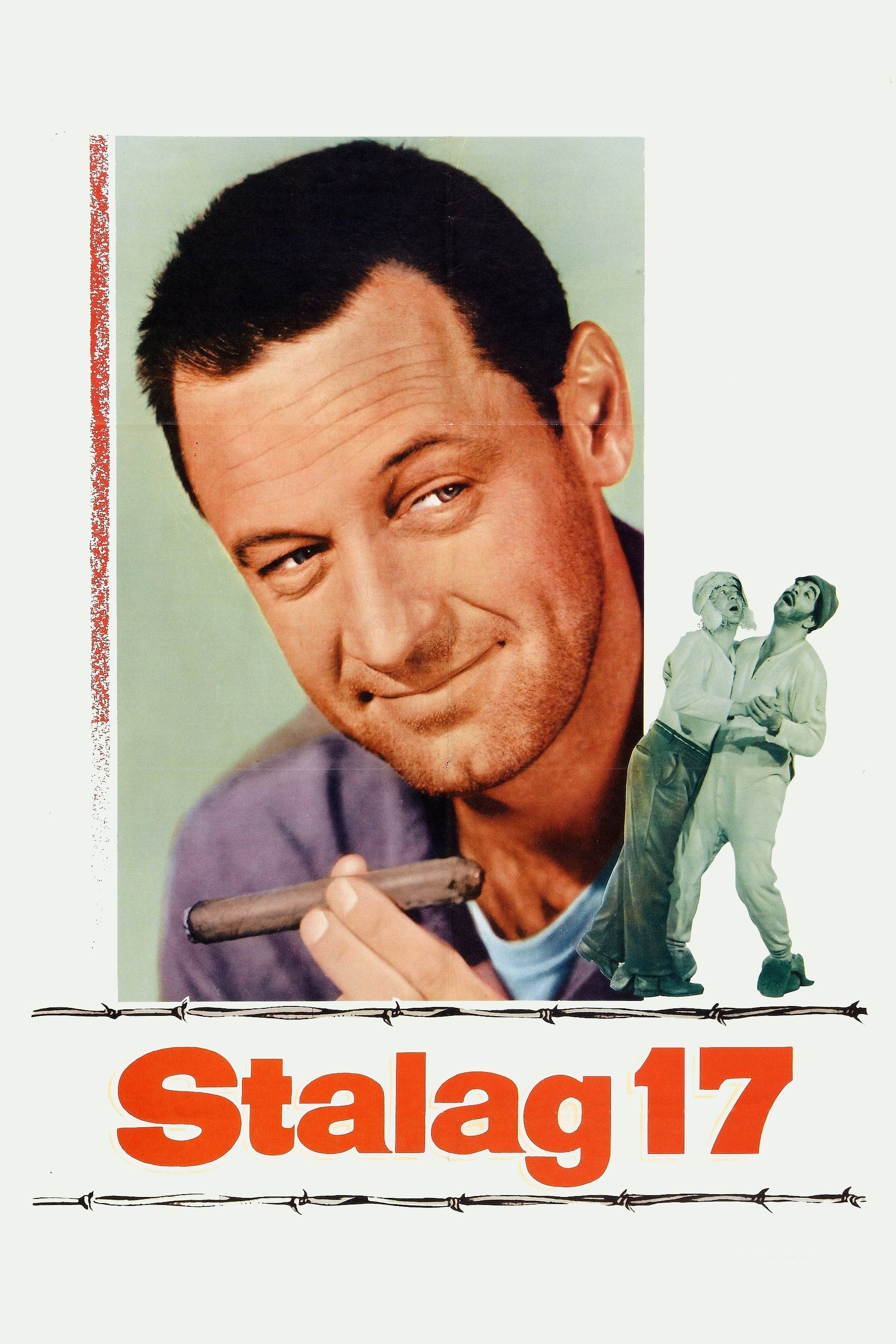
Stalag 17 (1953) character relationship network mapped with AI analysis. Explore the connections, alliances, and conflicts between characters.
An enterprising, cynical prisoner who openly barters with guards and creates diversions such as gambling, alcohol production, and spying. Initially suspected of informing, he is beaten by the prisoner...
A barracks clown whose antics help the prisoners endure the monotony and stress of captivity.
A recently captured lieutenant assigned temporarily to the barracks. He sabotaged a munitions train with a time bomb and becomes the target of an attempted transfer to Berlin, prompting the prisoners...
The commanding warden of the prisoner-of-war camp. He orders arrests, threatens to destroy the compound, and tries to send the detained lieutenant to Berlin as a suspected saboteur.
A prisoner who attempts to escape from the camp with another airman but is shot and killed during the attempt.
A barracks clown whose antics contribute to the prisoners' efforts to maintain morale in captivity.
The appointed chief of the barracks. He leads the initial escape arrangement, organizes the prisoners' effort to rescue the detained lieutenant, and helps coordinate the resulting diversion.
The narrator and Sefton's naive, loyal aide. He participates in life in the barracks and whistles a marching song after the prisoners return to their bunks.
He accompanies the newly captured lieutenant and explains that the lieutenant sabotaged a munitions train. Later, he reveals the method used to construct the lieutenant's time bomb.
The barracks security officer who secretly works as the German informant. He exchanges coded messages through a chess piece and a light signal, provides evidence against the detained lieutenant, and i...
A relatively jovial guard who secretly retrieves hidden messages from a chess piece, maintains a coded light signal, confiscates the prisoners' radio, and communicates with the informant.
A prisoner whose planned escape from the camp fails; he is shot and killed during the attempt.
Family, romantic, and professional connections based on plot evidence.
Schulz serves as a guard in the compound from which Johnson attempts to escape.
Schulz is a German guard in the camp holding Manfredi and the other American airmen prisoner.
Schulz serves among the German guards while von Scherbach oversees the camp and directs actions concerning Dunbar.
Bagradian accompanies Dunbar to Barracks 4 and reveals that Dunbar sabotaged a munitions train.
Alliances, conflicts, and narrative interactions that evolve throughout the story.
Price gets Bagradian to reveal the recipe for Dunbar's time bomb.
Hoffy leads Barracks 4 when the prisoners arrange Johnson's escape with Manfredi.
The men of Barracks 4, led by Hoffy, arrange Manfredi's attempted escape.
Hoffy gathers the men to rescue Dunbar and helps hide him in the latrine's water tower.
Price's spying threatens the Barracks 4 prisoners, including Animal, during the attempt to remove Dunbar.
Price's betrayal targets the prisoners of Barracks 4, including Cookie, who returns to the barracks after the final escape.
Hoffy orders Price to guard Sefton, but later learns from Sefton that Price is the German spy.
Price reveals the recipe for Dunbar's time bomb and demonstrates it as evidence against him.
Price's information supports von Scherbach's arrest and attempted removal of Dunbar.
Sefton witnesses Price speaking German to Schulz and demonstrating Dunbar's time bomb as evidence.
Johnson attempts to escape with Manfredi from the prisoners' compound.
In a German prisoner-of-war camp, suspicion and betrayal threaten a group of American airmen until Sefton exposes the spy and helps Dunbar escape.
Directed by Billy Wilder
Stalag 17 (1953) · 7.7/10 · comedy, drama, war
Plot analysis generated from content on Wikipedia, licensed under CC BY-SA 4.0.
Related entry on Wikidata (Q1356753), public domain (CC0).