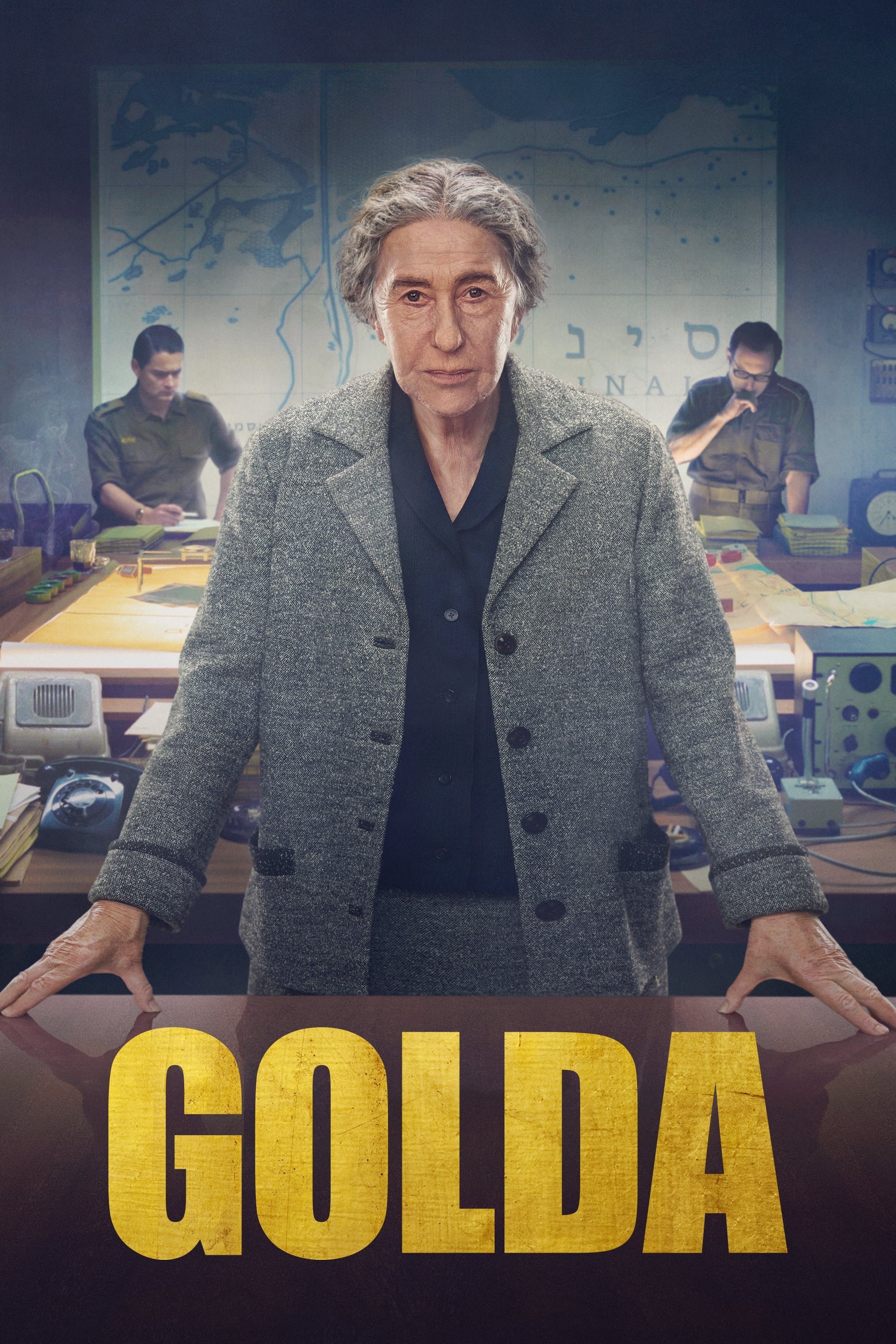
Golda (2023) character relationship network mapped with AI analysis. Explore the connections, alliances, and conflicts between characters.
Characters
Golda Meir
(played by Helen Mirren) — protagonist
Prime Minister of Israel during the 1973 Yom Kippur War, making critical strategic decisions under intense pressure while navigating intelligence failures and political fallout.
Henry Kissinger
(played by Liev Schreiber) — supporting
U.S. Secretary of State who supplies surplus fighter jets to Israel upon request and later attempts to mediate a ceasefire during the conflict.
Haim Bar-Lev
(played by Dominic Mafham) — supporting
Moshe Dayan
(played by Rami Heuberger) — supporting
Israel's Defense Minister during the war, grappling with shock over early setbacks and advocating for aggressive retaliatory strikes.
Ariel Sharon
(played by Ohad Knoller) — minor
Eli Zeira
(played by Dvir Benedek) — supporting
Chief of IDF Military Intelligence responsible for the failure to monitor Egyptian signals, resulting in a surprise attack.
Zvi Zamir
(played by Rotem Keinan) — supporting
Head of Mossad who delivers critical pre-war intelligence and oversees covert operations during the conflict.
Canonical Relationships
Family, romantic, and professional connections based on plot evidence.
Ariel Sharon → Golda Meir
(Professional Operational Adviser) — Sharon contributes an aggressive operational proposal to Golda's wartime decision-making.
Ariel Sharon proposes using the 143rd Division to cross the canal and challenge the Egyptian armies during the fifth day of the war.
Golda Meir → Haim Bar-Lev
(Power Civilian-Military Leadership) — Their roles connect political leadership with battlefield resistance.
Haim Bar-Lev leads Israeli tank forces resisting the Egyptian crossing while Golda directs the national war response.
Golda Meir → Eli Zeira
(Power Political Superiors) — Golda is the senior political authority confronting the consequences of Zeira's intelligence failure.
Zvi tells Golda that Eli Zeira neglected to properly monitor Egyptian signals intelligence, allowing Israel to be attacked unawares.
Golda Meir → Henry Kissinger
(Professional Diplomatic Counterparts) — Their relationship combines wartime dependence, negotiation, and disagreement over timing.
Golda requests surplus fighter jets from Henry Kissinger, and he later privately urges her to accept a ceasefire.
Golda Meir → Zvi Zamir
(Professional Prime Minister And Intelligence Chief) — Zvi serves as a critical intelligence source and confidential adviser to Golda.
Zvi Zamir delivers pre-war intelligence to Golda and later privately informs her about the intelligence failure involving Eli Zeira.
Golda Meir → Moshe Dayan
(Professional Political Colleagues) — A strained working relationship between the prime minister and defense minister during the war.
Golda states that she cannot initiate a counter-plan without the support of her defense minister, Moshe Dayan. She later talks him out of resigning af...
Story Dynamics
Alliances, conflicts, and narrative interactions that evolve throughout the story.
Moshe Dayan → Henry Kissinger
(Unknown Strategic Counterparts) — Their roles represent military escalation and American diplomatic management of the conflict.
Dayan proposes an air strike on Damascus, while Kissinger later becomes involved in securing aircraft and pressing for a ceasefire.
Ariel Sharon → Haim Bar-Lev
(Alliance Military Colleagues) — Both participate in Israel's military response, though the plot gives them different operational roles.
Sharon proposes a canal-crossing operation, while Haim Bar-Lev leads tank forces that resist the Egyptian crossing.
Zvi Zamir → Eli Zeira
(Conflict Intelligence Rivals) — The two intelligence leaders are contrasted through opposing performance during the warning period.
Zvi privately informs Golda that Eli Zeira failed to properly monitor Egyptian signals intelligence.
Story Analysis
A wartime political leader confronts surprise, military crisis, intelligence failure, personal responsibility, and the possibility of peace.
Plot Progression
Warnings Before Yom Kippur
— Golda Meir receives intelligence that Egypt and Syria may attack, but she and Moshe Dayan remain uncertain. On Yom Kippur, the leadership orders only partial mobilization before the surprise offensive...
Shock Across the Fronts
— The Syrian and Egyptian attacks expose Israel's lack of preparation. Dayan is shaken by the Golan Heights situation and attempts to resign, while Golda keeps him in office despite losing confidence in...
A Fight for Airpower
— Israeli forces suffer a defeat in Sinai, and Dayan proposes striking Damascus. Because aircraft are unavailable, Golda turns to Henry Kissinger, who reluctantly agrees to provide surplus jets.
Crossing the Canal
— Ariel Sharon proposes a canal-crossing operation while Zvi Zamir provides intelligence about Egyptian movements. Israeli forces resist the Egyptian advance and hold positions after the ambush at the C...
Victory and Its Cost
— Golda rejects Kissinger's immediate ceasefire request and continues the pressure that brings Egypt into talks. After the war, intelligence failures emerge, Golda accepts blame, testifies before the co...