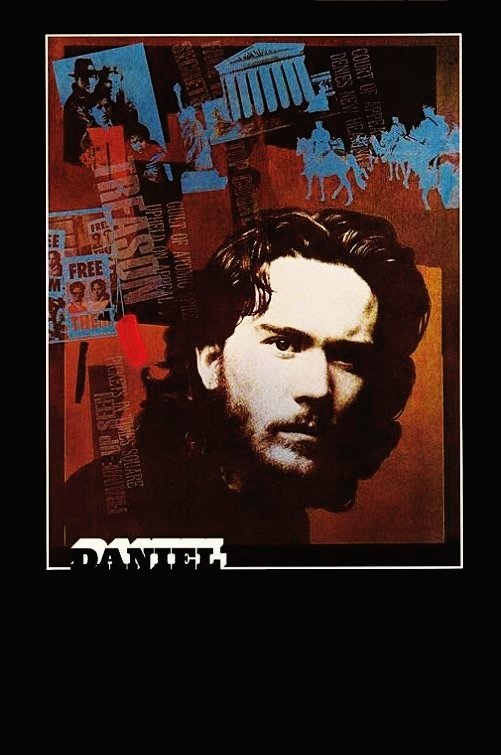
Daniel (1983) character relationship network mapped with AI analysis. Explore the connections, alliances, and conflicts between characters.
Characters
Daniel Isaacson
(played by Timothy Hutton) — protagonist
A central figure who questions the effectiveness of political demonstrations, cares for his collapsing sister and a child, helps children escape a chaotic confrontation, and testifies before a grand j...
Paul Isaacson
(played by Mandy Patinkin) — supporting
An imprisoned parent whose political case drives the family’s crisis. He tells Daniel that prisoners cannot be imprisoned mentally, insists that innocent people cannot be executed, and believes public...
Rochelle Isaacson
(played by Lindsay Crouse) — supporting
A parent preparing to testify in the family’s political case. She refuses to pawn a keepsake, reassures Daniel that she will return, and is associated with the decision not to let the family’s lawyer...
Frieda Stein
(played by Julie Bovasso) — supporting
A struggling woman whose possessions are examined by government officials. She bitterly remembers Paul as a burden she had always been expected to protect.
Jacob Ascher
(played by Ed Asner) — supporting
A figure connected to the family’s past and legal struggle. He had considered adopting Daniel and his sister, and the case damaged his health.
Susan Isaacson
(played by Amanda Plummer) — supporting
Robert Lewin
(played by John Rubinstein) — minor
Canonical Relationships
Family, romantic, and professional connections based on plot evidence.
Jacob Ascher → Susan Isaacson
(Family Prospective Adoptive Parent) — Jacob was considered as a possible adoptive parent for Susan.
Robert Lewin reveals that Jacob Ascher had considered adopting both Daniel and Susan.
Jacob Ascher → Daniel Isaacson
(Family Prospective Adoptive Parent) — Jacob was considered as a possible adoptive parent for Daniel and Susan.
Robert Lewin tells Daniel that Jacob Ascher had considered adopting Daniel and Susan.
Rochelle Isaacson → Daniel Isaacson
(Family Mother) — Rochelle is Daniel's imprisoned mother and remains emotionally connected to him during the legal crisis.
Daniel must testify about his imprisoned parents, while Rochelle prepares to testify and reassures Daniel that she will return.
Paul Isaacson → Daniel Isaacson
(Family Father) — Paul is Daniel's imprisoned father and a central source of his political and emotional loyalty.
Daniel must testify about his imprisoned parents, and Paul later speaks directly with Daniel in prison about the family's fight for freedom.
Daniel Isaacson → Susan Isaacson
(Family Sibling) — Daniel is Susan's brother and assumes responsibility for her care.
The plot explicitly identifies Susan Isaacson as Daniel's sister. Daniel later becomes responsible for her after she suffers a serious collapse.
Story Dynamics
Alliances, conflicts, and narrative interactions that evolve throughout the story.
Frieda Stein → Paul Isaacson
(Social Old Acquaintance) — Frieda has a longstanding connection to Paul marked by resentment and imposed responsibility.
Frieda bitterly remembers Paul as a burden she had always been expected to protect.
Robert Lewin → Daniel Isaacson
(Narrative Informant) — Robert provides Daniel with important information about his family history and legal case.
Daniel speaks with Robert Lewin, who explains Jacob's adoption proposal, the damage caused by the case, and the parents' legal decisions.
Paul Isaacson → Rochelle Isaacson
(Alliance Political Partner) — Paul and Rochelle act together in decisions concerning their legal and political defense.
Paul and Rochelle are jointly associated with the family's political case, and Robert explains that they together refused to let their lawyer call cer...
Story Analysis
Daniel navigates family collapse, political conflict, and imprisonment while preserving loyalty and hope.
Plot Progression
Electricity and Protest
— The story begins with a lesson that turns toward the electric chair. Peace protesters outside establish a tense political environment marked by opposition to police violence.
Family Trust and Fracture
— Daniel and Susan discuss a revolutionary studies foundation funded through the family trust. Their disagreement about demonstrations reflects wider strain within their separate lives.
Collapse in the Crowd
— Susan's collapse makes Daniel responsible for her recovery. Daniel later helps children through a chaotic protest while demonstrators demand freedom.
Testimony and Possessions
— Daniel faces a grand jury over his imprisoned parents, while Rochelle prepares to testify and protects a keepsake. Frieda's bitterness reveals the personal burden surrounding Paul.
Prison and Unresolved Hope
— Robert discloses Jacob's adoption proposal, damaged health, and the parents' legal choices. In prison, Paul defends mental freedom and keeps Daniel's hope for eventual freedom alive.
Directed by Sidney Lumet
Daniel (1983) · 6.6/10 · drama
Content sources
Related entry on
Wikidata
(Q4172098), public domain (CC0).
Plot breakdown and analysis on this page are AI-generated from the title's synopsis and metadata.