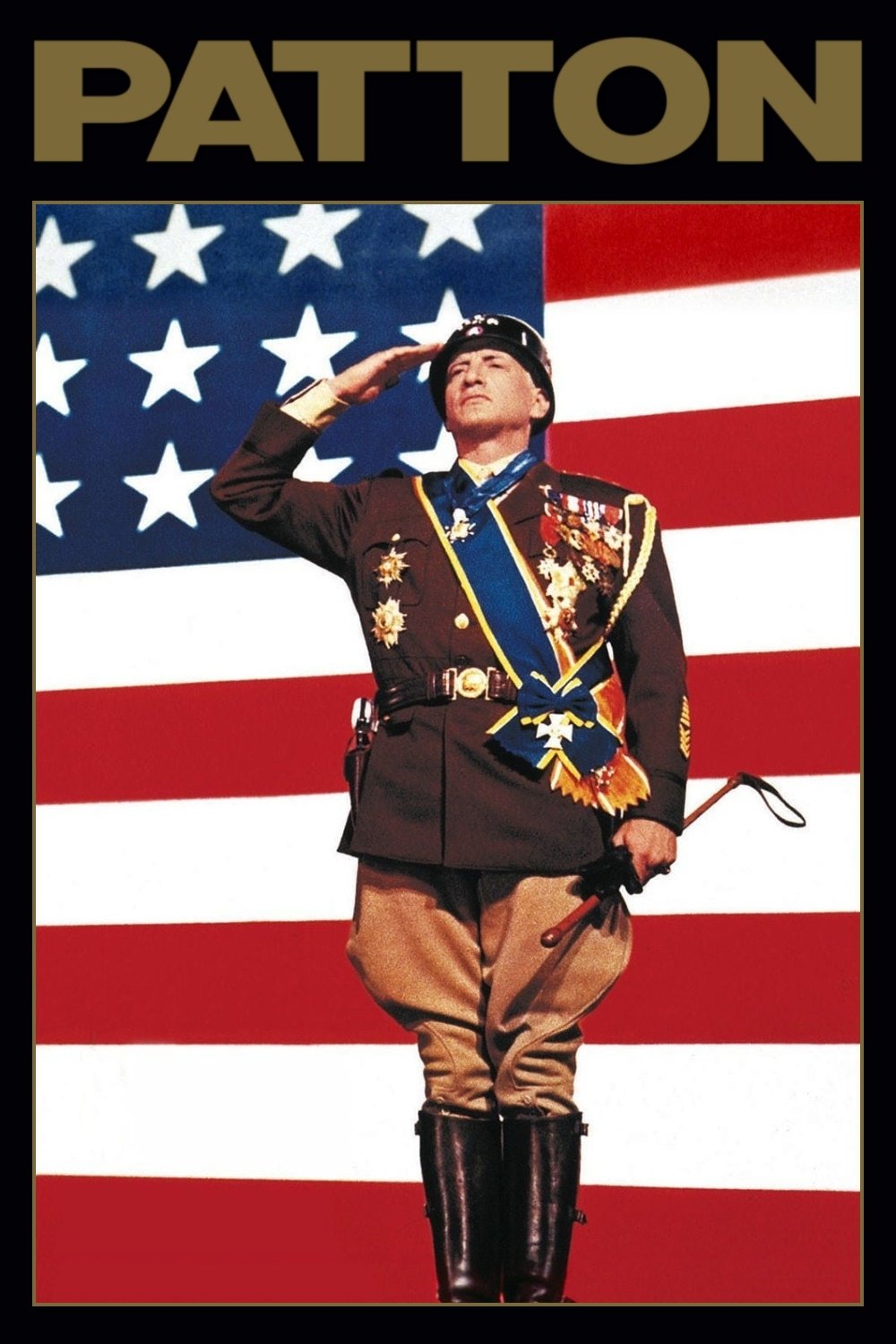
Patton (1970) character relationship network mapped with AI analysis. Explore the connections, alliances, and conflicts between characters.
Characters
General George S. Patton Jr.
(played by George C. Scott) — protagonist
Fierce WWII general known for aggressive tactics, controversial leadership, and driving Allied victories.
General Omar N. Bradley
(played by Karl Malden) — protagonist
Steady Allied commander and Patton's former subordinate, known for pragmatic leadership.
First Lieutenant Alexander Stiller
(played by Pat Zurica) — supporting
Patton's staff officer assisting with tactical planning and communications.
Field Marshal Sir Bernard Law Montgomery
(played by Michael Bates) — minor
British commander and Patton's rival, known for cautious Allied strategies.
Sergeant William George Meeks
(played by James Edwards) — minor
American soldier serving under Patton's command during frontline operations.
General Sir Harold Alexander
(played by Jack Gwillim) — minor
Allied commander overseeing Mediterranean operations and broader strategic planning.
Field Marshal Erwin Rommel
(played by Karl Michael Vogler) — supporting
Renowned German commander, Patton's strategic adversary in North Africa.
British Briefing Officer
(played by Alan MacNaughtan) — cameo
British military officer delivering tactical briefings to Allied forces.
Third Army Chaplain
(played by Lionel Murton) — cameo
Military chaplain providing spiritual support to Patton's troops.
Canonical Relationships
Family, romantic, and professional connections based on plot evidence.
General Omar N. Bradley → First Lieutenant Alexander Stiller
(Professional Command Staff Connection) — Stiller's staff work supports a formation operating within Bradley's command structure.
Stiller assists Patton with tactical planning and communications while Patton's Third Army reports to Bradley.
General George S. Patton Jr. → British Briefing Officer
(Professional Operational Contact) — The officer provides tactical information within the Allied military structure.
The British Briefing Officer is described as delivering tactical briefings to Allied forces, while Patton commands Allied operations.
General George S. Patton Jr. → Sergeant William George Meeks
(Professional Commander And Soldier) — Meeks is part of the force commanded by Patton.
Meeks's profile identifies him as an American soldier serving under Patton's command during frontline operations.
General George S. Patton Jr. → First Lieutenant Alexander Stiller
(Professional Staff Commander) — Stiller supports Patton's command through staff work and communications.
Stiller's character profile identifies him as Patton's staff officer assisting with tactical planning and communications.
General George S. Patton Jr. → General Sir Harold Alexander
(Power Senior Commander) — Alexander has strategic authority over Patton's Mediterranean operations.
Harold Alexander chooses Montgomery's plan and orders the Allied landing at Gela rather than Patton's preferred Palermo plan.
General George S. Patton Jr. → General Omar N. Bradley
(Professional Former Subordinate) — Their relationship shifts from Patton's seniority to Bradley's formal command authority.
The plot states that Bradley was Patton's former subordinate before Patton later reported to Bradley while commanding the Third Army.
Story Dynamics
Alliances, conflicts, and narrative interactions that evolve throughout the story.
General George S. Patton Jr. → Field Marshal Erwin Rommel
(related)
General Omar N. Bradley → Field Marshal Sir Bernard Law Montgomery
(Alliance Allied Command Colleague) — Both are senior Allied commanders involved in coordinating the broader war effort.
Bradley and Montgomery operate within the Allied command structure that allocates forces and supplies during the campaign in France.
General George S. Patton Jr. → Third Army Chaplain
(Social Military Association) — The chaplain is connected to Patton through the soldiers under his command.
The chaplain's profile identifies him as providing spiritual support to Patton's troops during the Third Army period.
General George S. Patton Jr. → Field Marshal Erwin Rommel
(Conflict Strategic Adversary) — Rommel represents the German military opposition to Patton's North African campaign.
The plot places Patton's North African command against German forces and identifies Rommel as his strategic adversary.
General Sir Harold Alexander → Field Marshal Sir Bernard Law Montgomery
(Alliance Strategic Associate) — Alexander adopts Montgomery's operational recommendation in the Sicilian campaign.
Alexander opts for Montgomery's more cautious invasion plan for Sicily.
General George S. Patton Jr. → Field Marshal Sir Bernard Law Montgomery
(Conflict Military Rival) — Their rivalry combines strategic disagreement with competition for Allied prominence.
Patton is frustrated by what he sees as Montgomery monopolizing the Allied effort, and the two later propose competing invasion plans for Sicily.
Story Analysis
A brilliant and controversial general pursues military glory while repeatedly colliding with Allied command and political restraint.
Plot Progression
Rebuilding the Defeated Corps
— Patton arrives after the II Corps suffers defeat at Kasserine Pass. He imposes discipline and leads the corps toward victory at El Guettar.
The Sicilian Race
— Patton and Montgomery advance competing plans for Sicily, while Alexander selects the landing at Gela. Patton then pushes through Palermo and races to Messina before the British.
The Cost of Outspokenness
— The hospital slapping incident creates public outrage and requires a formal apology. Patton is later placed in a London decoy command, where his Knutsford remarks alarm Allied leaders.
The Third Army Advance
— Patton takes command of the Third Army under Bradley and leads a rapid sweep across France. Fuel allocations halt his advance and provoke a confrontation with Bradley.
Victory and Diminishing Glory
— Patton's staff plans the relief of Bastogne, but his postwar political remarks cause another controversy. He loses the Third Army command, survives a near-fatal accident, and reflects on glory.