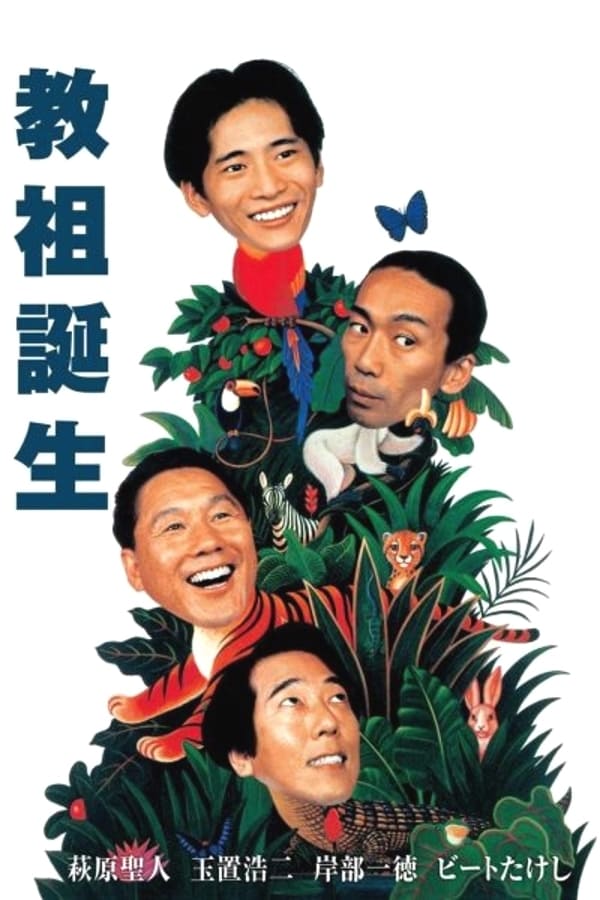
Many Happy Returns (1993) character relationship network mapped with AI analysis. Explore the connections, alliances, and conflicts between characters.
Characters
Kazuo Takayama
(played by Masato Hagiwara) — protagonist
Kazuo is training to take the Leader’s place in a small religious group. Though he initially treats the staged miracles as an act, concern for the believers leads him to take their needs more seriousl...
Tetsuharu Komamura
(played by Koji Tamaki) — supporting
Komamura is a member of the religious group who encourages Kazuo as he trains to replace the Leader and worries that the group is losing its purpose. He confronts Daisuke Shiba over exploiting the bel...
Daisuke Shiba
(played by Takeshi Kitano) — supporting
Shiba helps run the religious organization but treats it chiefly as a source of money. He pressures Kazuo to perform as a fake Leader, sells religious objects at inflated prices, and uses the believer...
Story Dynamics
Alliances, conflicts, and narrative interactions that evolve throughout the story.
Tetsuharu Komamura → Daisuke Shiba
(Conflict Moral Opponents) — Komamura challenges Shiba's financial exploitation and presses for his removal, while Shiba defends the practice as necessary to the organization.
Komamura confronts Shiba about exploiting the faithful, and Shiba replies that this is how the organization earns money. Komamura later warns Kazuo th...
Kazuo Takayama → Daisuke Shiba
(Conflict Sincerity Versus Exploitation) — Their disagreement grows from competing views of religious leadership into a personal struggle; Kazuo rejects Shiba's profit-driven demands but ultimately cannot dismiss him.
Shiba pressures Kazuo to perform as a fake Leader and profit from believers, while Kazuo increasingly resists that approach. Shiba threatens him with...
Kazuo Takayama → Tetsuharu Komamura
(Alliance Supporter And Adviser) — Komamura supports Kazuo's developing leadership and urges him to protect the group from Shiba's exploitation, but Kazuo cannot act on his final request.
Komamura encourages Kazuo as he takes the Leader's place and later asks him to expel Shiba, warning that the group will be destroyed otherwise.
Story Analysis
Kazuo's growing concern for believers clashes with Shiba's pursuit of profit, leaving the group's future unresolved.
Plot Progression
Miracles on Display
— The religious group travels to a rural community, where the Leader promises miracles and staged performances elicit hope. Kazuo is trained to succeed the Leader and initially treats the role as an act...
A Sincere Change
— The believers' hopes lead Kazuo to take their needs more seriously. He tries to help through advice and healing performances as Komamura worries that the group is losing its purpose.
Faith Meets Profit
— Shiba uses the organization to make money, including selling religious objects at inflated prices. His pressure on Kazuo to perform as a fake Leader sharpens their disagreement.
An Unresolved Demand
— Komamura challenges Shiba, who defends exploiting believers as a source of income. Shiba threatens Kazuo, and Komamura calls for his expulsion, but Kazuo cannot dismiss him.
Directed by Toshihiro Tenma
Many Happy Returns (1993) · 6.9/10 · comedy, drama
Content sources
Related entry on
Wikidata
(Q11499336), public domain (CC0).
Plot breakdown and analysis on this page are AI-generated from the title's synopsis and metadata.