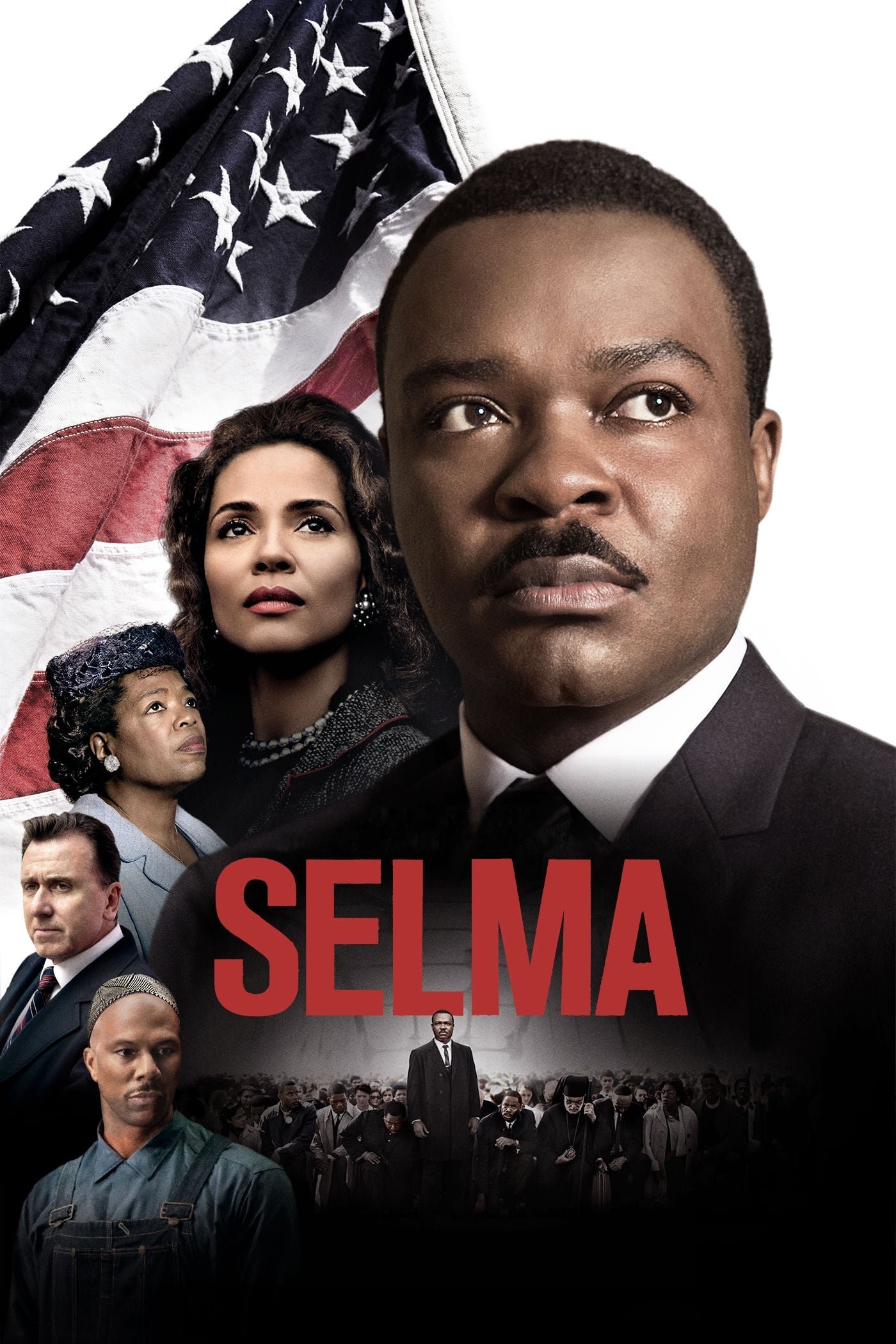
Plot Analysis Summary
A voting-rights campaign confronts institutional resistance, state violence, internal strain, and federal delay before achieving a decisive public breakthrough.
Story Structure — 6 Plot Phases
A Denied Right
The film establishes the violence and institutional obstruction surrounding Black voting rights. A denied registration attempt and presidential hesitation push the movement toward direct action.
Key Events
-
Nobel Prize Opening — The civil rights leader accepts the Nobel Peace Prize in 1964.
Location: Nobel Prize ceremony
-
Birmingham Church Bombing — Four black girls are killed by a bombing at a Birmingham church.
Location: Birmingham church
-
Cooper Denied Registration — Annie Lee Cooper attempts to register but is blocked by the white registrar. Characters: Annie Lee Cooper
Location: Selma registration office
-
Presidential Deferral — The president prioritizes the War on Poverty over immediate voting-rights legislation. Characters: President Lyndon B. Johnson
Location: White House
-
SCLC Arrives In Selma — SCLC leaders and activists arrive in Selma, where James Bevel welcomes them. Characters: Andrew Young, Ralph Abernathy, James Bevel, Diane Nash
Location: Selma
Selma Under Pressure
SCLC activists arrive in Selma and organize a courthouse registration action. Police confrontation and arrests reveal the immediate danger facing local protesters.
Key Events
-
Hoover Targets Marriage — Hoover calls the movement leader a problem and recommends disrupting his marriage. Characters: J. Edgar Hoover, President Lyndon B. Johnson, Coretta Scott King
Location: Washington, D.C.
-
Coretta Faces Strain — Harassing calls and death threats deepen Coretta's fear and marital strain. Characters: Coretta Scott King
Location: King residence
-
Courthouse Registration March — Activists and residents march toward the registration office and confront local authorities. Characters: Annie Lee Cooper, Andrew Young, Ralph Abernathy, Diane Nash, James Bevel
Location: Selma courthouse
-
Cooper Arrested — Cooper knocks the sheriff down during the confrontation and is arrested. Characters: Annie Lee Cooper
Location: Selma courthouse
Blood On The Cause
A night march is attacked, and Jimmie Lee Jackson is shot. His death, the morgue meeting, and internal criticism intensify the movement's urgency.
Key Events
-
Night March Ambush — Troopers attack night marchers, and Jimmie Lee Jackson is shot while hiding in a restaurant. Characters: James Bevel, Jimmie Lee Jackson
Location: Marion, Alabama
-
Morgue Meeting — Bevel meets Jackson's grandfather at the morgue after Jackson's death. Characters: James Bevel, Jimmie Lee Jackson
Location: Morgue
-
Movement Condemnation — Movement activists criticize the campaign's leadership and debate strategy. Characters: Diane Nash, James Bevel
Location: Movement meeting
The Bridge Assault
The first Selma-to-Montgomery march is violently suppressed on the Edmund Pettus Bridge. National television coverage turns the attack into a wider moral and political crisis.
Key Events
-
Bridge March Begins — Marchers cross the bridge and approach a line of state troopers. Characters: John Lewis, Amelia Boynton, Ralph Abernathy
Location: Edmund Pettus Bridge
-
Bridge Assault — Troopers attack marchers with clubs, horses, tear gas, and other weapons. Characters: John Lewis, Amelia Boynton
Location: Edmund Pettus Bridge
-
Wounded At Brown Chapel — The injured marchers receive treatment at the movement's headquarters church. Characters: John Lewis, Amelia Boynton
Location: Brown Chapel
A Passage Forward
Federal negotiations, legal action, and a second bridge crossing move the campaign toward judicial approval. A murder by a white mob underscores the continuing cost of resistance.
Key Events
-
Federal March Pressure — Johnson pressures the campaign to stop while Gray seeks court approval for another march. Characters: President Lyndon B. Johnson, John Doar, Fred Gray
Location: Federal offices
-
Second Bridge Crossing — Marchers return to the bridge, where the troopers turn aside and allow passage. Characters: John Lewis, Amelia Boynton, Fred Gray
Location: Edmund Pettus Bridge
-
Reeb Killed In Selma — A white mob beats a white supporter to death after the second bridge march.
Location: Selma street
-
March Court Approved — After a hearing, the federal judge approves the march. Characters: Fred Gray, John Doar
Location: Federal courtroom
March And Recognition
The court approves the march, and the president appeals to Congress for voting-rights legislation. The march reaches Montgomery and concludes with a speech at the State Capitol.
Key Events
-
Congressional Voting Rights Appeal — The president asks Congress to pass legislation removing restrictions on voting. Characters: President Lyndon B. Johnson
Location: Joint session of Congress
-
Highway March To Montgomery — The marchers travel along the highway toward Montgomery after receiving judicial approval. Characters: John Lewis, Amelia Boynton, Andrew Young, Ralph Abernathy, James Bevel
Location: Highway to Montgomery
-
Capitol Steps Speech — The march reaches Montgomery, where the movement leader delivers a speech at the State Capitol. Characters: Andrew Young, Ralph Abernathy, James Bevel, John Lewis, Amelia Boynton
Location: Montgomery State Capitol