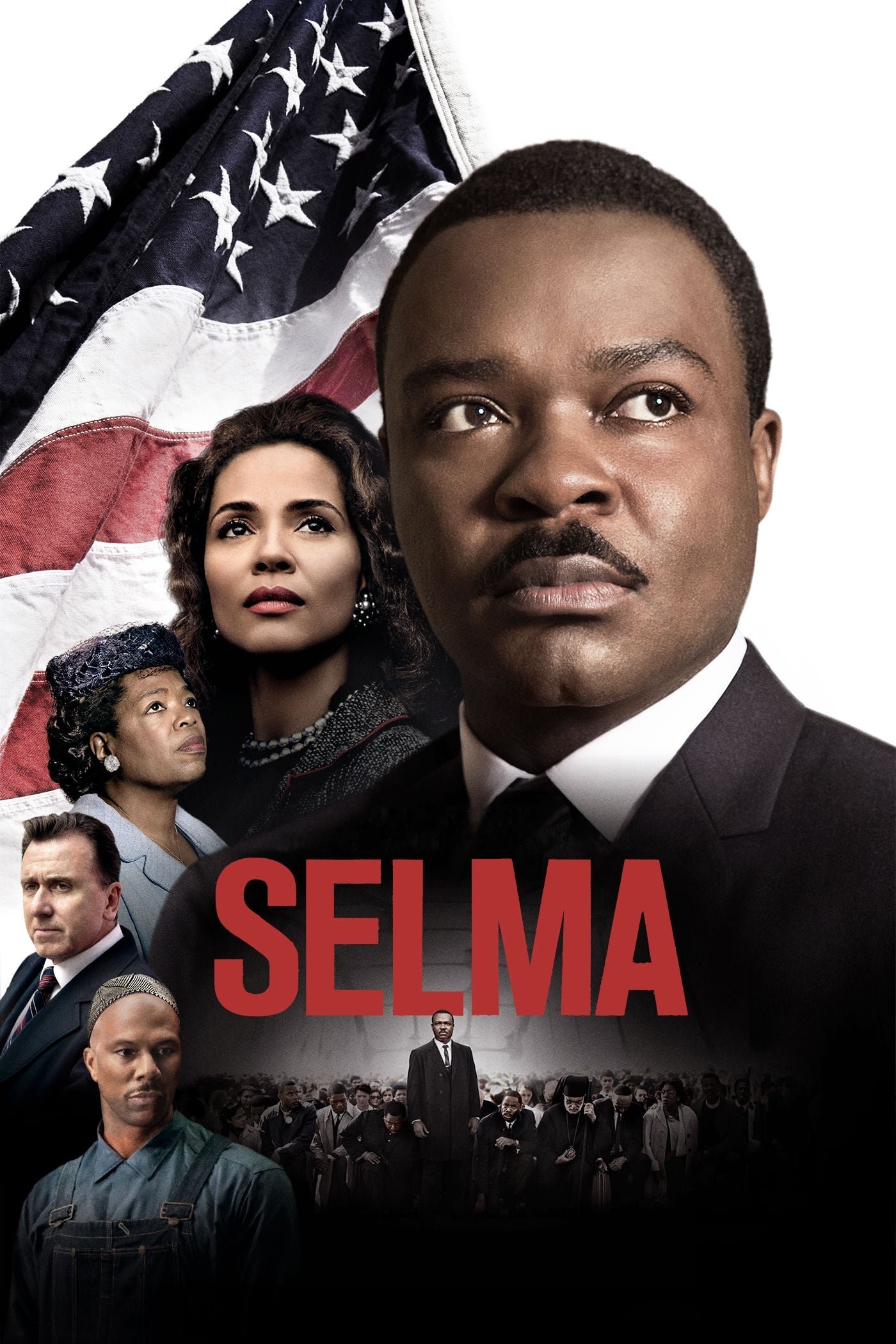
Selma (2014) character relationship network mapped with AI analysis. Explore the connections, alliances, and conflicts between characters.
Characters
Coretta Scott King
(played by Carmen Ejogo) — protagonist
King's wife who voices concerns about his safety in Selma. She endures devastating harassing phone calls and constant death threats, which cause significant marital strain and emotional toll as she su...
President Lyndon B. Johnson
(played by Tom Wilkinson) — supporting
The U.S. President who initially prioritizes the War on Poverty over voting rights legislation. He later pressures both King and Governor Wallace to halt protests, sends federal agents to negotiate, a...
Jimmie Lee Jackson
(played by LaKeith Stanfield) — supporting
Diane Nash
(played by Tessa Thompson) — minor
Andrew Young
(played by André Holland) — supporting
SCLC activist who travels to Selma with King. He advises King to proceed with the scheduled march to Montgomery, convincing him to let the marchers start without waiting for his return.
Ralph Abernathy
(played by Colman Domingo) — supporting
Close associate and SCLC leader who accompanies King to Selma to support the voting rights campaign and participate in the movement's activities.
Amelia Boynton
(played by Lorraine Toussaint) — minor
J. Edgar Hoover
(played by Dylan Baker) — minor
Annie Lee Cooper
(played by Oprah Winfrey) — minor
Fred Gray
(played by Cuba Gooding Jr.) — minor
John Doar
(played by Alessandro Nivola) — minor
James Bevel
(played by Common) — supporting
SCLC activist who welcomes King to Selma. After the murder of Jimmie Lee Jackson, he meets with the victim's family at the morgue and helps rally protesters to continue their struggle for civil rights...
John Lewis
(played by Stephan James) — supporting
SNCC leader who joins the Selma-to-Montgomery march. He crosses the Edmund Pettus Bridge alongside other activists and is severely injured during the state troopers' brutal assault.
Canonical Relationships
Family, romantic, and professional connections based on plot evidence.
President Lyndon B. Johnson → John Doar
(Professional Government Representative) — Doar acts as Johnson's representative during the escalating protest.
President Johnson sends Assistant Attorney General John Doar to persuade the movement's leader to postpone the next march.
President Lyndon B. Johnson → J. Edgar Hoover
(Professional Political Adviser) — Hoover advises Johnson on how to undermine the movement's leadership.
Hoover tells President Johnson that the civil rights leader is a problem and suggests disrupting his marriage.
Story Dynamics
Alliances, conflicts, and narrative interactions that evolve throughout the story.
Jimmie Lee Jackson → Amelia Boynton
(Narrative Movement Cause) — Jackson's death becomes part of the cause represented by Boynton's continued activism.
Jackson's killing intensifies the campaign, while Boynton later participates in the Selma-to-Montgomery march that carries the movement forward.
Annie Lee Cooper → Diane Nash
(Alliance Voting Rights Activist) — Cooper's registration effort reflects the campaign Nash helps organize.
Annie Lee Cooper attempts to register to vote in Selma, while Diane Nash travels to Selma with the civil rights activists organizing the voting-rights...
Amelia Boynton → Ralph Abernathy
(Alliance Coalition Partner) — They contribute to the same broad voting-rights coalition.
Amelia Boynton marches as a Selma activist alongside participants from the SCLC campaign led by figures including Ralph Abernathy.
John Lewis → Ralph Abernathy
(Alliance Coalition Partner) — They represent cooperating civil rights organizations during the marches.
John Lewis marches with SNCC and SCLC participants, while Ralph Abernathy is identified as an SCLC leader involved in the Selma campaign.
Amelia Boynton → Fred Gray
(Alliance Movement Legal Support) — Gray's legal work helps protect the protest effort represented by Boynton.
Amelia Boynton participates in the assaulted march, while Fred Gray later asks a federal judge to permit another march.
John Lewis → Fred Gray
(Alliance Movement Legal Support) — Gray's legal action supports the movement in which Lewis is a prominent participant.
John Lewis is badly injured during the first march, after which movement attorney Fred Gray seeks judicial permission for another march.
John Lewis → Amelia Boynton
(Alliance Marching Comrade) — They share direct participation and physical risk during the bridge assault.
John Lewis and Amelia Boynton are among the marchers who cross the Edmund Pettus Bridge and are injured during the state troopers' attack.
James Bevel → Jimmie Lee Jackson
(Alliance Movement Supporter) — Bevel responds to Jackson's death by supporting his family and mobilizing the movement.
After Jimmie Lee Jackson is shot, James Bevel meets with Jackson's grandfather at the morgue and helps rally protesters to continue the struggle.
Diane Nash → James Bevel
(Alliance Movement Colleague) — Both are connected to the coordinated civil rights campaign.
Diane Nash travels with the civil rights activists to Selma, and James Bevel appears among the activists organizing there.
Ralph Abernathy → James Bevel
(Alliance SCLC Colleague) — They operate as fellow SCLC organizers in Selma.
Ralph Abernathy accompanies the SCLC leadership to Selma, where James Bevel welcomes them and participates in the campaign.
Andrew Young → James Bevel
(Alliance SCLC Colleague) — They belong to the same organizing network supporting the Selma campaign.
Andrew Young travels to Selma as an SCLC activist, while James Bevel greets the arriving leadership and works with other SCLC activists there.
Andrew Young → Ralph Abernathy
(Alliance Movement Colleague) — Both are senior movement colleagues working within the Selma campaign.
Andrew Young and Ralph Abernathy travel to Selma with the SCLC leadership during the voting-rights campaign.
J. Edgar Hoover → Coretta Scott King
(Conflict Psychological Adversary) — Hoover's interference contributes to the harassment and strain surrounding Coretta's marriage.
Hoover suggests disrupting the leader's marriage, and Coretta later receives harassing calls involving an alleged recording of her husband.
Story Analysis
A voting-rights campaign confronts institutional resistance, state violence, internal strain, and federal delay before achieving a decisive public breakthrough.
Plot Progression
A Denied Right
— The film establishes the violence and institutional obstruction surrounding Black voting rights. A denied registration attempt and presidential hesitation push the movement toward direct action.
Selma Under Pressure
— SCLC activists arrive in Selma and organize a courthouse registration action. Police confrontation and arrests reveal the immediate danger facing local protesters.
Blood On The Cause
— A night march is attacked, and Jimmie Lee Jackson is shot. His death, the morgue meeting, and internal criticism intensify the movement's urgency.
The Bridge Assault
— The first Selma-to-Montgomery march is violently suppressed on the Edmund Pettus Bridge. National television coverage turns the attack into a wider moral and political crisis.
A Passage Forward
— Federal negotiations, legal action, and a second bridge crossing move the campaign toward judicial approval. A murder by a white mob underscores the continuing cost of resistance.
March And Recognition
— The court approves the march, and the president appeals to Congress for voting-rights legislation. The march reaches Montgomery and concludes with a speech at the State Capitol.