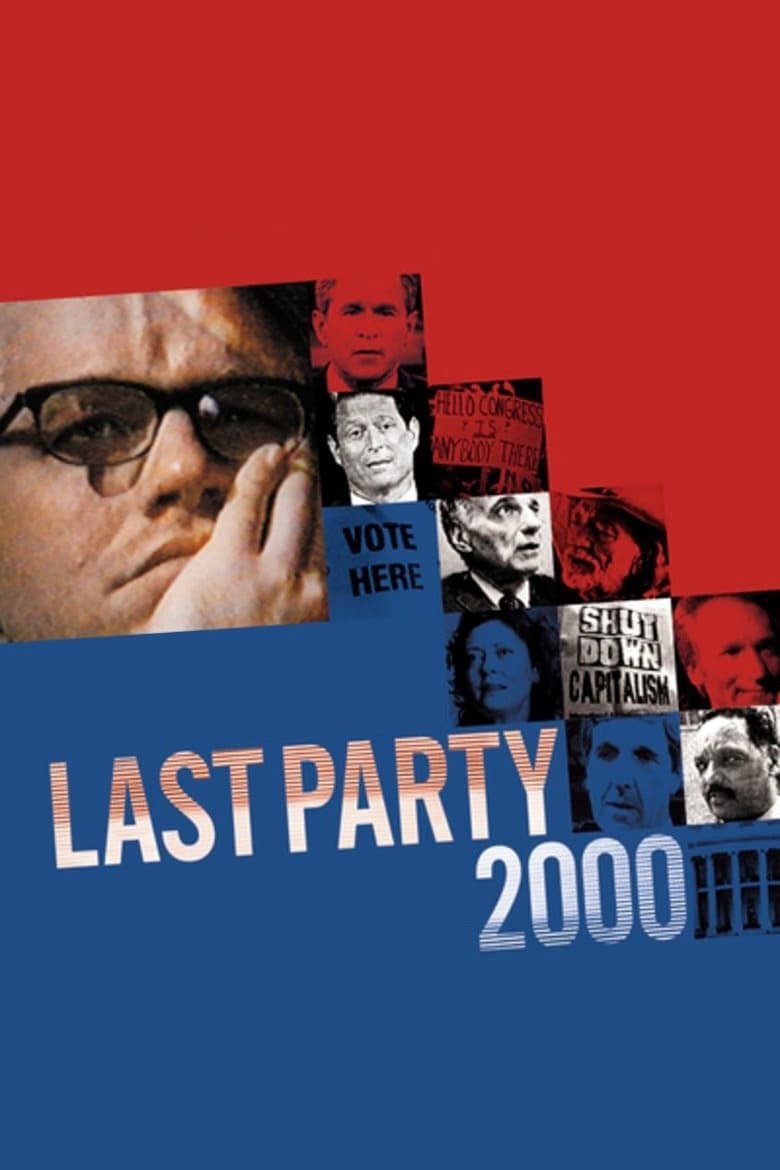
A documentary exploring the 2000 US Presidential election through the disillusioned lens of Phillip Seymour Hoffman, contrasting orchestrated conventions with grassroots protests and alternative politics.
Story Structure — 4 Plot Phases
Convention Coverage & Shift
Hoffman begins documenting the Republican and Democratic National Conventions but quickly pivots away from the orchestrated events.
Key Events
Election Timeline Begins — Documentary filming commences over the final six months of the 2000 Presidential election.
Location: United States
Republican National Convention — Hoffman begins documenting the official Republican campaign events.
Location: Republican National Convention
Democratic National Convention — Hoffman shifts focus to the official Democratic campaign events.
Location: Democratic National Convention
Convention Coverage Shift — Hoffman deliberately spends less time inside the orchestrated conventions.
Location: Convention Perimeter
Camera Equipment — The primary tool used by Hoffman to document the election and protests.
Location: Various
Street Protests & Disillusionment
The focus moves to street protests and police actions, revealing Hoffman's growing distaste for money politics and conservative influence.
Key Events
Convention Coverage Shift — Hoffman deliberately spends less time inside the orchestrated conventions.
Location: Convention Perimeter
Street Protests Coverage — Filming moves to the grassroots street protests outside the venues.
Location: City Streets
Police Action Documentation — Hoffman captures the tense interactions and police actions during protests.
Location: Police Line
Money Politics Critique — Hoffman expresses visible distaste for the influence of money in politics.
Location: Campaign Trail
Conservative Right Opposition — Hoffman's ideological conflict with the conservative political right becomes apparent.
Location: Campaign Trail
Campaign Progression — The election campaign advances, altering the documentary's tone and focus.
Location: Various Locations
Hoffman's Disillusionment — Hoffman appears increasingly disillusioned as the campaign unfolds.
Location: Documentary Set
Seedier Appearance — Hoffman's physical demeanor reflects his growing cynicism about the political process.
Location: Documentary Set
City Streets — The primary setting for grassroots activism and police confrontations.
Location: City Streets
Alternative Politics & Interviews
Hoffman finds energy in the Nader campaign and conducts interviews with Barney Frank, who critiques the efficacy of traditional marches.
Key Events
Seedier Appearance — Hoffman's physical demeanor reflects his growing cynicism about the political process.
Location: Documentary Set
Nader Campaign Introduction — Hoffman discovers renewed energy through the Ralph Nader campaign.
Location: Nader Campaign Events
Alternative Candidate Focus — Nader is highlighted as a viable alternative to the indistinguishable major parties.
Location: Nader Campaign Events
Frank Interview Setup — Hoffman prepares to interview Barney Frank about political effectiveness.
Location: Interview Location
Frank's March Critique — Frank argues that marches and demonstrations are largely a waste of time.
Location: Interview Location
NRA/AARP Comparison — Frank contrasts ineffective protests with the strategic power of the NRA and AARP.
Location: Interview Location
Campaign Materials — Pamphlets and signs representing the alternative political movement.
Location: Nader Campaign Events
Microphone — Used to capture Frank's critical analysis of political demonstrations.
Location: Interview Location
Political Realization — The film highlights the contrast between symbolic protests and effective lobbying.
Location: Interview Location
Climactic Encounters & Reflection
The documentary concludes with a flustered interview with Jesse Jackson, leaving Hoffman's political journey unresolved and reflective.
Key Events
NRA/AARP Comparison — Frank contrasts ineffective protests with the strategic power of the NRA and AARP.
Location: Interview Location
Jackson Interview Start — Hoffman begins his interview with civil rights leader Jesse Jackson.
Location: Interview Location
Hoffman's Flustered State — Hoffman becomes too flustered during the Jackson interview to proceed smoothly.
Location: Interview Location
Unasked Questions — The interview concludes with several planned questions left unasked due to Hoffman's nerves.
Location: Interview Location
Documentary Conclusion — The documentary wraps up, capturing the disillusionment and political realities of 2000.
Location: Post-Production
Story Breakdown
Convention Documentation — Initial coverage of Republican and Democratic National Conventions.
Orchestrated Events — Hoffman films inside the official party conventions.
Strategic Pivot — Hoffman deliberately shifts focus away from the conventions.
Grassroots & Conflict — Coverage of street protests and police confrontations.
Street Protests — Filming captures the energy and tension of grassroots activism.
Police Actions — Documentation of law enforcement responses to demonstrations.
Ideological Conflict — Hoffman expresses distaste for money politics and the conservative right.
Political Analysis — Interviews and commentary on political effectiveness.
Nader Campaign — Hoffman finds renewed energy in Ralph Nader's alternative movement.
Barney Frank Interview — Frank critiques marches as ineffective compared to lobbying groups like the NRA and AARP.
Personal & Narrative Arc — Hoffman's emotional journey and documentary conclusion.
Growing Disillusionment — Hoffman appears seedier and more cynical as the campaign progresses.
Jackson Interview — A flustered encounter with Jesse Jackson leaves questions unasked.
Documentary Wrap — The film concludes with a reflective tone on the 2000 election.
Filmed over the last six months of the 2000 Presidential election, Phillip Seymour Hoffman starts documenting the campaign at the Republican and Democratic National Conventions, but spends more time outside, in the street protests and police actions than in the orchestrated conventions. Hoffman shows an obvious distaste for money politics and the conservative right. He looks seedier and more disillusioned the campaign progresses. Eventually Hoffman seems most energized by the Ralph Nader campaign as an alternative to the nearly indistinguishable major parties. The high point of the film are the comments by Barney Frank who says that marches and demonstrations are largely a waste of time, and that the really effective political players such as the NRA and the AARP never bother with walk ins, sit-ins, shoot-ins or shuffles. In the interview with Jesse Jackson, Hoffman is too flustered to ask all of his questions.