Story Structure — 5 Plot Phases
Constructing a Simpler World
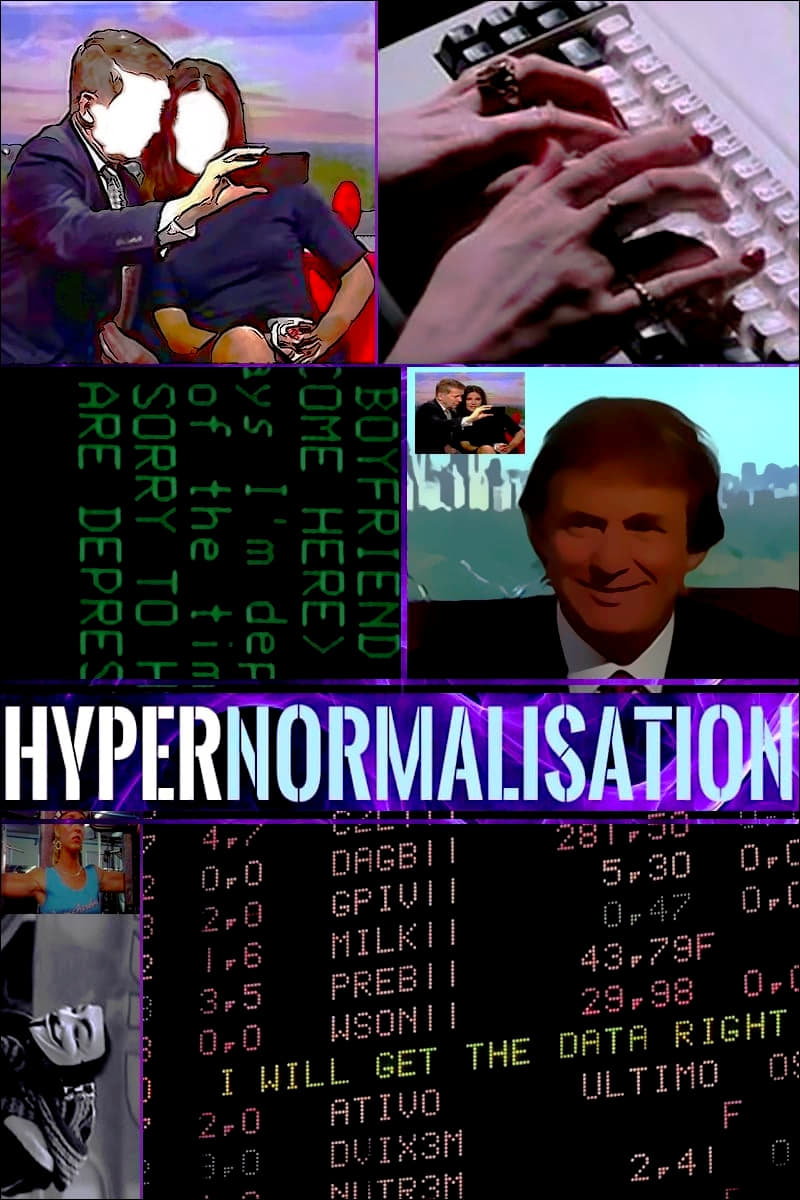
The film introduces a world shaken by extraordinary events and argues that powerful institutions constructed reassuring versions of reality. Political, financial, technological, and countercultural forces all participate in this retreat from complexity.
Key Events
-
A World of Extraordinary Events — Suicide bombings, refugee movements, and political upheaval appear to undermine global stability.
Location: Global
-
The Artificial Reality — A simpler and reassuring version of reality is constructed to avoid society's complexity.
Location: Global
-
Retreat into Make-Believe — Radicals, artists, musicians, and countercultural movements also become part of the retreat from reality.
Location: Global
-
New York Financial Collapse — New York faces collapse after years of borrowing and declining tax revenue.
Location: New York
-
Banks Gain Political Power — Political power increasingly shifts toward banks and financial institutions.
Location: New York
Financial Power and Strategic Uncertainty
New York's financial collapse shifts authority toward banks, while Damascus develops a strategy based on uncertainty, conspiracy, and proxy forces. These contrasting responses establish the film's broader politics of destabilisation.
Key Events
-
Banks Gain Political Power — Political power increasingly shifts toward banks and financial institutions.
Location: New York
-
Damascus Strategy of Uncertainty — A ruling regime uses uncertainty, conspiracy, and proxy forces to influence events beyond its borders.
Location: Damascus
-
Politics of Destabilisation — The film follows the spread of destabilising politics through indirect influence and uncertainty.
Location: Middle East
-
Beirut Barracks Bombing — Suicide bombers attack a military barracks, killing hundreds.
Location: Beirut
-
Indirect State Violence — The bombing demonstrates how violence can be used indirectly by states pursuing regional influence.
Location: Beirut
Terror Rewrites Policy
The Beirut barracks bombing demonstrates the power of indirect violence. The subsequent American withdrawal shows how terror and political paralysis can alter foreign policy.
Key Events
-
Indirect State Violence — The bombing demonstrates how violence can be used indirectly by states pursuing regional influence.
Location: Beirut
-
American Withdrawal — Despite official condemnation, the United States withdraws its troops after the attack.
Location: Beirut
-
Terror Reshapes Foreign Policy — Terror and political paralysis reshape foreign policy.
Location: International political arena
-
UFO Conspiracy Reports — Reports of UFOs and secret documents are presented as evidence of a possible government conspiracy.
Location: United States
-
Weapons and Public Perception — The possible conspiracy is described as concealing advanced weapons and manipulating public perceptions.
Location: United States
Conspiracy and Political Retaliation
UFO reports and secret documents become signs of possible hidden manipulation. Suicide bombings then destroy confidence in negotiation and help produce a hard-line political response.
Key Events
-
Weapons and Public Perception — The possible conspiracy is described as concealing advanced weapons and manipulating public perceptions.
Location: United States
-
Negotiation Loses Credibility — Repeated suicide bombings destroy public faith in negotiation.
Location: Israeli-Palestinian conflict zone
-
Hard-Line Government Rises — Violence helps bring a hard-line government to power.
Location: Israel and Palestine
-
Retaliation Becomes Entrenched — Escalating retaliation locks both sides into conflict and eliminates the earlier political solution.
Location: Israel and Palestine
-
Fear of Hidden Dangers — Fear spreads through science, journalism, politics, and popular culture, producing pessimism about the future.
Location: United States
Leaderless Politics, Unstable Future
Occupy experiments with networks, consensus, and the human microphone while revealing the difficulties of non-hierarchical action. The Arab Spring closes the film as the artificial order becomes increasingly vulnerable.
Key Events
-
Fear of Hidden Dangers — Fear spreads through science, journalism, politics, and popular culture, producing pessimism about the future.
Location: United States
-
Occupy Rejects Hierarchy — The Occupy movement attempts to create a leaderless society through networks and consensus.
Location: United States
-
Consensus Meets Its Limits — The human microphone and leaderless methods reveal the difficulty of collective action without hierarchy.
Location: Occupy protest sites
-
Arab Spring and Vulnerable Order — As the Arab Spring begins, the artificial order becomes vulnerable to forces it cannot understand or control.
Location: Global