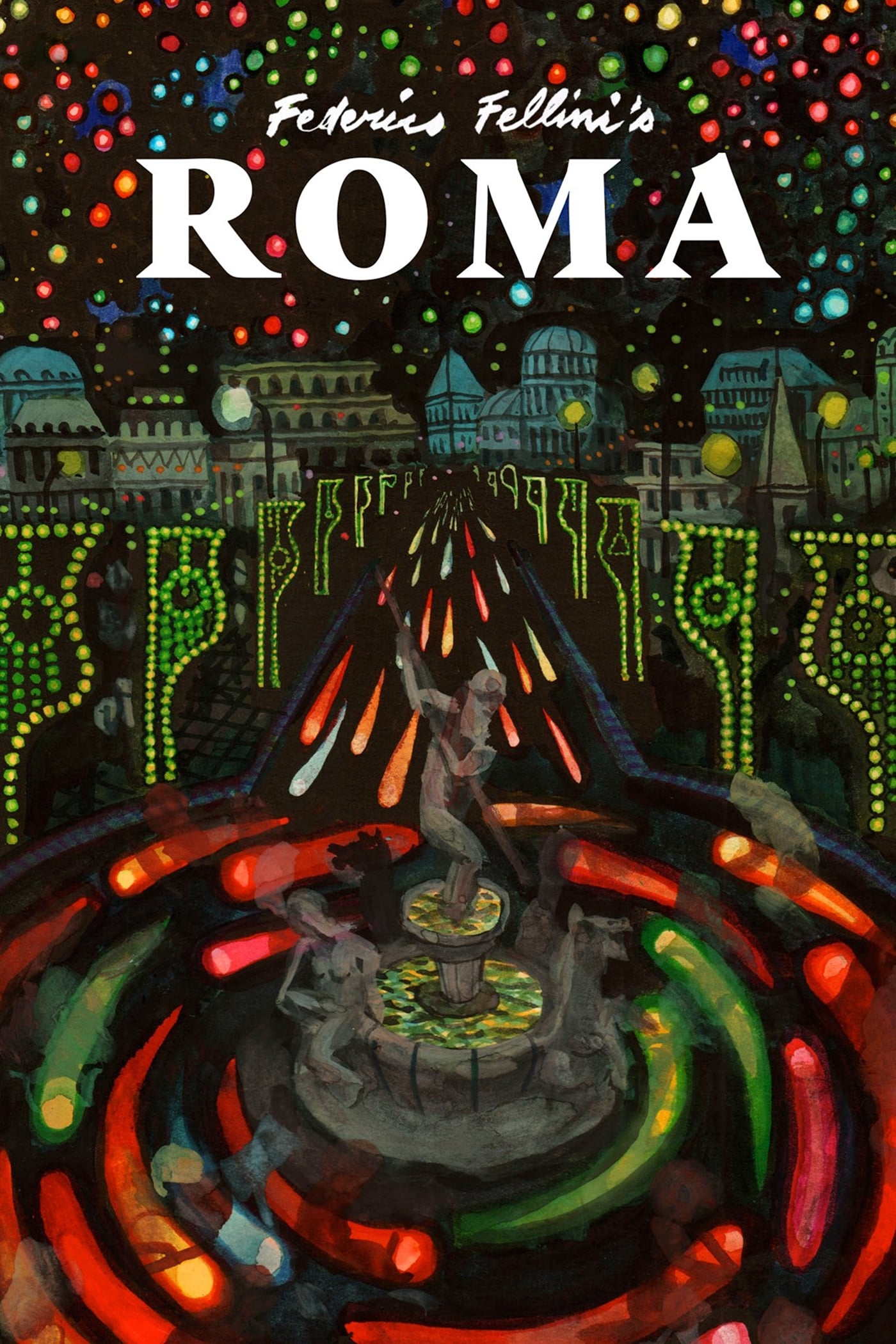
Roma (1972) character relationship network mapped with AI analysis. Explore the connections, alliances, and conflicts between characters.
Characters
Fellini, Age 18
(played by Peter Gonzales Falcon) — protagonist
The autobiographical protagonist and central observer of Rome's eclectic social landscape, navigating between the Fascist era of the 1930s and the contemporary 1970s.
Princess Domitilla
(played by Pia De Doses) — supporting
An eccentric elderly noblewoman who hosts a bizarre liturgical fashion show featuring priests and nuns in elaborate, unconventional costumes.
Reporter Interviewing Fellini
(played by Norma Giacchero) — supporting
A journalist conducting an interview with the protagonist, reinforcing the film's self-reflective, documentary-like framing.
Fellini as a Child
(played by Stefano Mayore) — supporting
The younger incarnation of the protagonist, serving as a visual device for early childhood memories of Rome.
Canonical Relationships
Family, romantic, and professional connections based on plot evidence.
Reporter Interviewing Fellini → Fellini, Age 18
(Professional Interviewer And Subject) — The interview gives Fellini an opportunity to challenge picturesque depictions of Rome and discuss its workers, housing, factories, bureaucracy, and social tensions.
A reporter speaks with Fellini about his interest in Rome and the kind of city he wants to show.
Fellini, Age 18 → Fellini as a Child
(Temporal Older And Younger Self) — The two incarnations frame the film's movement between childhood memories and adult reflection on Rome.
The reference shifts from the child's early impressions of Rome toward adulthood and describes the city as a personal and cinematic memory.
Story Dynamics
Alliances, conflicts, and narrative interactions that evolve throughout the story.
Princess Domitilla → Fellini, Age 18
(Narrative Observed Subject) — Domitilla's secluded aristocratic world becomes one of the social settings viewed within Fellini's portrait of Rome.
The reference describes a sequence centered on Princess Domitilla and her formal gathering as part of the film's observations of Rome.
Story Analysis
The film assembles Rome through childhood memory, adult observation, public spectacle, buried history, private disappointment, and inherited ritual.
Plot Progression
Lessons in a Legendary City
— Childhood impressions of Rome emerge through lessons about ancient history and comic school performances. Patriotic rhetoric, songs, and street disorder complicate the city's legendary image.
The City Beyond Postcards
— The adult perspective frames Rome as personal memory and prompts an interview about how to represent it. The film turns toward workers, housing, factories, bureaucracy, and unpredictable public entert...
The Past Beneath the Streets
— Subway construction is hindered by remains and unexpected underground features. An earthquake damages the tunnel and buildings above, bringing the work to a halt.
Private Longing and Old Rituals
— A beach invitation carries the suggestion of romantic disappointment. The film then enters Princess Domitilla's inherited palazzo, where formal religious and social ceremony contrasts with the changin...
Directed by Federico Fellini
Roma (1972) · 7.3/10 · comedy, drama
Content sources
Related entry on
Wikidata
(Q18423), public domain (CC0).
Plot breakdown and analysis on this page are AI-generated from the title's synopsis and metadata.