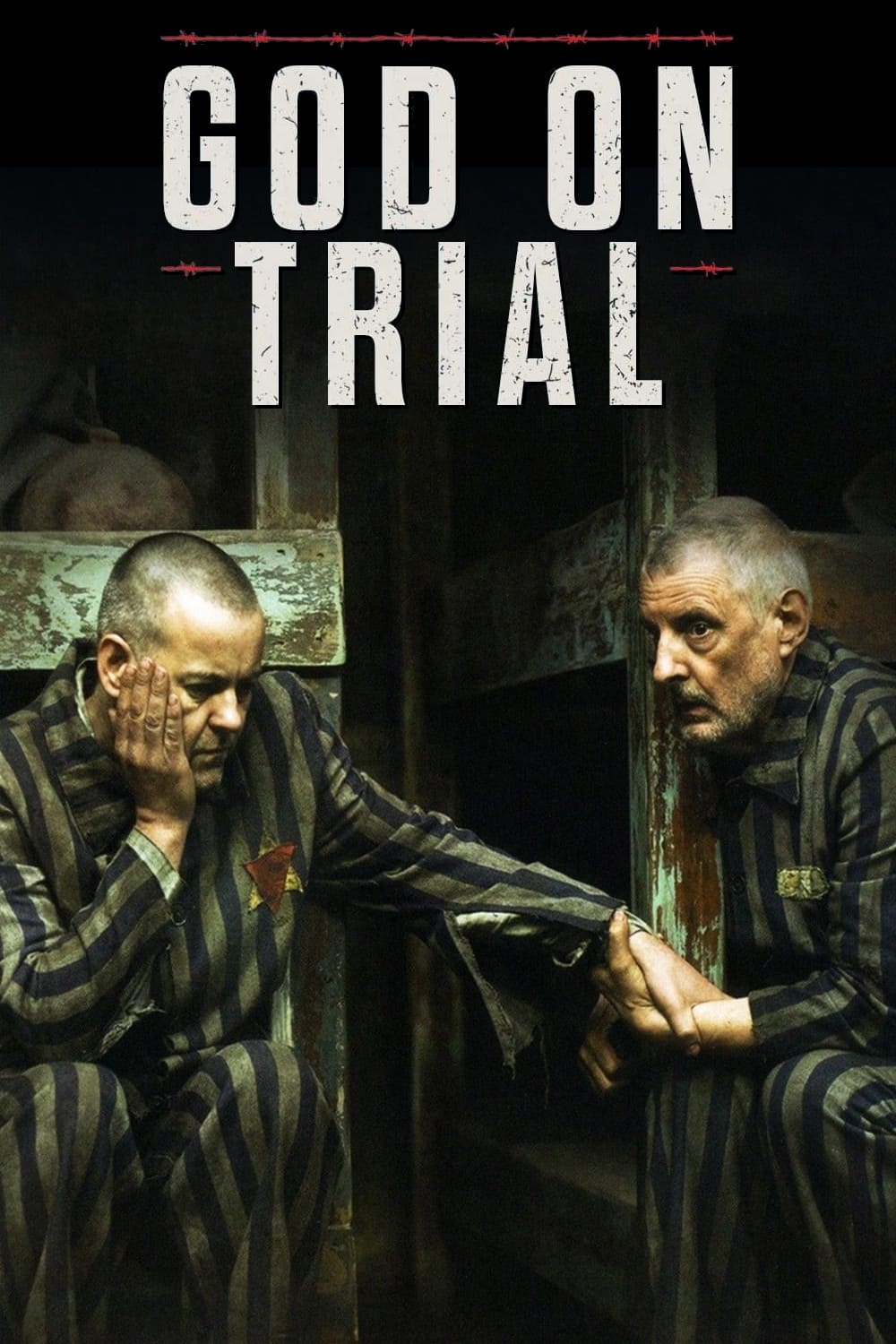
Plot Analysis Summary
Jewish prisoners debate whether God has kept the covenant while confronting persecution, dehumanization, and the struggle to preserve faith.
Story Structure — 5 Plot Phases
The Trial Begins
Prisoners facing death gather in a blockhouse and decide to put God on trial. They frame their case around the covenant and the suffering of their people.
Key Events
-
Prisoners Face Death — Jewish prisoners confront death and the suffering of their people.
Location: Auschwitz
-
A New Transport Arrives — A new transport arrives as the camp's brutal routines continue.
Location: Auschwitz
-
The Men Gather — Prisoners gather to consider their suffering and their bond with God.
Location: Blockhouse
-
God Is Put on Trial — The prisoners decide to judge whether God has broken the covenant.
Location: Blockhouse
-
The Covenant Is Examined — The case draws on the covenant and its promises to the Jewish people.
Location: Blockhouse
Faith Under Argument
The prisoners debate whether suffering tests faith or exposes a broken covenant. The discussion also considers sin and whether the camp's murderers could be instruments of God.
Key Events
-
The Covenant Is Examined — The case draws on the covenant and its promises to the Jewish people.
Location: Blockhouse
-
History Enters the Debate — The prisoners invoke repeated catastrophes in Jewish history.
Location: Blockhouse
-
Suffering as a Test — Some argue that suffering tests faith and demands continued loyalty to God.
Location: Blockhouse
-
Endurance Is Challenged — Others reject past endurance as an excuse for the present horror.
Location: Blockhouse
-
Sin Is Proposed — One argument suggests that the prisoners may have broken the covenant through sin.
Location: Blockhouse
-
The Instrument Question — The debate questions whether Hitler and the camp's murderers could be instruments of God.
Location: Blockhouse
The Cost of Survival
A prisoner describes accepting authority over others as a means of survival. A witness details the camp's deliberate stripping away of possessions, identity, family, and dignity.
Key Events
-
Survival and Authority — A prisoner explains that he accepted responsibility over others because he wanted to survive.
Location: Blockhouse
-
Degradation Is Described — A witness describes how the camp takes possessions, names, hair, families, and dignity.
Location: Blockhouse
Evidence and Covenant
Prayer and uncertainty briefly offer a possible consolation, but one judge rejects them as evidence. He returns the debate to whether God has kept the covenant, and the prisoners continue consulting scripture.
Key Events
-
Prayer Is Considered — The prisoners consider prayer and acknowledge that God's mind cannot be known.
Location: Blockhouse
-
Consolation Is Rejected — One judge rejects consolation and predictions as evidence in the trial.
Location: Blockhouse
-
The Covenant Remains the Question — The judge insists that the issue is whether God kept the covenant.
Location: Blockhouse
-
Deliberations Continue — The prisoners return to scripture and resume their deliberations.
Location: Blockhouse
Dignity Without Verdict
A man explains that camp disorder is an intentional means of dehumanization and urges the prisoners not to surrender their God. The transcript ends with the verdict unresolved and the prisoners struggling to preserve faith and dignity.
Key Events
-
Camp Disorder Is Explained — A man explains that filth and disorder are deliberate tools of dehumanization.
Location: Blockhouse
-
Faith Is Defended — He urges the others not to let their captors take their God as well.
Location: Blockhouse
-
Verdict Remains Unresolved — The trial ends without a stated verdict, leaving the struggle over dignity and faith unresolved.
Location: Blockhouse