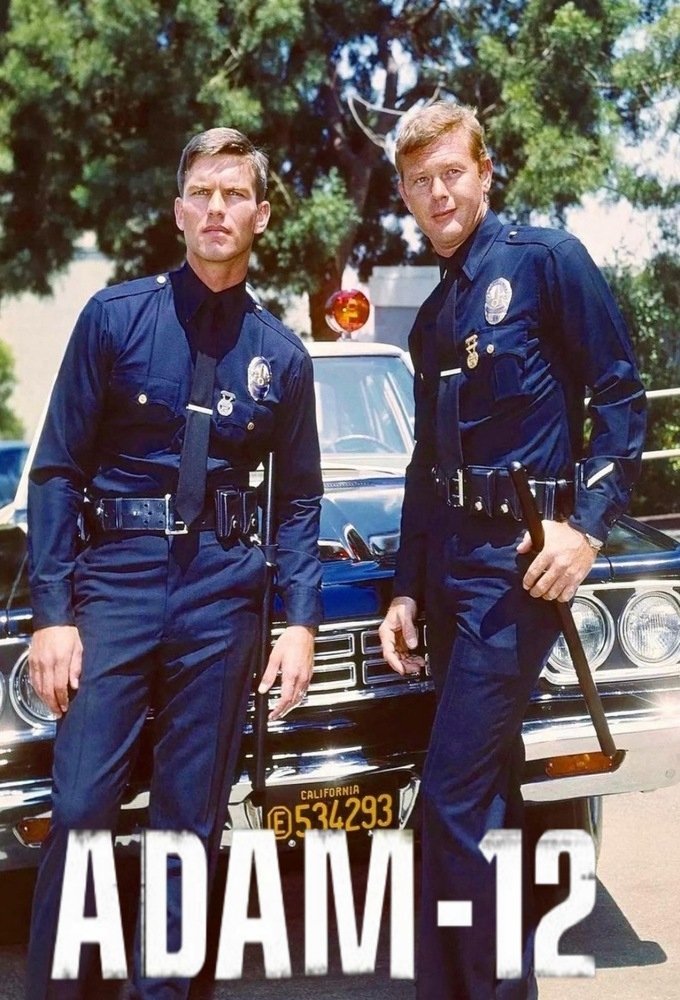
Adam-12 (1968) character relationship network mapped with AI analysis. Explore the connections, alliances, and conflicts between characters.
Characters
Officer Pete Malloy
(played by Martin Milner) — protagonist
LAPD officer in the Central Division. Initially intending to resign after his previous partner's death, he is assigned to train rookie Jim Reed. After witnessing Reed's potential, he stays on the forc...
Officer Jim Reed
(played by Kent McCord) — protagonist
Inexperienced LAPD rookie assigned to Malloy. After disobeying orders to singlehandedly arrest armed suspects, he earns Malloy's respect and completes a nine-month probationary period. More rigid than...
Sergeant MacDonald
(played by William Boyett) — minor
LAPD sergeant who primarily uses a station wagon version of the Adam-12 patrol vehicle. He serves as a senior officer, with Malloy occasionally filling in for him as the watch commander during the fin...
Canonical Relationships
Family, romantic, and professional connections based on plot evidence.
Officer Pete Malloy → Sergeant MacDonald
(Supervisor and Subordinate) — A standard law enforcement hierarchy where MacDonald oversees Malloy's duties while occasionally seeking his assistance for personal matters.
"MacDonald reports his own broken-in camper to the officers in Episode 3 and later refers Malloy to his brother's autobody shop in Episode 18, demonst...
Officer Jim Reed → Sergeant MacDonald
(Supervisor and Subordinate) — Reed operates under MacDonald's command, following orders during critical incidents despite potential tactical risks.
"MacDonald's authority extends to Reed, as seen in Episode 15 where Mac seemingly allows robbers to leave a bank, directly impacting Reed's safety and...
Story Dynamics
Alliances, conflicts, and narrative interactions that evolve throughout the story.
Officer Pete Malloy → Officer Jim Reed
(Unspoken Trust) — Maintain an unspoken, instinctive trust that requires minimal verbal coordination during high-pressure field operations.
"S2E12 hostage situation; S5E18 kidnapping escape; S7E24 shootout rescue; minimal verbal communication required in critical moments."
Story Analysis
Seven-season arc tracking the evolution of a patrol partnership from rookie probation to institutional legacy.
Plot Progression
Season 1: Foundation and Friction
— The series establishes the mentor-protégue dynamic as Malloy guides Reed through probationary challenges. Early calls introduce procedural learning, community friction, and the psychological weight of...
Season 2: Deepening Trust and Crisis
— Partnership solidifies through shared trauma and community outreach initiatives. Hostage situations and reckless colleague incidents force structured debriefing and emotional support protocols. The of...
Season 3: Ethical Grounding and Legacy
— The relationship evolves into a quasi-familial bond marked by shared personal milestones and moral clarity. Gang violence and internal affairs suspicions challenge their integrity. Data-driven policin...
Season 4: Tactical Synchronization
— Early methodological disagreements diminish as Reed matures into an equal partner. Ambush survival and procedural clashes demonstrate growing psychological endurance. Cross-department collaborations a...
Season 5: Crisis Adaptation and Resilience
— Kidnapping and equipment failures require rapid emotional recalibration and trust reinforcement under duress. Resource optimization and budget constraints force adaptive management. The officers navig...
Season 6: Institutional Wisdom and Outreach
— Cross-department exposure and community policing initiatives translate personal stress into mentorship and public trust. Air Support ride-alongs and airport duty demonstrate institutional adaptability...
Season 7: Legacy Transmission and Closure
— Reed's Medal of Valor and vice assignment mark the culmination of shared trauma into institutional legacy. Team policing initiatives and modernized tactics complete their narrative arc. The series con...