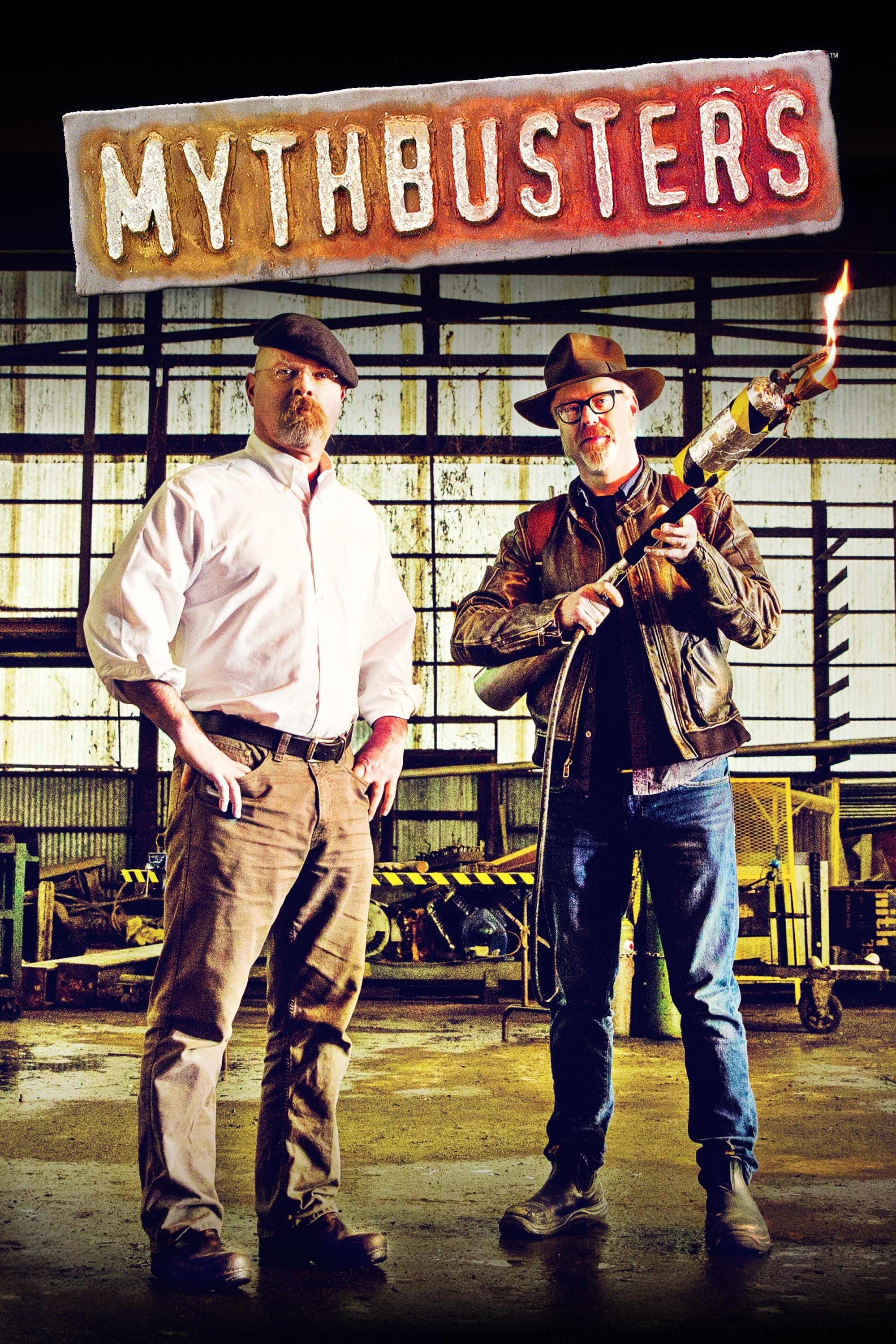
MythBusters (2003) interactive character relationship network and AI-powered story timeline. Explore the connections, alliances, and conflicts between characters across the narrative arc.
Overall narrative architecture across all 16 seasons, tracking the evolution from basic urban legend testing to high-profile scientific validation and cultural legacy.
Rating: 7.8/10 (657 votes)
The series establishes its core methodology by testing everyday urban legends and basic physics. Early experiments focus on survival myths, household hazards, and historical curiosities, building a reputation for rigorous, evidence-based debunking.
The team broadens its scope to include Hollywood stunts, historical reenactments, and complex mechanical tests. Revisiting past experiments with improved equipment addresses early criticism and solidifies the show's scientific credibility.
Cinematic action sequences and celebrity guest appearances become central to the narrative. The show leverages film industry connections to test high-risk stunts, blending entertainment with empirical validation.
Strategic partnerships with directors, chefs, and public figures elevate the production value. Complex survival and food science experiments dominate, emphasizing cross-disciplinary expertise and methodological refinement.
The series concludes with nostalgic revisits, large-scale volunteer tests, and a spectacular final experiment. The narrative arc resolves by celebrating the show's impact on public science literacy while delivering a definitive, high-impact sendoff.
Plot analysis generated from content on Wikipedia, licensed under CC BY-SA 4.0.
Related entry on Wikidata (Q486844), public domain (CC0).