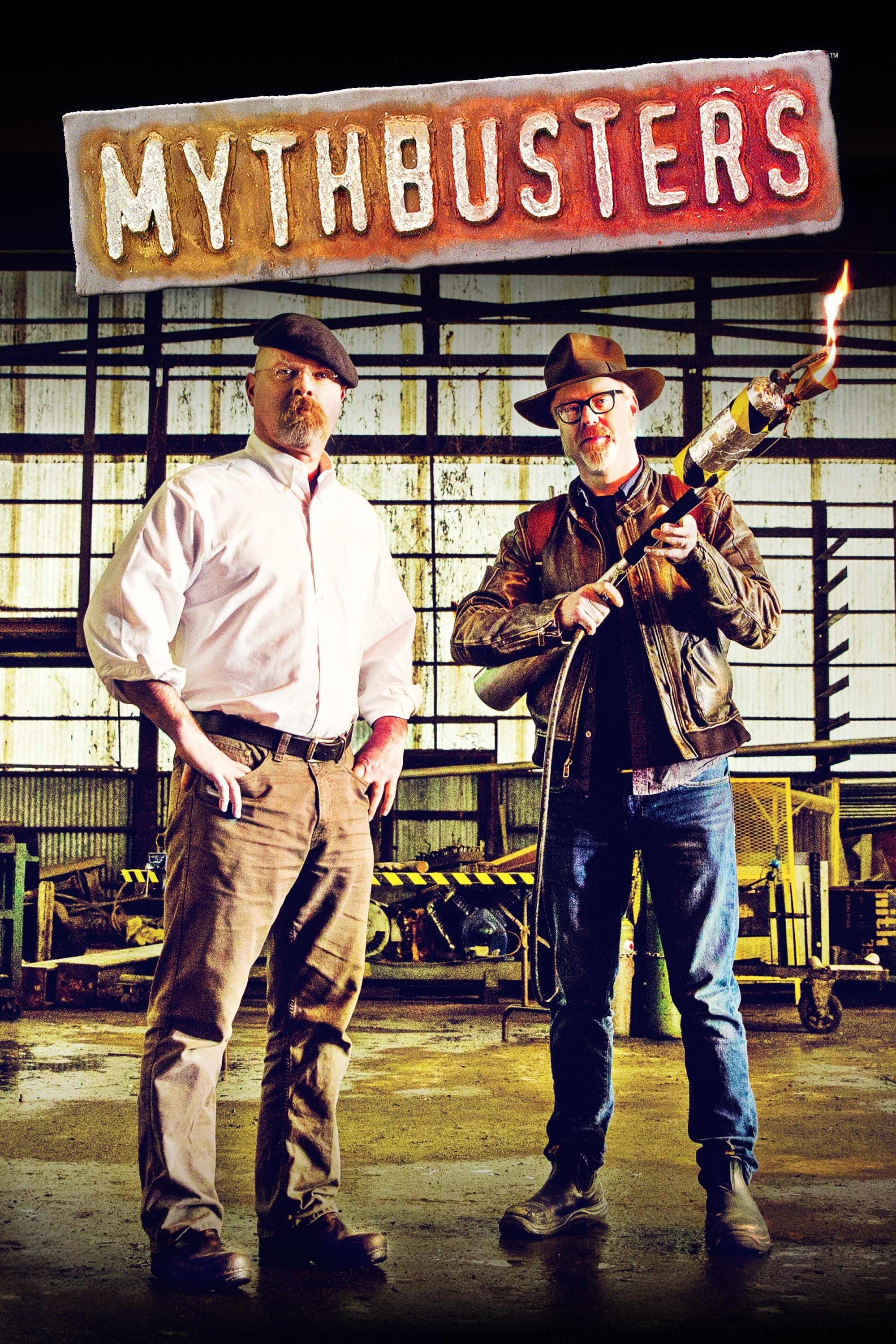
Story Structure — 5 Plot Phases
Seasons 1-3: Foundations of Scientific Skepticism
The series establishes its core methodology by testing everyday urban legends and basic physics. Early experiments focus on survival myths, household hazards, and historical curiosities, building a reputation for rigorous, evidence-based debunking.
Key Events
-
Jet-Assisted Chevy Launch — The team tests if rocket assistance can propel a classic car to extreme speeds. Characters: Self (Actor: Alton Brown)
Location: Test Track
-
Pop Rocks and Soda Disaster — Investigation into whether mixing candy and soda creates a hazardous reaction. Characters: Self (Actor: Barack Obama)
Location: Lab
-
Buried Alive Survival Test — Testing human limits and survival techniques when trapped underground. Characters: Self (Actor: Seth Rogen)
Location: Sand Pit
-
Alcatraz Escape Investigation — Reenacting historical prison escape methods to verify feasibility. Characters: Self (Actor: James Cameron)
Location: Recreation Facility
Seasons 4-6: Expanding the Myth-Busting Horizon
The team broadens its scope to include Hollywood stunts, historical reenactments, and complex mechanical tests. Revisiting past experiments with improved equipment addresses early criticism and solidifies the show's scientific credibility.
Key Events
-
Explosive Decompression Test — Simulating cabin pressure loss to test bullet-induced structural failure. Characters: Self (Actor: Alton Brown)
Location: Pressure Chamber
-
Chicken Gun Impact Study — Assessing biological projectile damage to aircraft components. Characters: Self (Actor: Barack Obama)
Location: Wind Tunnel
-
Bridge Collapse Rhythm Test — Testing if synchronized marching frequency can induce structural resonance. Characters: Self (Actor: Seth Rogen)
Location: Bridge Structure
-
Titanic Suction Simulation — Modeling underwater pressure dynamics during vessel sinking. Characters: Self (Actor: James Cameron)
Location: Water Tank
-
Concrete Burial Search — Searching for hidden remains using industrial equipment and forensic methods. Characters: Self (Actor: Alton Brown)
Location: Construction Site
Seasons 7-9: Hollywood Myths and Pop Culture Integration
Cinematic action sequences and celebrity guest appearances become central to the narrative. The show leverages film industry connections to test high-risk stunts, blending entertainment with empirical validation.
Key Events
-
Myth Revisited Reassessment — Retesting earlier experiments with improved methodology to address criticism. Characters: Self (Actor: Barack Obama)
Location: Main Lab
-
Scuba Diver Rescue Drill — Simulating aerial extraction and water displacement forces. Characters: Self (Actor: Seth Rogen)
Location: Pool
-
Archimedes Death Ray Revisit — Testing ancient optical weaponry with modern reflective arrays. Characters: Self (Actor: James Cameron)
Location: Sunlit Field
-
Elevator Jump Survival — Evaluating whether jumping at impact can reduce fall trauma. Characters: Self (Actor: Alton Brown)
Location: Elevator Shaft
-
Radar Detector Deflection — Testing visual and material interference with law enforcement technology. Characters: Self (Actor: Barack Obama)
Location: Highway
Seasons 10-12: High-Profile Collaborations and Culinary Science
Strategic partnerships with directors, chefs, and public figures elevate the production value. Complex survival and food science experiments dominate, emphasizing cross-disciplinary expertise and methodological refinement.
Key Events
-
Quicksand Immersion Test — Assessing human mobility and extraction techniques in viscous terrain. Characters: Self (Actor: Seth Rogen)
Location: Mud Pit
-
Jawbreaker Explosion Study — Investigating thermal expansion and structural failure in confectionery. Characters: Self (Actor: James Cameron)
Location: Lab
-
Pingpong Ball Lift — Calculating buoyancy requirements to raise submerged items. Characters: Self (Actor: Alton Brown)
Location: Ocean Surface
-
Boom-Lift Catapult Test — Repurposing industrial machinery for medieval-style launching. Characters: Self (Actor: Barack Obama)
Location: Open Field
-
Exploding House Fumes — Testing chemical compatibility and explosive potential of household cleaners. Characters: Self (Actor: Seth Rogen)
Location: House Model
Seasons 13-16: Legacy, Reunions, and the Grand Finale
The series concludes with nostalgic revisits, large-scale volunteer tests, and a spectacular final experiment. The narrative arc resolves by celebrating the show's impact on public science literacy while delivering a definitive, high-impact sendoff.
Key Events
-
Ming Dynasty Astronaut Launch — Simulating ancient spaceflight concepts with modern propulsion. Characters: Self (Actor: James Cameron)
Location: Desert Range
-
Brown Note Frequency Test — Investigating subsonic acoustic effects on human physiology. Characters: Self (Actor: Alton Brown)
Location: Sound Chamber
-
Salsa Escape Jailbreak — Testing escape feasibility using unconventional lubrication methods. Characters: Self (Actor: Barack Obama)
Location: Jail Cell
-
Port-a-Potty Combustion — Assessing gas accumulation and ignition risks in confined sanitation units. Characters: Self (Actor: Seth Rogen)
Location: Construction Site
-
Contagious Yawn Study — Analyzing psychological and physiological triggers for social mirroring. Characters: Self (Actor: James Cameron)
Location: Observation Room
-
Six-Pack Cooling Race — Comparing thermal transfer methods for rapid beverage chilling. Characters: Self (Actor: Alton Brown)
Location: Lab
-
Civil War Bullet Impregnation — Testing ballistic trajectory and ricochet physics in historical contexts. Characters: Self (Actor: Barack Obama)
Location: Medical Bay
-
Vocal Glass Shattering — Determining if human voice frequency can induce structural resonance. Characters: Self (Actor: Seth Rogen)
Location: Acoustic Lab
-
Personal Jet Pack Build — Constructing and testing personal flight apparatus from scratch. Characters: Self (Actor: James Cameron)
Location: Hangar