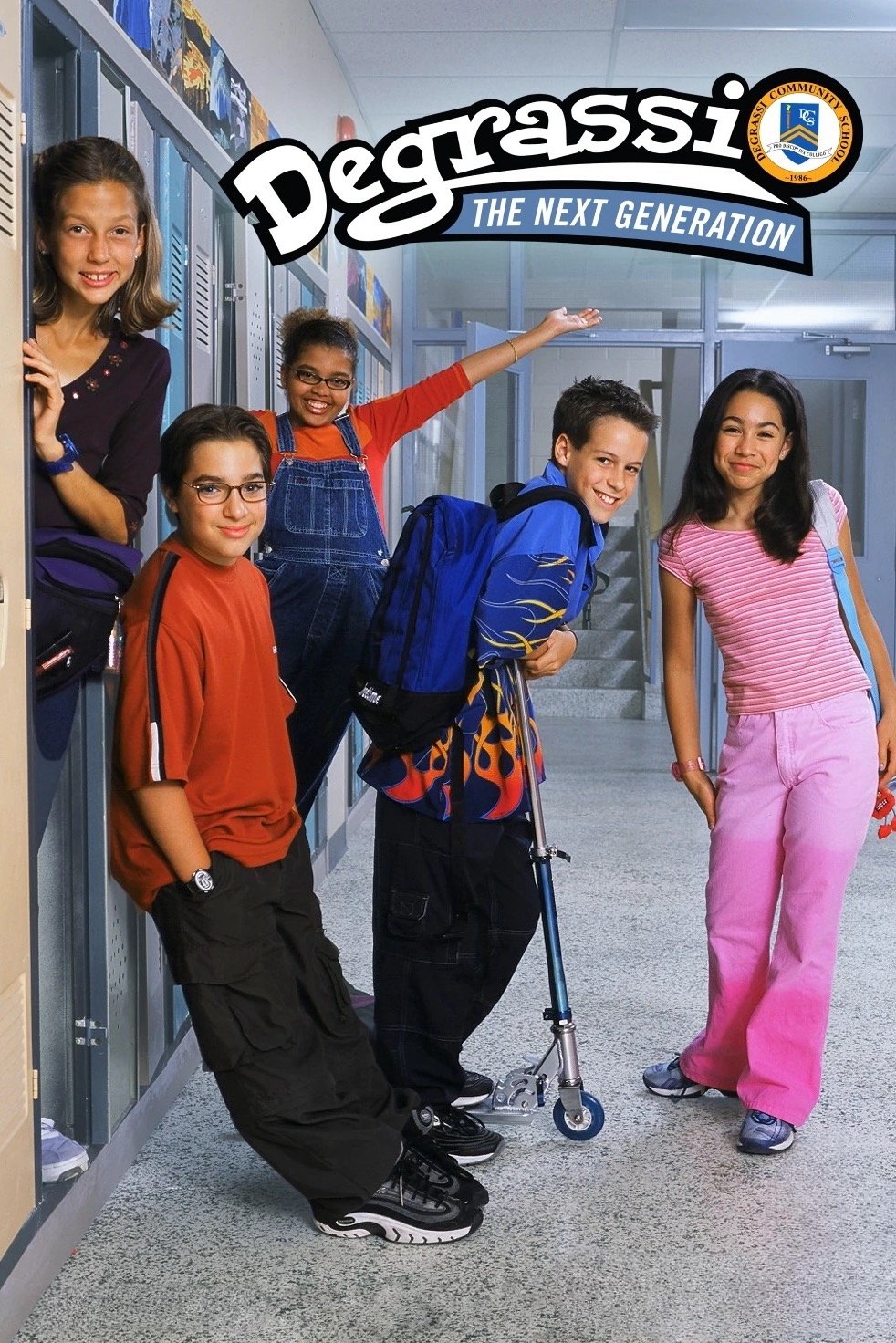
Degrassi (2001) interactive character relationship network and AI-powered story timeline. Explore the connections, alliances, and conflicts between characters across the narrative arc.
The fourteen-season narrative follows successive student generations as private adolescent problems become public tests of responsibility, identity, loyalty, and institutional trust.
"They begin dating, break up, reconnect, struggle with Eli's anxiety and instability, maintain a long-distance relationship, and remain emotionally co...
"The Hollingsworth siblings confront their father's political behavior and its effect on the family."
"Maya and Zig repeatedly pursue each other, face rivalry with Miles, and Maya later tries to protect Zig from criminal danger."
"They bond during the Paris trip, grow closer, and repeatedly struggle with family pressure, secrecy, and emotional distance."
"They repeatedly discuss relationships, school problems, family issues, and Clare's pregnancy-related dilemma."
"Becky challenges Zo\u00eb's conduct, investigates a video involving Zo\u00eb, and later faces a moral conflict over testimony."
"Miles and Maya compete for each other's affection, and their relationship becomes part of the later romantic triangle involving Zig."
"Maya repeatedly supports Tristan, searches for him, speaks up for him, and becomes involved in his personal crises."
Rating: 7.6/10 (115 votes)
The school community is introduced through peer pressure, family conflict, early romance, and questions of responsibility. Private choices begin producing public consequences.
Students confront pregnancy, assault, illness, sexuality, activism, and grief. Trust becomes a central measure of friendship.
Romantic betrayal, adoption, pregnancy, abuse, illness, and school violence raise the stakes. Relationships begin to carry lasting consequences.
The school shooting transforms the community and forces students to confront guilt, grief, forgiveness, and recovery. Identity and sexuality remain major sources of conflict.
Students deal with addiction, eating disorders, friendship breakdowns, and the difficulty of rebuilding trust. Graduation makes change unavoidable.
University, work, romance, and independence widen the characters' worlds. Old relationships remain powerful even as new responsibilities emerge.
Students face illness, trauma, sexuality, family conflict, and changing ambitions. Friendship networks become more important than school status.
A younger group confronts modeling pressure, gender identity, sexuality, disability, and family trauma. Older students begin handing the narrative to a new generation.
Online identity, sexuality, pregnancy, addiction, and family instability become increasingly visible. Secrets repeatedly collide with public reputation.
Gang violence, mental health, transgender identity, pregnancy, and school discipline create intersecting crises. Students begin demanding accountability from peers and institutions.
Post-traumatic stress, addiction, family illness, sexuality, and relationship breakdowns dominate the school community. Coping strategies often become new sources of danger.
Students confront concussion, harassment, identity, family instability, and suicide. Grief reshapes the friendships and romances that remain.
Travel, journalism, assault, criminal danger, and family secrets move private pain into public view. The characters increasingly challenge institutions and inherited power.
The final season brings together pregnancy, family politics, online exploitation, criminal threats, romance, and graduation. The narrative closes with growth but not complete resolution.
Plot analysis generated from content on Wikipedia, licensed under CC BY-SA 4.0.
Related entry on Wikidata (Q1182912), public domain (CC0).