Plot Analysis Summary
A multi-vignette film exploring historical shifts, institutional control, and abstract desires for utopian escape.
Story Structure — 4 Plot Phases
Historical Departures
The film opens with Civil War-era vignettes and introduces the train escape to Vizcaya alongside the abstract search for a Gilbert Islands utopia.
Key Events
-
Civil War Era Opening — Film opens with vignettes tracing origins from the Civil War period.
Location: Historical Battlefield
-
Train Departure to Vizcaya — A train bound for Vizcaya presents a potential escape route to France.
Location: Train Station
-
Gilbert Islands Utopia Vision — An abstract narrative thread explores the search for a utopian society.
Location: Abstract Landscape
-
Social Services Intervention — Oppressive authorities attempt to force a family into the state-sponsored order.
Location: Rural Settlement
Institutional Friction
Oppressive social services clash with a hunter-gatherer family, while a 1950s classroom highlights the tension between rigid education and student imagination.
Key Events
-
Hunter-Gatherer Relocation — The family faces pressure to abandon traditional lifestyles for modern integration.
Location: State Camp
-
State Integration Attempt — Bureaucratic processes attempt to assimilate the displaced family.
Location: Government Facility
-
1950s Classroom Setting — The narrative shifts to a mid-century educational environment.
Location: Schoolroom
-
Schoolmaster's Lecture — The instructor delivers rigid, dry logic to the students.
Location: Classroom
-
Student Daydreaming — A student escapes the lecture through imaginative daydreaming.
Location: Classroom
Modern Disillusionment
A driving school scenario reveals the shock of external reality, followed by technicians debating political censorship on urban graffiti.
Key Events
-
Driving School Enrollment — A new vignette introduces a driving lesson scenario.
Location: Rapid Driving School
-
Girl's Interior Focus — The student driver concentrates solely on the vehicle's interior mechanics.
Location: Car Interior
-
Exterior Awakening Shock — Glimpsing the outside world triggers a rude awakening for the driver.
Location: Roadside
-
Graffiti Removal Site — Technicians arrive at a location marked with political graffiti.
Location: Urban Wall
-
Technician Debate — Workers engage in lengthy discussions over the political implications of the tags.
Location: Urban Wall
-
Selective Censorship Decision — The team decides which graffiti to erase and which to permit.
Location: Urban Wall
Abstract Convergence
The narrative threads merge as the timeline reaches the Spanish Economic Miracle, culminating in reflections on utopia and final escape imagery.
Key Events
-
El Otro Lado Concept — The narrative explores the abstract desire to escape to another side.
Location: Abstract Threshold
-
Social Order Escape Fantasy — Characters visualize breaking free from systemic constraints.
Location: Mental Space
-
Spanish Economic Miracle Shift — The timeline advances to Spain's rapid economic transformation era.
Location: Modern Cityscape
-
Vignette Convergence — Separate storylines thematically intersect near the conclusion.
Location: Narrative Space
-
Utopia Reflection — The film contemplates the feasibility of the sought utopian ideals.
Location: Abstract Horizon
-
Final Escape Imagery — Visual metaphors of departure and liberation close the narrative.
Location: Open Road
-
Abstract Narrative Conclusion — The film ends on a contemplative note regarding societal escape.
Location: Cinema Screen
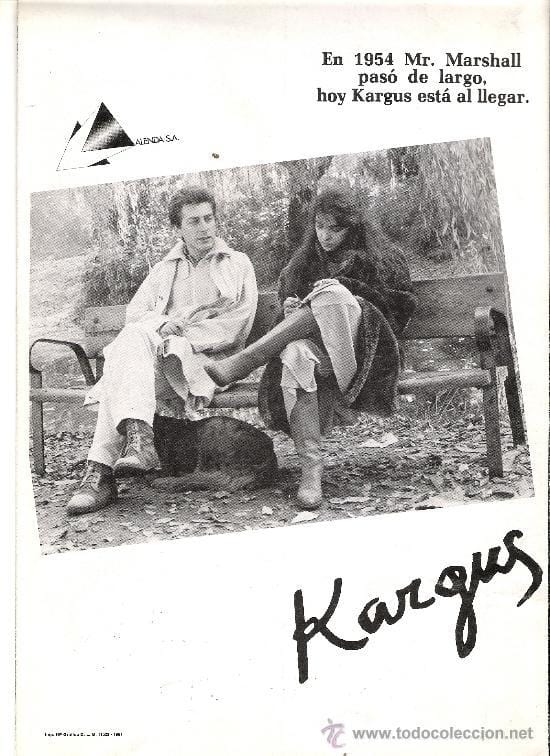
A series of vignettes is woven into a larger story in this first film to be written and directed by Juan Minon and Miguel A. Trujillo. A writer who works in a bookshop to earn a living meets a wealthy American named Kargus looking for talent to ensconce in his projected art colony in the Gilbert Islands. In order to convince the American to take him on as a good prospect, the writer promotes his own stories -- the vignettes seen in the film. One story is about a young man trying to impress his girlfriend with his new car, a car he indirectly borrowed from a rental agency. His efforts to hide the rental sign on top of the car lead to various comical posturings. Other vignettes are from the era of the Spanish Civil War, including one about two people trying to survive by hunting cats and killing them to sell to butchers. Another vignette shows pro-Franco activists eradicating anti-Franco graffiti in Madrid.