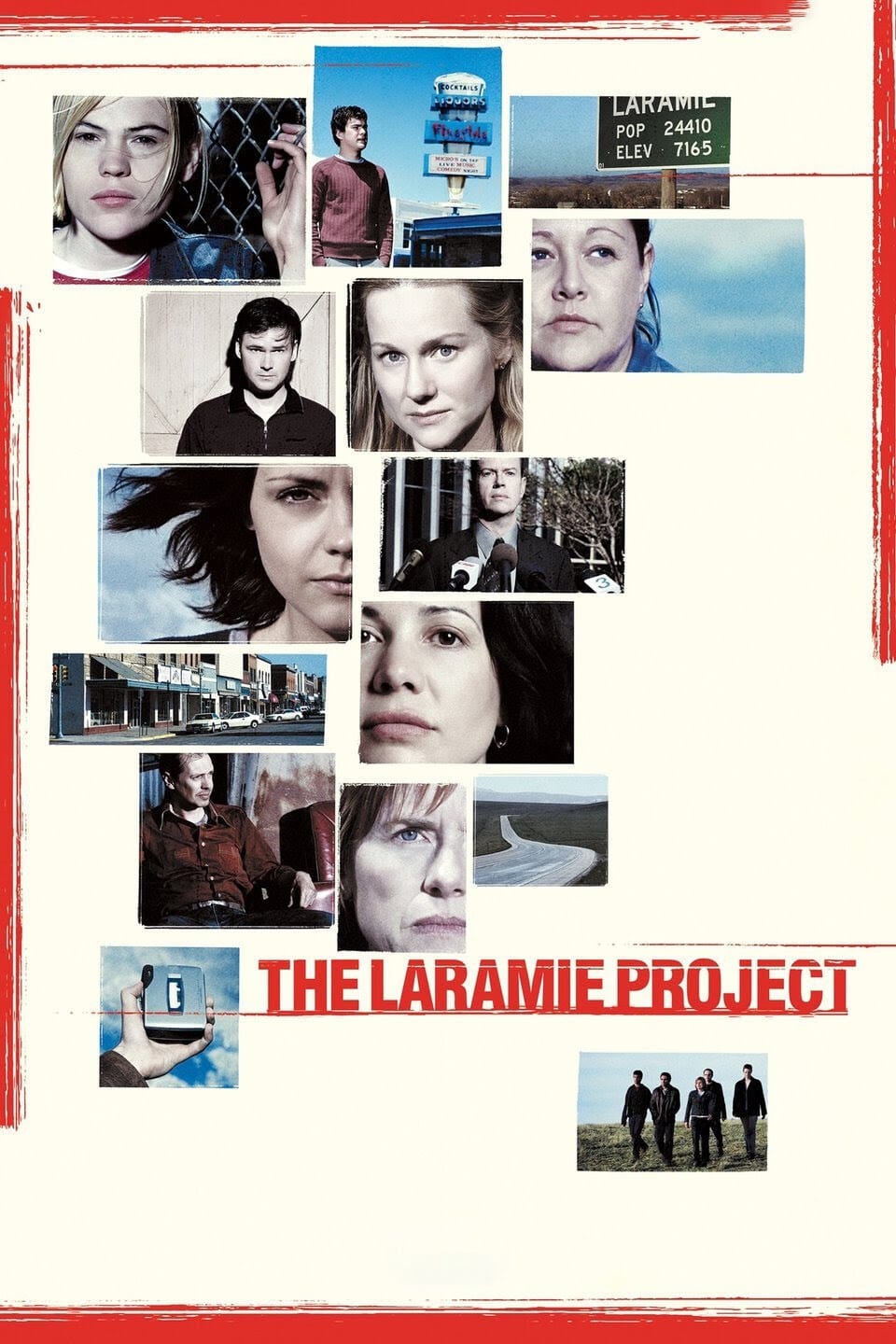
The Laramie Project (2002) — AI Story Visualization
Plot Analysis Summary
A community examines violence, prejudice, responsibility, and the possibility of change after a brutal attack.
Story Structure — 5 Plot Phases
A Town Shattered
Laramie's self-image collapses after a young man is brutally attacked and left near death. The discovery that the suspects are local intensifies the town's shame.
Key Events
Laramie Before the Crime — Residents identify Laramie with beauty and independent identity.
Location: Laramie, Wyoming
Brutal Fence Attack — A young man is beaten, tied to a fence, and left near death.
Location: A fence outside Laramie
Local Suspects Identified — Residents learn that both suspects grew up in Laramie.
Location: Laramie, Wyoming
National Media Arrives — National media attention turns the town into a symbol of violence and prejudice.
Location: Laramie, Wyoming
Theater Company Travels — Moisés Kaufman and a theater company travel to interview residents.
Location: Laramie, Wyoming
Voices Under Pressure
A theater company arrives to record local testimony. Students fall silent, while residents offer sharply conflicting accounts of the attack.
Key Events
Theater Company Travels — Moisés Kaufman and a theater company travel to interview residents.
Location: Laramie, Wyoming
Students Stop Speaking — A teacher says students became silent after reporters arrived.
Location: A local school
Bar Encounter Recalled — A bartender recalls the suspects meeting the victim and ordering beer.
Location: A local bar
Conflicting Explanations — Residents repeat competing explanations for the assault.
Location: Laramie interview settings
Prejudice Challenged — Some residents blame the victim while others reject that reasoning.
Location: Laramie interview settings
The Cost Of Violence
The consequences reach the responding officer and her family through a possible HIV exposure. Residents debate unequal attention and whether the assault was a hate crime.
Key Events
Prejudice Challenged — Some residents blame the victim while others reject that reasoning.
Location: Laramie interview settings
Officer Faces Exposure — A police officer learns that contact with blood may have exposed her to HIV.
Location: The crime scene
Family Fear Emerges — The officer's mother describes the fear caused by the exposure risk.
Location: The officer's home
Unequal Attention Debated — Residents debate why this crime receives more attention than a patrolman's death.
Location: Laramie interview settings
Hate Crime Argument — Others argue that the deliberate assault should be understood as a hate crime.
Location: Laramie interview settings
A Moral Reckoning
At a vigil, Father Roger Schmit connects verbal abuse with physical violence. The legal case and public arguments force the community to examine its assumptions.
Key Events
Hate Crime Argument — Others argue that the deliberate assault should be understood as a hate crime.
Location: Laramie interview settings
Vigil Begins — Father Roger Schmit speaks at a vigil about violence against gay people. Characters: Father Roger SchmitLocation: A Laramie vigil
Verbal Abuse As Violence — Father Roger Schmit argues that verbal abuse can grow into physical attacks. Characters: Father Roger SchmitLocation: A Laramie vigil
Prosecution Announces Penalty — The County's Attorney's Office announces a death-penalty prosecution.
Location: The County's Attorney's Office
Community Reconsiders Responsibility — The interviews question what the town taught the suspects.
Location: Laramie interview settings
Honesty And Change
The interviews end without a simple resolution. Laramie is challenged to hear the suspects' story and decide whether the tragedy can produce greater honesty and change.
Key Events
Community Reconsiders Responsibility — The interviews question what the town taught the suspects.
Location: Laramie interview settings
Town Confronts Its Story — Laramie is challenged to confront prejudice instead of hiding behind its image.
Location: Laramie, Wyoming
Listening To The Suspects — The closing interviews insist that the suspects' story must be heard.
Location: Laramie interview settings
Possibility Of Change — The tragedy becomes a challenge to pursue honesty and change. Characters: Father Roger SchmitLocation: Laramie, Wyoming
Story Breakdown
Laramie's Original Image — The town begins with a proud identity that is transformed by violence.
Independent Town — Residents associate Laramie with beauty and independence.
Violent Disruption — A young man is attacked and left near death.
The Local Suspects — The town learns that the suspected attackers are connected to Laramie itself.
Hometown Connection — Residents discover that both suspects grew up locally.
Public Shame — The revelation damages the town's preferred self-image.
The Interview Project — A theater company gathers testimony to create a theatrical account of the event.
Silent Students — A teacher explains that students stopped speaking after reporters arrived.
Conflicting Testimony — Residents provide incompatible explanations for the assault.
Prejudice And Blame — The interviews expose competing ideas about responsibility and motive.
Victim Blaming — Some residents assign partial blame to the victim.
Hate Crime Debate — Others argue that hostility toward gay people motivated the attack.
Consequences Of Violence — The crime affects responders, families, and public debates about attention and justice.
Exposure Fear — A responding officer fears possible HIV exposure from blood contact.
Justice Comparison — Residents compare the case with the death of a local patrolman.
A Challenge To Change — The closing testimony asks Laramie to confront its culture and pursue honesty.
Vigil Message — Father Roger Schmit links verbal abuse with physical violence.
Unresolved Reckoning — The community must listen, reflect, and decide whether change is possible.
"The Laramie Project" is set in and around Laramie, Wyoming, in the aftermath of the murder of 21-year-old Matthew Shepard. To create the stage version of "The Laramie Project," the eight-member New York-based Tectonic Theatre Project traveled to Laramie, Wyoming, recording hours of interviews with the town's citizens over a two-year period. The film adaptation dramatizes the troupe's visit, using the actual words from the transcripts to create a portrait of a town forced to confront itself.