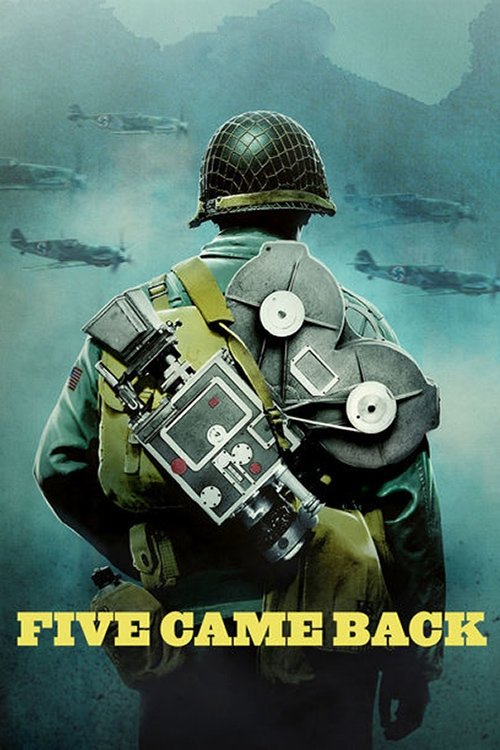
Explores the WWII service and cinematic legacy of five American directors through archival footage and modern commentary.
Story Structure — 4 Plot Phases
Frontline Deployments
The documentary introduces the five directors and their initial deployment to WWII theaters across the Pacific and European fronts.
Key Events
Introduction of Five Directors — Overview of the five filmmakers deployed to WWII theaters.
Location: U.S. Military Archives
Streep Narration Begins — Streep opens with historical context and wartime background.
Location: Studio
Ford Documents Midway — Ford captures combat footage under dangerous conditions.
Location: Pacific Theater
Capra's Propaganda Mission — Capra receives orders to produce wartime propaganda films.
Location: Washington D.C.
Huston Films Aleutians — Huston records the harsh realities of the Aleutian campaign.
Location: Aleutian Islands
Wyler Boards B-17 Bombers — Wyler risks his life to film bomber crew experiences.
Location: European Theater
Modern Commentary
Contemporary filmmakers analyze the wartime works and personal legacies of the original directors through structured interviews.
Key Events
Wyler Boards B-17 Bombers — Wyler risks his life to film bomber crew experiences.
Location: European Theater
Stevens Documents Camps — Stevens captures the horrific reality of liberated camps.
Location: German Concentration Camps
Spielberg Analyzes Wyler — Spielberg breaks down Wyler's immersive documentary style.
Location: Modern Studio
Coppola Discusses Huston — Coppola highlights Huston's gritty realism and service.
Location: Modern Studio
del Toro Reflects on Capra — del Toro evaluates Capra's patriotic messaging and legacy.
Location: Modern Studio
Greengrass Examines Ford — Greengrass traces Ford's shift from fiction to frontline docs.
Location: Modern Studio
Kasdan Explores Stevens — Kasdan discusses Stevens' unflinching war trauma portrayal.
Location: Modern Studio
Archival Revelations
Restored footage and historical records expose the harsh realities, ethical dilemmas, and unfiltered trauma of wartime documentation.
Key Events
Kasdan Explores Stevens — Kasdan discusses Stevens' unflinching war trauma portrayal.
Location: Modern Studio
Archival Footage Restoration — Decades-old footage is restored for modern audiences.
Location: National Archives
Directors Personal Accounts — Personal wartime diaries reveal the filmmakers' inner thoughts.
Location: Historical Records
Modern Cinema Impact — Modern directors acknowledge the profound influence of the docs.
Location: Film Industry
Propaganda Legacy Debate — Discussion on the ethical and artistic impact of propaganda.
Location: Academic Panel
Ethical Documentation Debate — Debate over the responsibility of filming human suffering.
Location: Film Festival
Enduring Cinematic Legacy
The film concludes by tracing the profound influence of these documentaries on modern cinema, historical memory, and ethical storytelling.
Key Events
Ethical Documentation Debate — Debate over the responsibility of filming human suffering.
Location: Film Festival
Spielberg Deepens Analysis — Spielberg details how Wyler shaped modern documentary craft.
Location: Modern Studio
Coppola Highlights Huston — Coppola emphasizes Huston's blend of action and narrative.
Location: Modern Studio
Legacy Synthesis — Film concludes by synthesizing the enduring cinematic impact.
Location: Documentary Screen
Historical Recap — Streep wraps up the historical overview and themes.
Location: Studio
Story Breakdown
Wartime Deployments — Tracks the initial military assignments and frontline documentation efforts of the five directors.
Ford Pacific Mission — Ford captures combat footage under dangerous Pacific conditions.
Capra Propaganda Unit — Capra receives orders to produce patriotic wartime films.
Wyler Bomber Recon — Wyler risks his life filming bomber crew experiences.
Modern Director Insights — Contemporary filmmakers provide expert analysis on the historical works and personal legacies.
Spielberg on Wyler — Spielberg breaks down Wyler's immersive documentary style.
Coppola on Huston — Coppola highlights Huston's gritty realism and service.
del Toro on Capra — del Toro evaluates Capra's patriotic messaging and legacy.
Archival Footage Analysis — Examines the restoration, presentation, and historical value of decades-old film reels.
Restoration Process — Decades-old footage is carefully restored for modern audiences.
Combat Documentation — Analysis of raw battlefield footage and its historical accuracy.
Camp Liberation Reels — Review of Stevens' unflinching documentation of liberated camps.
Ethical Historical Debates — Explores the moral responsibilities and artistic impacts of wartime propaganda and trauma filming.
Propaganda Impact — Discussion on the effectiveness and manipulation of wartime messaging.
Trauma Representation — Debate over the ethical boundaries of filming human suffering.
Journalistic Responsibility — Analysis of the filmmakers' duty to truth versus military orders.
Cinematic Legacy Formation — Traces how the wartime techniques and narratives shaped modern documentary and narrative cinema.
Technique Evolution — How handheld cameras and immersive editing changed film craft.
Narrative Innovation — The shift from staged fiction to authentic frontline storytelling.
Genre Influence — The lasting impact on war documentaries and historical dramas.
Final Synthesis Conclusion — Concludes the documentary by tying together historical context, modern analysis, and enduring cultural impact.
Streep Narration Wrap — Streep delivers the final historical overview and thematic closure.
Historical Context Recap — Summary of the directors' contributions to WWII media efforts.
Enduring Cultural Impact — Reflection on how these films continue to shape public memory.
The extraordinary story of how Hollywood changed World War II – and how World War II changed Hollywood, through the interwoven experiences of five legendary filmmakers who went to war to serve their country and bring the truth to the American people: John Ford, William Wyler, John Huston, Frank Capra, and George Stevens. Based on Mark Harris’ best-selling book, “Five Came Back: A Story of Hollywood and the Second World War.”