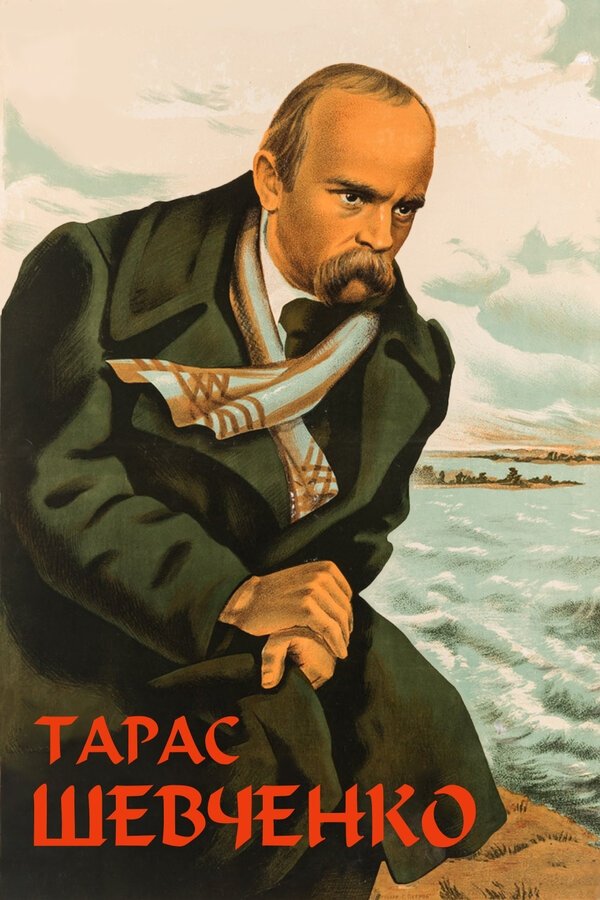
Taras Shevchenko (1951) character relationship network mapped with AI analysis. Explore the connections, alliances, and conflicts between characters.
Characters
Taras Shevchenko
(played by Sergey Bondarchuk) — protagonist
The central protagonist, a Ukrainian poet and artist who identifies true art as serving the common people. Exiled by Tsar Nicholas I to a distant Caspian fortress as a low-ranking soldier and banned f...
Nikolay Chernyshevsky
(played by Vladimir Chestnokov) — supporting
A prominent intellectual who tirelessly campaigns for Shevchenko's release from exile. He shares the poet's vision of a future where Russian and Ukrainian peoples overthrow the chains of slavery.
Nikolay Dobrolyubov
(played by Nikolai Timofeyev) — supporting
A writer and critic who works alongside Chernyshevsky to secure the poet's freedom. He joins Shevchenko in dreaming of a bright, liberated future for their nations.
Irakli Uskov
(played by Dmytro Milyutenko) — supporting
Kosarev
(played by Mark Bernes) — supporting
A fortress captain who assists and supports the exiled poet during his forced military service.
Skobelev
(played by Mikhail Kuznetsov) — supporting
A Ukrainian soldier stationed at the fortress who offers steadfast support to Shevchenko during his exile.
Nicholas I / Alexander III
(played by Mikhail Nazvanov) — minor
Canonical Relationships
Family, romantic, and professional connections based on plot evidence.
Kosarev → Irakli Uskov
(Professional Fortress Associate) — Their military roles place them within the same fortress structure.
Kosarev is described as a captain and Uskov as the major of the fortress, where both support Shevchenko.
Nikolay Chernyshevsky → Nikolay Dobrolyubov
(Professional Collaborator) — They form an intellectual partnership focused on the poet's liberation.
The plot states that Chernyshevsky and Dobrolyubov work together to secure Shevchenko's release.
Story Dynamics
Alliances, conflicts, and narrative interactions that evolve throughout the story.
Skobelev → Kosarev
(Social Fortress Associate) — They belong to the limited support network surrounding Shevchenko in exile.
Both Skobelev and Kosarev are identified as supporters of Shevchenko during his service at the Caspian fortress.
Nikolay Dobrolyubov → Nicholas I / Alexander III
(Conflict Political Opponent) — Dobrolyubov's actions oppose the imperial suppression of the poet.
Dobrolyubov works to free Shevchenko from the exile imposed by Nicholas I.
Nikolay Chernyshevsky → Nicholas I / Alexander III
(Conflict Political Opponent) — His liberation campaign challenges the imperial policy toward Shevchenko.
Chernyshevsky campaigns for the release of a poet exiled and punished by Nicholas I.
Taras Shevchenko → Nikolay Dobrolyubov
(Alliance Liberation Ally) — Dobrolyubov supports both Shevchenko's release and his emancipatory ideals.
Dobrolyubov works alongside Chernyshevsky to secure Shevchenko's freedom and later dreams with him of liberation.
Taras Shevchenko → Nikolay Chernyshevsky
(Alliance Liberation Ally) — Chernyshevsky becomes a major advocate for Shevchenko's freedom.
Chernyshevsky works hard for Shevchenko's release and later shares the poet's dream of a future without slavery.
Taras Shevchenko → Irakli Uskov
(Alliance Supporter) — Uskov's support contrasts with the imperial punishment imposed on Shevchenko.
The major of the fortress, Uskov, is named as one of Shevchenko's supporters during exile.
Taras Shevchenko → Nicholas I / Alexander III
(Conflict Oppressor) — The ruler's repression directly shapes Shevchenko's exile and suffering.
Nicholas I exiles Shevchenko to a distant Caspian fortress, orders him to serve as an ordinary soldier, and forbids him to write or draw.
Taras Shevchenko → Kosarev
(Alliance Supporter) — Kosarev assists the imprisoned poet within the fortress setting.
The plot identifies captain Kosarev among the people who support Shevchenko during his difficult exile.
During the poet's difficult days at the fortress, Ukrainian soldier Skobelev supports Shevchenko.
Story Analysis
A poet's commitment to the people survives political pressure, military exile, and imperial censorship.
Plot Progression
The Artist Finds His Purpose
— Shevchenko studies at the Saint Petersburg Academy of Arts while carrying the memory of peasant hardship. He concludes that true art must serve ordinary people.
Poetry Returns To Ukraine
— After graduation, Shevchenko returns to Ukraine and writes with love for the common people. Attempts by influential groups to tame him fail because he chooses popular causes.
Fame Meets Imperial Repression
— Shevchenko's freedom-loving creativity becomes known throughout Russia. Nicholas I responds by sending him to a Caspian fortress as a soldier and banning his writing and drawing.
Allies In The Fortress
— Exile becomes a period of hardship, but Skobelev, Kosarev, and Uskov support the poet. Their solidarity provides emotional strength under military punishment.
Freedom And A Shared Future
— Chernyshevsky and Dobrolyubov work for Shevchenko's release, which eventually succeeds despite his illness and age. Together they imagine Russian and Ukrainian liberation from slavery.