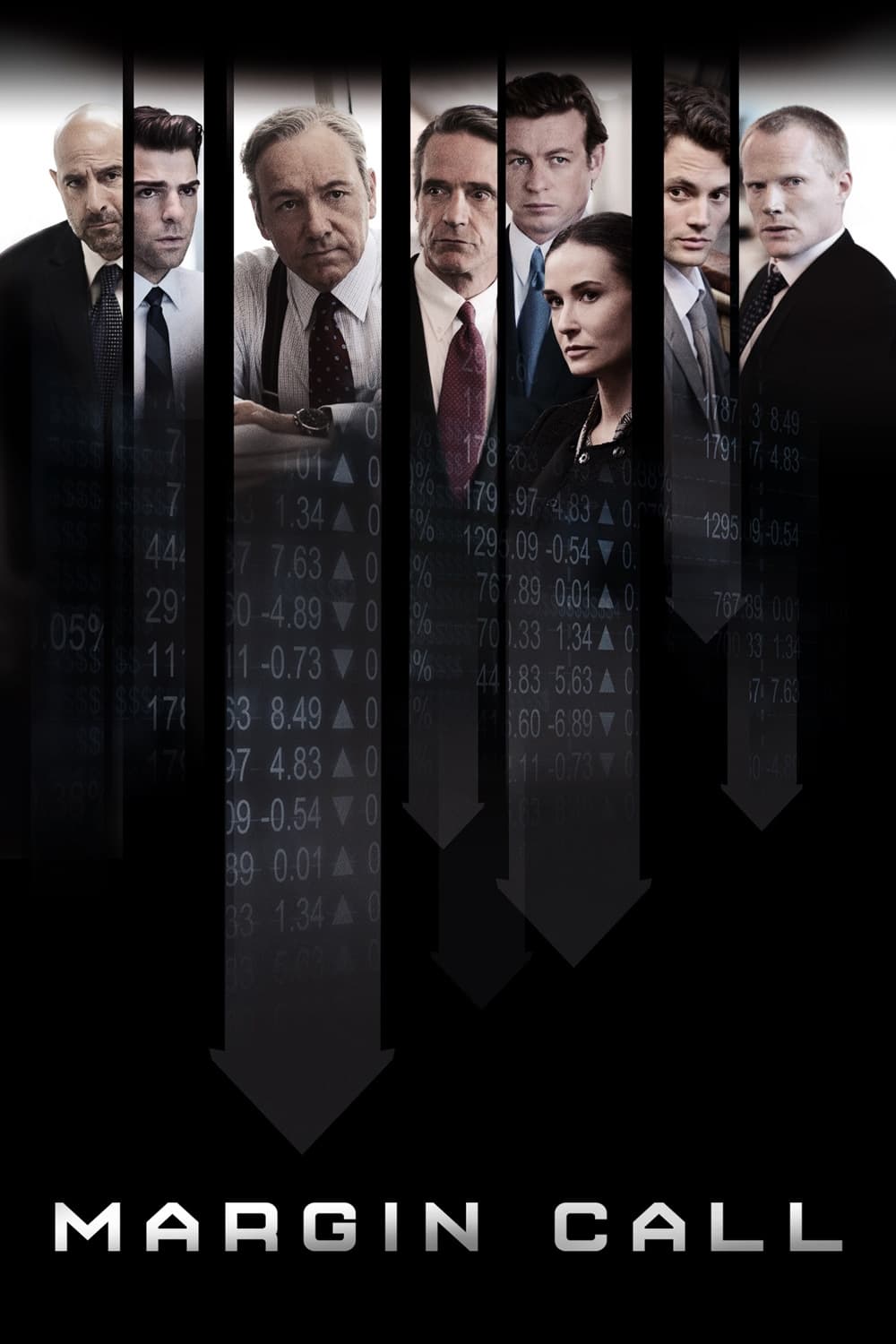
Margin Call (2011) character relationship network mapped with AI analysis. Explore the connections, alliances, and conflicts between characters.
Senior executive overseeing credit trading. Initially opposes the fire sale due to reputational concerns but executes it to save the firm. Later resigns over moral conflict, is persuaded to stay for f...
Junior analyst who uncovers a critical flaw in the firm's risk model via a flash drive. His findings expose severe over-leveraging in MBS assets, triggering the internal crisis and subsequent fire sal...
Head of credit trading who escalates risk findings to management. He attempts to retrieve the fired risk manager Eric Dale and offers philosophical reassurance to junior analysts about the nature of f...
The ruthless CEO who prioritizes corporate survival above all else. He approves the destructive fire sale of toxic assets, shifts blame to Sarah Robertson, and manipulates key employees to stay, justi...
Division head who validates the crisis findings and advocates for the aggressive fire sale strategy. He plays a key role in coercing Eric Dale into compliance by threatening his financial benefits, di...
Junior analyst pulled back into the office to assist with the crisis. He accompanies Emerson to visit Eric Dale and represents the younger generation of traders grappling with the ethical and financia...
Chief Risk Management Officer who validates the crisis but is scapegoated by Tuld despite having warned management about the risks over a year earlier. She serves as a moral counterweight and shares a...
Disgraced head of risk management who discovers the firm's fatal flaw but is ignored and fired. He leaks his findings to a successor, resists corporate coercion, and is ultimately forced to comply wit...
Family, romantic, and professional connections based on plot evidence.
Sullivan's findings are reviewed and validated in the senior meeting attended by CRMO Sarah Robertson.
The firm threatens Dale's benefits and severance while forcing him to cooperate with the liquidation plan approved by Tuld.
Tuld tells Rogers that Sullivan will be promoted after the fire sale.
Rogers, Robertson, Cohen, and other executives participate in meetings about Sullivan's findings and the firm's response.
A meeting of division head Jared Cohen, CRMO Sarah Robertson, and other senior executives reviews Sullivan's findings.
Emerson travels to Dale's residence and attempts to persuade him to return to the firm.
After reviewing Sullivan's findings, Emerson summons Sam Rogers, his boss, to address the crisis.
Sullivan and Bregman return to work with Will Emerson, the head of credit trading, after reviewing the completed model.
Peter Sullivan calls junior analyst Seth Bregman back to work after discovering the firm's severe exposure.
Alliances, conflicts, and narrative interactions that evolve throughout the story.
Dale spends the day commiserating with Robertson while both face the consequences of the firm's risk decisions.
Dale is bribed and forced to cooperate with Cohen's plan after the firm threatens to cut his benefits and severance.
Tuld tells Robertson that he will assign blame to her before the traders and board.
Rogers disputes Tuld's decision to sell the problematic assets, later confronts him, and submits his resignation.
Rogers argues against Cohen's fire sale because it will damage relationships, reputation, and market stability.
Sullivan and Bregman go out to find Dale, and Bregman later accompanies Emerson to Dale's residence.
An investment bank discovers catastrophic leverage and chooses institutional survival over ethics, reputation, and individual responsibility.
Directed by J.C. Chandor
Margin Call (2011) · 6.9/10 · drama, thriller
Plot analysis generated from content on Wikipedia, licensed under CC BY-SA 4.0.
Related entry on Wikidata (Q624614), public domain (CC0).