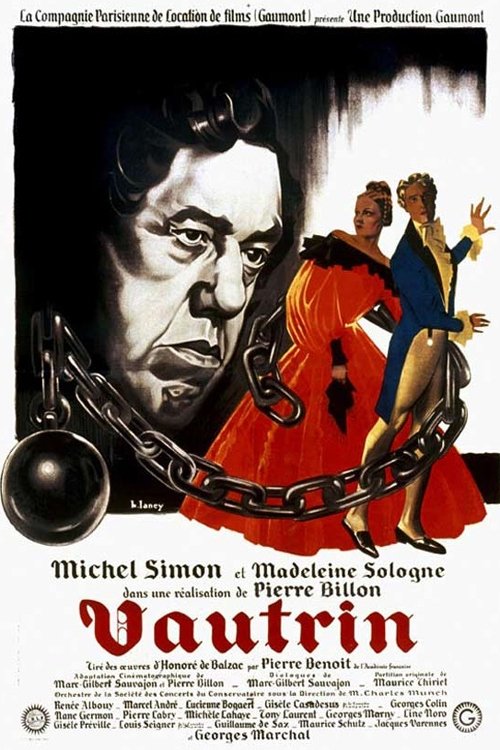
The production is framed within the Occupation period, noting its cultural significance.
Key Events
Art Direction — René Renoux designs historical sets Characters: VautrinLocation: Cité Elgé
Story Breakdown
Literary Adaptation — The film draws directly from Balzac's literary universe.
Balzac Novels — Source material includes Illusions perdues and others.
Character Origins — Vautrin serves as the central figure across multiple texts.
Directorial Vision — Pierre Billon guides the historical drama adaptation.
Pierre Billon — Director responsible for overall creative execution.
Historical Drama Style — Emphasizes period accuracy and literary fidelity.
Cast & Performance — Key actors bring the literary characters to life.
Michel Simon — Leads the film as the titular Vautrin.
Supporting Actors — Madeleine Sologne and Georges Marchal join the ensemble.
Production Logistics — Filming combines studio work with outdoor locations.
Cité Elgé Studios — Primary indoor filming location in Paris.
Fontainebleau Locations — Outdoor scenes captured around the historic region.
Artistic Design — Visual aesthetics are crafted for historical authenticity.
René Renoux — Art director overseeing set construction and styling.
Set Construction — Detailed period-accurate environments built for filming.
Historical Context — The film's release and production reflect its era.
Occupation Period — Produced during the German occupation of France.
Cultural Adaptations — Part of a broader trend adapting Balzac during wartime.
A famous convict Jacques Collin, alias Trompe la mort, or abbot Carlos Herrera, also called Vautrin, escapes from prison. Chance makes him meet Lucien de Rubempré, an impetuous and eternal lover who, when he is dismissed, collapses. Moved by this fragility, he takes him under his wing, and will do everything possible to ensure that his creature reaches happiness, even if it means imagining the worst shenanigans and other scams, with the help of a band of clever villains.