Episode Guide
-
Guns of the Russian Military Forged in Europe’s shadow, Russian small arms were once dismissed as crude copies. Often lacking the finish of Western counterparts, Russian guns have been battle-proven worldwide, with their emphasis on robustness and simplicity of design. Review the long history of Russian small arms–from Peter the Great to the Cold War.
-
The F-15 Built to put U.S. pilots back in charge of the skies, the F-15 Eagle proved its superiority in Desert Storm and Operation Iraqi Freedom. In a dogfight, it can maneuver against the toughest fighters and climb to Mt. Everest’s height in 60 seconds. One of the toughest planes in the world, one fortunate F-15 pilot flew back to base after losing a wing! Featuring interviews with Operation Iraqi Freedom pilots and footage that puts the viewer right in the cockpit of the world’s greatest fighter aircr
-
The Submarines -
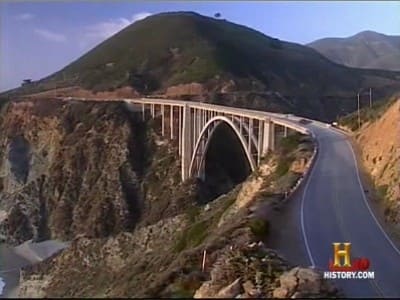
Pacific Coast Highway For 25 years, construction crews dug, blasted, tunneled, and bridged their way up America's West Coast along the California, Oregon, and Washington shoreline to build the Pacific Coast Highway. Historians, road and bridge engineers, and experts relate this story of perseverance, primal machines, convict labor, and engineering brilliance as we tour its scenic route. And we look at the latest technologies used to keeping it running despite floods, earthquakes, tsunamis, and landslides.
-
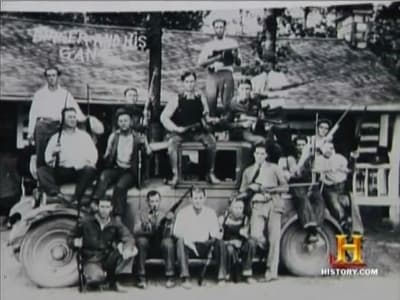
Gangster Guns -
Ship of Gold -
Racetrack Tech A look at the “science of safety” as applied to Indy or NASCAR racing. From tires to roll-cages to hood flaps, we examine the incredible technology that’s helping prevent crashes and enabling drivers to survive the inevitable ones. See how today’s innovative minds digitally reconstruct crashes and design new technology that keeps pushing the limits of racing. The drivers may grab the glory, but they wouldn’t dare get behind the wheel if it weren’t for the guys in white lab coats.
-
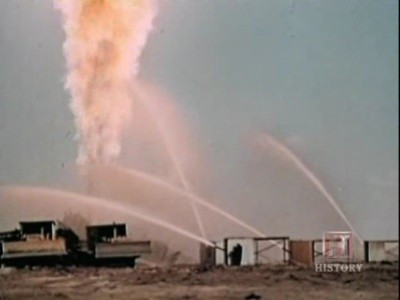
Oil Fire Fighting When a burning gusher shoots flames into the air, only a handful of men know how to snuff out the monster. Fighting fire with fire, they place explosives around the flames to blow it out, or douse it with tons of water. The modern world depends on these risk takers, yet their industry began less than 100 years ago. Join us for a scorching hour as we review the rich history of this “breed apart”, and look at modern heat-resistant clothing, new technology, and regulations that protect oil firefigh
-
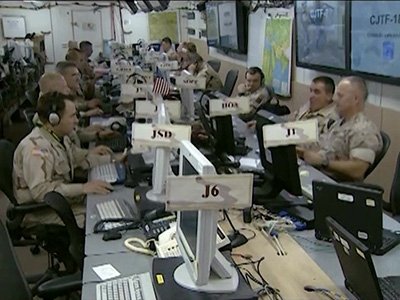
Command Central “Centcom” in Doha, Qatar represents everything a modern military command post can be with the most sophisticated military information systems–from video-conferencing to real-time frontline satellite communication. From this forward command in the heart of the Middle East, the U.S. ran the Iraq War. But command posts have not always been so technologically advanced as we see when we delve into the history of military communication–from tattooed messenger to satellite technology.
-
Front Line Reporting In March 2003, embedded civilian correspondents rolled along with the U.S. military convoy as it invaded Iraq. Equipped with satellite and video phones, digital cameras, and lightweight satellite uplinks, frontline reporters dispatched the news of war as it happened. Reports of war are as old as war itself; once the exclusive province of soldier-scribes like Julius Caesar, the accounts were usually written after the fact. Join us as we review the history and preview the future of frontline repor
-

Nature's Engineers Towering skyscrapers buzzing with life, intricate tunnels connecting entire communities, mighty dams that tame the wildest rivers–this is construction animal style! Take a walk on the wild side as we investigate common creatures seemingly designed to alter their habitat and remake the world. Our ability to learn and capacity for abstract thought may separate us from beavers, honeybees, birds, termites, and spiders, but these engineers of nature remind us that we’re merely the latest in a long li
-
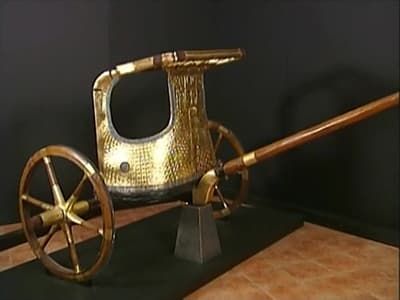
Bible Tech Arguably the most influential book ever written, the Bible provides a glimpse into the origins of ancient technology and its uses. We examine the technological plausibility of biblical structures and machines–including the Tower of Babylon, the Temple of Jerusalem, ancient bronze and iron forging, and shipbuilding skills that might have been employed to build Noah’s Ark.
-
The Power Grid The largest manmade machine ever created, the electric power grid traverses the nation from California to Maine, Florida to Washington State. This huge complex of power plants, substations, and transmission lines continually supplies power to millions of customers. In an electrifying hour, we explore the grid’s origin, from Edison’s Pearl Street Station in New York to the post-WWII “Golden Age” to deregulation and restructuring that directly impacted California’s energy crisis in the 21st centur
-

Bathroom Tech From tub to toilet to toothpaste, here's everything you ever wanted to know about the most used and least discussed room in the house. From the first home bathrooms in ancient India, Roman latrines, and bizarre Victorian-era bath contraptions, to modern luxurious master bathroom suites, we trace the history of bathing, showering, and oral hygiene. And we reveal the messy truth about what was used before toilet paper–brainchild of the Scott Brothers of Philadelphia–and why astronauts wear diapers
-
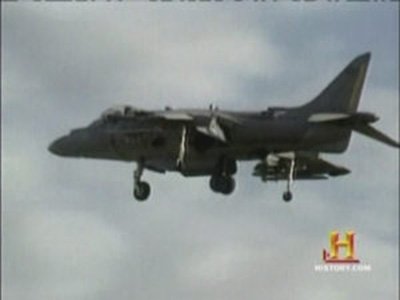
Engineering Disasters 6 An in-depth look at the modern era's most complex, deadly, and controversial engineering failures. With the aid of 3-D animation, forensic experts, and footage of disasters, we seek to understand what went wrong and how mishap led to remedy. Stories include: the Marines' AV-8 Harrier "Jump Jet"; the Ford Explorer/Firestone rollovers; fire on the Piper Alpha offshore oil rig; derailment of a high-speed train in Germany; and computer errors that brought the world to the brink of accidental nuclear
-
F-18 Hornet One aircraft in the U.S. arsenal best typifies the will to win. Using the latest and most sophisticated computerized technology, the F-18 Hornet is now one of the foremost fighters of the 21st Century. Once a plane that nobody wanted, today it’s the principal Navy and Marine fighter-attacker–with a flick of a switch, it transforms from bomber to fighter. Interviews with pilots and crews, combined with archive film and color reenactments, take you inside the cockpit of this multi-role aircraft.
-
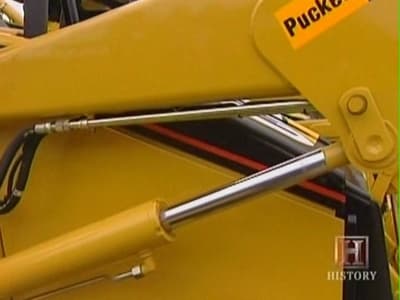
Hydraulics The machines that helped build our world have been powered by hydraulics, a compact system of valves, hoses, and pumps that transmits forces from point to point through fluid. This basic concept of powerful force transmission through fluid provides the drive for most machines today. From the ancient Roman mastery of the aqueduct to Universal Studios, a veritable hydraulic theme park, we see how hydraulics power industry, keep planes flying, and make that 3-point-turn a U-turn.
-
The Subs of WWII -
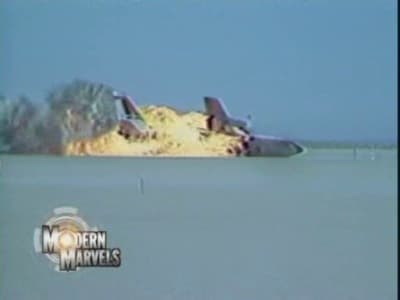
Plane Crashes When the most sophisticated machines fail, they do so horrifically, plunging to earth with a terrifying loss of life. From the beginning of manned flight, plane crashes have plagued the aviation industry and terrorized the public. But the truth is, passengers have never been safer because of the brightest minds, best technology, and billions of dollars focused on preventing air disasters. Using famous crashes like TWA Flight 800, we examine safety improvement and what still needs to be done.
-

D-Day Tech Modern Marvels shines the spotlight on the array of inventions that made the epic invasion possible, telling the stories of their development and following them into combat in the greatest invasion in history. From parachuting mannequins to pole charges, amphibious DUWKS trucks to Rhino Barges, D-Day tech is a fascinating look at the hardware that helped free Europe from Hitler's grasp.
-
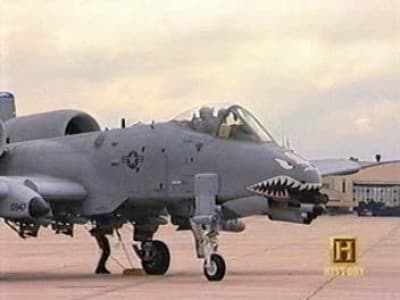
A-10 Tankbuster Nicknamed the 'Warthog', the A-10 Tankbuster is one of the U.S. military's most prolific air support fighters. Focuses on its design, production, and life saving record on the battlefield.
-
Rubber The story of rubber is more than tires, toys, gloves, and gum–it’s imbedded in modern life, from the controversial Challenger O-rings to seals on hydrogen fuel cells. A gigantic worldwide synthetic rubber industry creates exotic elastomers for high-tech applications, while China’s rapid industrialization plays havoc with the world’s natural rubber supply. From the ancient Olmecs of Yucat n, who knew the secret of vulcanization, to modern processing plants, we trace rubber’s history and future.
-
City Water When you tap your faucet does clean, pure water flow? Can your city supply enough water for industry, firefighting, and street cleaning? U.S. public water-supply systems serve nearly 99 percent of the population, yet few users know how the system of aqueducts, pipes, and pumps work. Learn the colorful history of the water systems in Chicago, New York City, and Los Angeles when we scour the past and look to the future, including desalination plants that turn seawater into drinking water.
-
Greatest Movies Gadgets Cars that fly and drive themselves. Spiffy spy tools that see under doors and through walls. Water “Harleys” that fly above and below the surface. Only in the movies, right? Hollywood may have dreamt these things up, but regular guys are making them for real as we see in a 2-hour special combining clips of recent blockbusters and hilarious old movie serials, along with a look at real-life creations, including intelligence-gathering “insects” and undersea robots. Gadgets lovers beware your bank a
-
Robots -
Nuclear Tech Nuclear research ranges from well-known applications, such as bombs and reactors, to little-known uses in medicine, food preparation, and radiation detection. It’s also spawned ancillary technologies to store nuclear waste and clean up accidents.
-
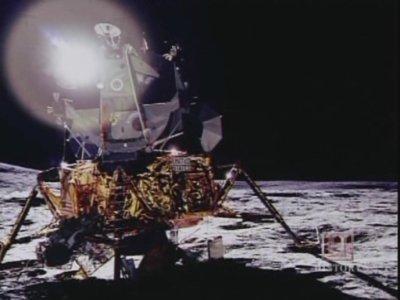
Apollo 11 As mankind's greatest achievement of the 20th century, Apollo 11 stood as the apogee of science, exploration, flight, and technological prowess. In scarcely 10 years, America went from rocketing monkeys to landing a man on the moon. Leaving Earth on July 16, 1969, Neil Armstrong, Edwin Aldrin, and Mike Collins pushed the limits of skill and endurance. See and experience the flight of Apollo 11 through the eyes of the astronauts, mission controllers, engineers, and designers who made it happen.
-
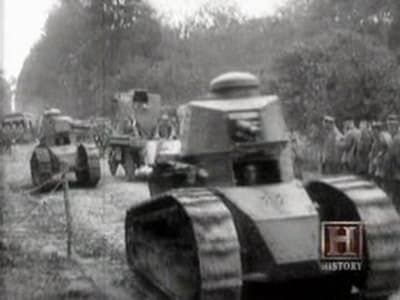
World War I Tech The first bombing airplanes and widespread use of chemical weapons…earliest tanks…submarines. When Industrial-Age technology and war first mixed on a large scale, the end result was ruthlessly efficient destruction. World War One epitomized the dark underbelly of the Industrial Revolution. We see how technological achievements that streamlined 19th-century production, improved transportation, and expanded science were used to efficiently decimate a generation of soldiers in the early 20th centur
-
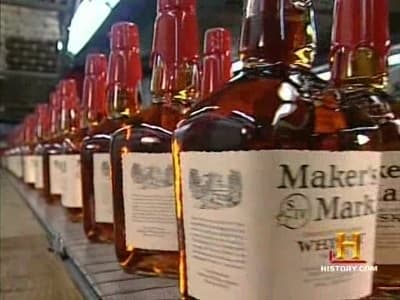
Distilleries From water and grain…to mash…still…vat…barrel and bottle–the distilling of alcoholic spirits is a big business and near-sacred religion. Its acolytes eye the color, swirl the glass, inhale the bouquet, sip, and then ponder their ambrosia.
-
Oil Tankers The biggest moving objects ever built by man, oil tankers dominate the world’s waterways, both in size and numbers. Upwards of 10,000 strong, the world tanker fleet’s vast number results from the modern, insatiable thirst for oil. We’ll dig into the history of oil transport–from Civil War days to the critical WWII years and invention of the supertanker in the 1950s. And we examine the financial impact of modifying these steel leviathans to prevent future catastrophic environmental disasters.